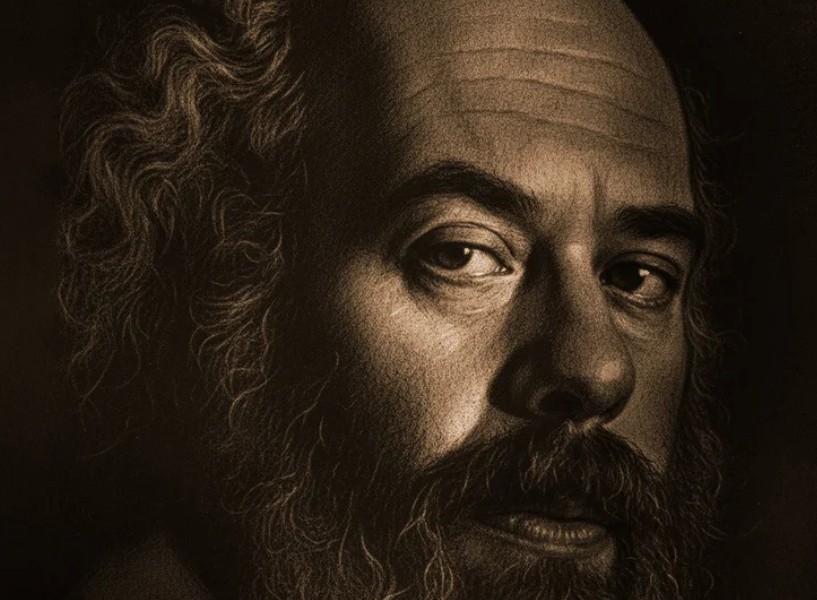
This past Sunday I had the privilege of attending the world premiere of The Darkest Light, a masterful documentary by director Simon Mendes and producer Heidi Reinberg. The film tells the complete story of Rabbi Shlomo Carlebach, from his incandescent light to the darkness of his abuse of countless women and girls.
While I was featured in the documentary for a total runtime of less than a minute, I had been involved in the film from early on. I sat for several interviews over the years with Simon and watched him go through his own evolution as the years went on. When I first spoke to Simon he told me that he was looking to tell the story of Shlomo Carlebach completely, but wasn’t looking to take a position on his life. The purpose of interviewing me was to present a more full and complete image of Shlomo Carlebach.
As an outsider to the project it was very interesting to watch Simon’s evolution on this story. I myself went through just such an evolution when I first started writing about Carlebach. When I first sat for an interview with Simon I remember we spoke about the direction the film would take. At the time he was planning to be relatively neutral about the abuse, including it as a part of Carlebach’s life but not as the primary focus of the film. Something about Simon at the time told me that I should hang in there and that his focus would change. The interview lasted a few hours and was very thorough and all-encompassing in scope.
After that initial interview we stayed in touch. Simon started talking to Carlebach survivors and it was very clear from the way he was talking about the project that his perspective had shifted. Over time it became clear that he intended to tell the story of Shlomo Carlebach through the lens of the abuse. As he spoke to more and more people on this project it became increasingly apparent how personal this project was for him and how important it was for him to give these women whom Carlebach had abused the platform they deserved to talk about their experiences.
When I saw the first preview of the film in September of 2025 I had a lot of thoughts about it. Mostly positive, but not completely. I felt that the original cut gave too much deference to the other side, to the people who didn’t believe it or didn’t think it should be discussed after Carlebach’s death, and that it unfairly gave the last word to people who seemed very motivated to keep the status quo about Carlebach’s music even if they acknowledged the abuse. Simon and I spoke extensively about these objections and misgivings. Still, even then, it was an excellent film.
Between then and now, however, it’s clear that Simon picked a side. The Darkest Light gives appropriate time and voice to the debate over what should happen to Carlebach’s music going forward—a question that is not settled even among his survivors—but gives no quarter to those who would deny the abuse or contend that we should fully separate the art from the artist and pretend that we aren’t aware of his many abuses and the harm he caused his survivors. The only time in the film given to the deniers is in a brief interview with Yankele Shemesh, a close friend and touring partner of Carlebach’s, in which he calls Carlebach a king, and demands that anyone who says anything negative about him go to his gravesite and beg his forgiveness.
Shemesh comes off as unhinged, completely detached from reality in his denials of the abuse Carlebach committed. Indeed that’s where this film leaves that discussion. This film is the makeh b’patish, the last word in the conversation started many years ago by Sarah Blustain in Lilith. There can no longer be any question of if Shlomo Carlebach sexually assaulted all those women and girls, only what we do in response.
In that sense the film is an absolute masterpiece. It begins by drawing the audience into the world of Shlomo Carlebach. It makes you fall in love with him, his music, his message, and his philosophy. It transports you emotionally and temporally to the intimate and personal relationship created by Carlebach between him and his audience. You feel as if you’re there, as if you’re living in his world, a world of love, and light, and music. And then it brings you crashing back down to reality by slapping you in the face with a detailed and heartbreaking account of his sexual assault of Sheva Kuvet Hart, who had come to him expecting to be part of a learning group he’d organized. There was no group. Carlebach had lied to her to sexually assault her.
The shift to that account in the film is sudden and jarring, and it perfectly captures not only what his survivor must have experienced in that moment, but what everyone who has ever grappled with the darkness of Shlomo Carlebach experienced the first time they learned of his crimes. As the film continues it moves back and forth between the lofty fantasy Carlebach created for his followers and the harsh reality of what he was actually doing to his survivors.
Much of the film is filtered through the lens of Neshama Carlebach as she comes to terms with who her father really was and the tremendous harm he caused. Her own evolution on this issue is apparent, not only through the film itself but through her own writing over the years. In 2018, at the height of the #MeToo reckoning with her father’s legacy, she wrote her now-famous article, My Sisters, I Hear You, in which she acknowledges the tremendous pain in her father’s legacy. The article never explicitly acknowledged the allegations in any specificity, but for the first time it was an acknowledgement by “the other side” that the allegations of abuse weren’t some fringe distraction, but something real that deserved to be grappled with.
The #MeToo movement and the reckoning it caused with Carlebach’s legacy had seriously impacted Neshama as well. Her career came to a standstill as the backlash against her father’s music and legacy grew, and for a number of years she had difficulty booking shows. Many people no longer wanted to pay to hear Shlomo Carlebach’s music and felt that her use of it was in poor taste. Her own history with his music is complicated, and she discusses that in the film. When Shlomo Carlebach died he left his family with nothing, and it took years of work and litigation for Neshama to enforce the copyrights Shlomo himself had never enforced.
Throughout the film she exhibits a clear and strong ambivalence about her father’s music and legacy. She loves him but can no longer deny the harm he caused. In the film she completes a story she began in My Sisters, I Hear You. She describes being sexually assaulted as a girl by a friend of her father’s, and then describes her father’s flippant denial of her abuse when she disclosed it to him. It’s a heartbreaking moment in the film, and highlights how Shlomo Carlebach’s complete indifference toward women’s body autonomy and personhood extended even to his own daughter.
In an article published the day of the premiere, Neshama goes even further than she does in the film and clearly and unequivocally acknowledges the abuse. She expresses her hope that beyond a simple conversation about whether or not to still sing her father’s music the film will be a springboard for a communal conversation about the systems that enable abuse. While Neshama was originally expected to attend the premiere and sit on a panel with two of Carlebach’s survivors following the screening, she explains in the article that she decided not to attend out of deference to the survivors who deserve the primary focus. She nonetheless expressed her support for the film and her intention to participate in future events and screenings.
It’s a powerful piece that I strongly recommend reading.
It stands in stark contrast to her sister Dari, who explicitly states in the film that she doesn’t believe the allegations, and that no one—not even his victims—could know the truth of what really happened. In a statement to Arutz Sheva, Dari said, “I want to say first of all that I was interviewed four years ago, before the direction of this film was made known to me. I would never be a part of a film like this, and if I could be removed, I would a thousand times. Unfortunately, I am bound by a release I signed. There is somehow a popular opinion that because my sister has clearly stated her opinion, that is the opinion of the entire family. That is hers and hers alone.” In the film Neshama discussed emails and messages she’d received from friends and family castigating her for having written My Sisters, I Hear You. The family clearly do not all agree on this issue.
The end of the film focuses on the question of Carlebach’s music. While it doesn’t take an explicit position on that question it does present strong opinions against the use of his music alongside opinions support its continued use. In fact, of the three survivors interviewed in the film, the two who address the question don’t agree on that point. Donna Zerner says that she still listens to his music and enjoys it, while S.J. Schwaidelson says that if she had her druthers she’d never hear it again.
Over the years I’ve spoken to many of Carlebach’s victims, many of them disagree on that question. Enough of them have told me over the years that they no longer go to shul because they can’t guarantee they won’t hear his music. If we believe as a community that everyone should have a right to go to shul without having to accept being triggered by their abuser’s music as a precondition for walking in the door, then it’s incumbent on us to rid our shuls of his music.
That said, Neshama’s point is well taken. This is not just about whether or not we continue singing her father’s music in shul. It’s about a communal reckoning with Carlebach’s abuse, as well as all the abuse regularly enabled and disregarded in our communities. I would argue, however, that the two issues require the same approach. Eliminating Carlebach’s music from shul is no simple task. It is ubiquitous across the Jewish world in a way that is unmatched by the music of any other composer. Even attempting to rid our shuls of his music would require exactly the kind of communal reckoning Neshama calls for. It would require communal teaching, sermons from the pulpit, and real discussions at the Shabbos table about not only this one specific abuser but how we can build safer communities as a whole, and how we can become supportive and safe communities for all survivors. In doing the work on the former, I believe we can foster the latter.
The Darkest Light is an absolute must-see. It definitively moves the conversation beyond the question of whether or not the abuse happened. It did. Now the question is how we respond.
If you want to request a screening in your community, reach out to Simon.