This Is My God

For the longest time I haven’t been able to bring myself to say the name “Hashem”. It feels wrong to me, like I’m forcing myself to utter the name of a being I know to be something entirely false and contrived by people with whom I would never want to associate. Don’t worry, this article isn’t a renunciation of my religion. No, I believe with all my heart in “Hashem;” I just can’t bring myself to utter that word, or even think it without cringing. When I need to refer to my Creator in conversation, I call Him God. That’s who I feel my bond with: God. Hashem makes me want to run and hide; God makes me feel safe and loved and protected. I feel God, not Hashem, watching over me. God is who I pray to, not Hashem.

Until this morning I couldn’t understand why Hashem is so objectionable to me. I thought about it because it’s bothered me for the longest time; I couldn’t say the name of my God without feeling dirty; I’ve really felt guilty about it. I thought about situations in which I would be inclined to discuss Hashem and, for the most part, they’re all with people who use Hashem to their own advantage. People discussing the “kids at risk” crisis, or the latest “falsely accused rebbi” or hateful discussions about how gay people are the scum of the earth and intend to destroy us one male sexual encounter at a time.

I realized that any time I have ever been spoken to about Hashem, barring a few exceptions, it’s been a discussion I wanted to run away from, with a person I wanted to berate for their ignorance. They were twisting my God into something so horrible that I couldn’t even say His name as it is accepted in my religious circles. Hashem is a disgusting idea to me because the people who claim to worship Him and embrace His law made their idea of Him so reprehensible.  

God, though…God is entirely my own construct. No one refers to God by that name in my community. In fact, most find it a bit uncomfortable when I do, like I’m an outsider trying to sound intelligent about a subject with which I couldn’t possibly be familiar. But God is my understanding of my chosen deity and religion. God is someone who loves me, protects me, and gives me a better way to live my life. God is something I want to be closer to. God is something I can work toward. God is the deity of my bible, the savior of my nation; Hashem just makes me cringe.

Someone once asked me an interesting question: Does someone who has an easy life have an easier time with faith than someone who has a difficult life? As I was trying to come up with an answer, someone listening in on the conversation interjected and said “It’s two sides of the same challenge.” On the one hand, the person who has a hard life is confronted with so much evil and pain that he may lose sight more easily of God, because the God he knew and loved seems so heartbreakingly absent. On the other hand, The person who has an easy life never has to confront the question of God’s existence because, in a sense, he never really needs God for anything. God is incidental in his life, and therefore, he may forget that God even exists and is the Master of Creation.

I had a hard life. Have a hard life. I’m only 21. I’m having a hard life. My mother abused me, physically and emotionally, for years. My grandmother tried to hold things together and keep the peace, but eventually she fell into her own depression. Life went to hell. We had money but no way to access it because my grandmother needed to sign the checks, and she was, effectively, catatonic. I was a high school kid, suffering through my abuse, not sure how I would pay for food or clothes, never feeling safe because my grandmother could no longer protect me from my mother.

At first I cursed Hashem. I cursed Him for the life I had been promised by all my rabbis and teachers, and the life He had given me; I cursed Him for letting my abuser go on unchecked, as she pleased, while my grandmother and I suffered; I cursed Him for the things I had to do in order to live day to day; I cursed Him for not just taking my life and letting it all end. Then I prayed. Every day, with tears in my eyes, I prayed, begged Hashem to help me. I stopped going out very much because I didn’t want people to see me crying.

I begged my family to help. Some of them knew what was going on, but for one reason or another, always had more pity for my mother than for me. My grades plummeted. I started skipping school and staying home, online, where my real friends were. My family told me that I had to go to yeshiva and rebuked me constantly for my “sins”. They seemed to think that if only I would be the perfect yeshiva boy they had envisioned, my life would somehow perfect itself.

All I saw were people who knew, but did nothing—who would only judge me, and focus on my spiritual shortcomings, rather than help end my abuse and help me heal. Hashem wasn’t there for me, and those who worship in His name only used Him to make me feel worthless and guilty. Regardless of what I needed to do to survive, it always seemed contrary to what they believed Hashem wanted. If I skipped school in order to earn money so I could pay for things like food and clothing, things that most teenagers have provided for them, I was sinning. I was expected to conform to everyone else’s norms even though my life was falling to pieces. All this in the name of Hashem. This wasn’t the life I had been promised; this wasn’t the Hashem I had been told about. I stopped believing in that deity.

For a while I had no god. I tried finding proof for the existence of the one I’d abandoned, proof that He had never existed, or proof of some other truth entirely. The more I searched the more I realized I would never find proof: It always came down to faith.

I examined my life and the course it had taken, and I couldn’t deny the hand of some intervening being. Hashem and His worshippers had never helped me, but there were those who did, and situations which somehow managed to work in my favour that I couldn’t explain logically. I had to finally admit that something was intervening, some sort of deity, but which one?

I started learning more about this deity I had once known as Hashem, but now He seemed different, more like a God I could connect to rather than the Hashem from which I felt so removed. I began to understand His law, His will, the way in which he governs our world, His mercy, His judgement, His anger and kindness. I still wasn’t seeing His plan as ultimately good, but at least I could begin to understand the rules—the method to His madness.

This deity I was getting to know needed a name. He was the god of the Judaism that I had accepted, but the feel of Him, and of my understanding of Him, was so radically different from the way I felt and understood Hashem that I couldn’t refer to Him by that name any longer. Hashem to me was synonymous with unfettered, blind, zeal, to the point where it superseded His actual will. I named Him God. I still can’t say Hashem without cringing, but I am an Orthodox Jew and I love God, because he is the God I chose, instead of a god I was forced to accept. His law is the law I embraced, not the laws that had previously been imposed on me. He is, in every sense, my God.

Standard

T…Th…Thank…Thank you God…?

Author’s note: I use language in this post which some people might find offensive, especially in relation to prayer and God. I use that language because it accurately represents the situation. Those are words I have actually spoken aloud to God when I’ve been angry. I’m sorry if I offend people, but I felt this piece would be inaccurate if I censored it. 

I find prayer very difficult. I’m not alone in that. Many of my friends find it very hard to pick up a siddur (prayer book) and say the words. Some feel no connection to it; others are angry with God and can’t bring themselves to pray to a being about whom they feel so conflicted. For me it’s something else. It’s not that I don’t believe in prayer or find it unhelpful; it’s not that I have no connection to the idea of prayer, or that I don’t understand the prayers themselves. For me the problem is that the words codified by our Sages weren’t written for me. I don’t feel that they’re specific enough. True, most of the standard prayer service can be adapted to any specific emotion or thought, but getting to the point where I can connect the two is very difficult for me.

I pray every day, the standard stuff from the siddur, but all I’m really doing is mouthing words. I don’t feel more connected to God when I’m finished. I feel as though I have fulfilled my obligation, allowing me to get on with my day until my next God-related obligation. The times I’ve felt most connected is when the words come from me, when I am their author, and they are crafted for a specific situation, emotion, feeling, need, or expression. During Neilah (closing prayer service) on Yom Kippur, when I break down and cry like a child begging his parents for something, begging for forgiveness for my transgressions—the words I speak that elicit those tears aren’t written in my machzor (prayer book). I am talking straight to God, and it is the only time I feel God is actually listening to me. When I’m finished, I feel the way I imagine that begging child would when he thinks he may just get his way. It’s not easy asking for forgiveness, admitting wrongdoing, but one day a year, we are told that if sincere, our repentance will be accepted, and our prayers will be answered. That makes it somewhat easier.

Then there are the times when I’m angry, furious, hurt, frustrated, and feeling betrayed by God. These usually occur after when friends of mine are suffering. They are spontaneous and visceral. I remember driving down the BQE a day after spending the night with a friend of mine while she endured a rape kit, and suddenly bursting into tears, shouting at the heavens, asking God why the fuck He saw fit to torture the people I love. I remember the words of Neilah:

יהי רצון מלפניך שומע קול בכיות שתשים דמעותינו בנאדך להיות ותצילנו מכל גזרות אכזריות כי לך לבד עינינו תלויות

(May it be Your will before You, who hears the sound of weeping, that You place our tears in Your flask to stay, and that You rescue us from all cruel decrees, for to You alone to our eyes look.)

 It’s the basis for that Mordechai Ben David song, Daddy Dear. In it, a son asks his father if it’s true that when we cry, God cries along with us, collects those tears in His cup, and that when that cup finally fills, the Redemption will come. The father tells his son that it is true. “One more question,” asks the son, “Just how deep is this cup/ tell me when will it fill/ don’t you think it is time/ that the sun forever shine.”

 It’s the question I ask God every time I find myself at a loss to explain why people I love suffer. The words come easy, as do the tears. By far this is the easiest form of prayer for me, when I’m angry at God and confused by His judgment.

 The hardest form of prayer for me, is thanking God for everything He’s done for me. Sure, there’s Pesukei D’zimra and Hallel (prayers of praise), but years of rote make that equivalent to the half mumbled thank-you a child gives his mother before running out the door with a Popsicle. No, in order to properly thank God for something, the words need to be mine, with the object of my gratitude firmly in my mind. I need to open my mouth, and utter three simple words: “Thank you God.” To me, that is the hardest form of prayer. It takes me hours before I can bring myself to utter those words.

 I’ve thought about why it’s so difficult for me to get them out, and it’s taken me a while, but I think, through writing this, I finally understand. It’s not because I dislike God. There are things I will never understand, and I do find myself angry at God often enough. It’s not that, though. When I think about it, the most difficult part of saying “Thank you God” is the act of humbling myself to the point where I can acknowledge that whatever it is I feel compelled to thank God for, is something that I could never have gotten or achieved on my own without God’s intervention.

 As human beings we like to take credit for our possessions, our stations in life, our accomplishments, and sideline any contributors to that success or accomplishment. That doesn’t hold true only when it relates to God. How many times has someone taken credit for something you’ve done, something they could never have accomplished without you? It happens all the time in the corporate world, creative industries like writing, music, and art, even around the house, with one kid claiming credit for the spotless floor when really it was his younger brother who slaved away at it with a toothbrush, his left thumbnail, and a bucket of soapy water.

 That humbling is terribly difficult. In my mind I can easily acknowledge God’s role in my success. I can even write articles about it. But saying thank you to God remains difficult. Somehow when it stays inside my head, or between you and me in writing, it’s either personal, or between me and my fellow human being, and God won’t see it. I know that’s not true, but I can tell myself that God has other things to do, and that my admissions of humility in the form of thanks will go unnoticed, which makes it easier to think or write. When I actually utter the words, however, I know God is listening. God is acknowledging my humility, my admission that whatever I am thanking God for is not of my doing alone, and tacitly accepting my thanks. It makes it real. It makes it hard.

 Anyone else have the same issue with prayer? I’d love to hear some other perspectives on it. Share this around; get a conversation started.

Standard

I Have a Dream

In my last post I referenced a Mishpacha article that characterized the bloggers who cover sexual abuse in our community as “angry.” In the response I wrote to Mishpacha I explained that the anger that the community sees in those bloggers is the result of years of indifference toward survivors, and the outrage at the lengths to which the community goes to quiet survivors and protect abusers. I would characterize myself as an angry blogger. I try being a little more moderate most of the time, but I can’t help it sometimes; sometimes I just can’t hold it all in; I can’t see the situation objectively and dispassionately, and the anger I try to keep in check explodes outward, channeled into the biting words of a caustic blog post.

I didn’t start out as an angry blogger. When I first got involved in the subject, I was warned by the people I worked with not to get involved with those bloggers. They explained to me the dangers of descending into that tar-pit. Once mired, I was warned, it would be very hard to extricate myself. I heeded their advice and tried reaching out through my writing to the very organizations that my now colleagues spat on in their posts.

The first big project I undertook was trying to get a meeting with the powers that be at Agudah—the bane of every blogger in the abuse-coverage world. Agudah. Mere mention of that organization can bring some people to apoplexy. The way I saw it, though, they were doing a disservice to the very people they were trying to help. While it’s true that the Yeshivish world seems very closed to dealing with abuse, and seemingly prefers believing that it can’t happen rather than acknowledging and dealing with the issue, their children are in no less danger than the children of people who do know how to properly handle abuse and abusers. While the stories I’d heard at the time did gall me, and I was inclined to be upset with the community for causing that pain, those children helped focus me on reaching across the aisle.

I was a young idealist at the time. As a young frum Jew who looked like a part of the community I was trying to change, I figured that Agudah would sooner deal with me than any of those ”angry bloggers.” I reached out to an Agudah spokesperson; we exchanged a few emails, and set a time for a phone conversation. We covered everything from the community’s aversion to mentioning anything related to sex, be it abuse or between consenting people, why I believed the community so adamantly refused to believe that abuse was an actual issue, to the psak that had been issued at the Agudah convention a few years ago which permitted reporting only after a rabbi had been consulted. The spokesperson was very sympathetic to both my experience and those of my friends, but said that there was little he could do to affect change. The conversation concluded with this admonition from him: “Tafasta meruba lo tafasta,” which translates roughly as “take what you can get.”

I was furious when I hung up the phone. I thought I had gotten close, and all I had gotten was “take what you can get.” I went on Facebook and immediately became what I had sworn I’d never be. “Agudah’s official policy on abuse: Tafasta meruba lo tafasta.” I had become an angry blogger. For the next few months the articles and Facebook posts I wrote could have been featured on FailedMessiah. It was open season on Chassidim and anyone from Lakewood. I was burning the skeletons of bridges I had been trying to build.

Honestly, it feels good to cut people and communities down to size. It feels powerful. I get to sit in judgment from behind my keyboard on other people; I get to take the high ground and condemn them. The moral high ground is a great place to be. People loved my writing; I garnered praise from those in the blogger/activist community. The validation and praise felt euphoric. I felt drunk on the hatred of those around me, and the anger and frustration I held within me. Those children I had set out to protect had taken a back seat to my need to vent and inflict pain on those who had hurt me.

In all my writing, however, in all the cleverly worded barbs and sharp admonitions, there is a certain emptiness, a feeling like I am wasting my time and accomplishing nothing. The people who harbor the same hatred and anger lap up my writing and beg for more, and the people who I set out to educate stay uneducated. I feel like a dog chasing its tail.

This post was supposed to be completed and published on Martin Luther King Jr. Day, but I got sidetracked in a Greenwich Village bar, and then by the inevitable hangover that followed. That being said, it’s never too late to talk about MLK.

It’s the 1960s, close to 100 years following the emancipation proclamation, and blacks, while not quite still in the cotton fields, are still treated like animals. Signs forbidding their entrance to whites only shops are still common. A white man and a black man are still forbidden from sitting on the same bench, or sitting in the same section of the bus, or even drinking from the same water fountain. They are “separate but equal,” perhaps the most tongue in cheek bit of institutionalized racism in history. To quote MLK in his Letter from a Birmingham Jail, in response to why he felt he couldn’t have waited for a more opportune time to hold his protest in Birmingham:

But when you have seen vicious mobs lynch your mothers and fathers at will and drown your sisters and brothers at whim;…when you suddenly find your tongue twisted and your speech stammering as you seek to explain to your six year old daughter why she can’t go to the public amusement park that has just been advertised on television, and see tears welling up in her eyes when she is told that Funtown is closed to colored children, and see ominous clouds of inferiority beginning to form in her little mental sky, and see her beginning to distort her personality by developing an unconscious bitterness toward white people; when you have to concoct an answer for a five year old son who is asking: “Daddy, why do white people treat colored people so mean?”;…when you are humiliated day in and day out by nagging signs reading “white” and “colored”; when your first name becomes “nigger,” your middle name becomes “boy” (however old you are) and your last name becomes “John,” and your wife and mother are never given the respected title “Mrs.”; when you are harried by day and haunted by night by the fact that you are a Negro, living constantly at tiptoe stance, never quite knowing what to expect next, and are plagued with inner fears and outer resentments; when you are forever fighting a degenerating sense of “nobodiness”–then you will understand why we find it difficult to wait.

I can empathize with how MLK must have felt, sitting in a jail in Birmingham for the crime of not waiting for a permit to protest the injustice he and his people had been suffering for centuries. While I’ve never suffered the way the blacks did for centuries in this country, I have seen friends of mine become suicidal, self injurious, develop eating disorders, and suffer with PTSD while waiting for their community to help them. My first emotional reaction to seeing that is sadness. Then intense anger. Then pure hatred.

The only time I’ve ever managed to overcome that hatred and write something I feel was actually constructive, was in my post titled Olam Hafuch Ra’isi. That post took weeks to write. I discarded paragraph after paragraph, countless hateful, scathing criticisms of my fellow Jews. I can’t count how many times I started writing that piece and then stopped because I couldn’t stop the hate I feel so often from coming through in my writing. After weeks, I finally managed to write that post, and it was the most popular piece I have ever written. Everyone liked it. My fellow anti-abuse activists, fellow survivors, and even people who usually dismiss “angry bloggers” with disgust, read my piece and walked away thinking. I am prouder of that piece than anything I have ever written, and I wish I could do that with every piece I write.

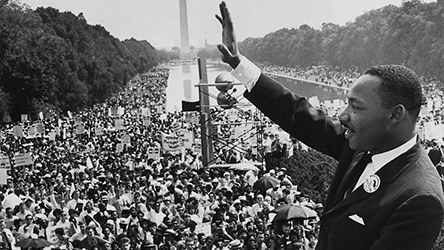
After finishing that piece, I understood, to a point, how MLK must have felt writing his letter from that Birmingham jail. If you have not yet read it, please do. To me, it, paired with his I Have a Dream speech, is the activist’s manifesto.

I can’t imagine that MLK never hated the white people for what they were doing to his people, but he realized that his cause could only be furthered and realized through peaceful protest, education, and most importantly, a willingness to accept white people as equals if they were willing to accept blacks as true equals. His movement was not about revenge, or making the whites suffer for what they had done once blacks gained equal rights. He envisioned a world where “little black boys and girls will be holding hands with little white boys and girls.”

That was his dream. Not a world where anyone who had wronged him would be brought before his people and be made pay for what they had done. His message was one of forgiveness, acceptance, a willingness to embrace those who had wronged him should they be willing to embrace his people in the same way. His iconic speech on the steps of the Lincoln memorial end with these words, words that make me cry every time I hear them:

[W]hen we allow freedom to ring, when we let it ring from every village and every hamlet, from every state and every city, we will be able to speed up that day when all of God’s children, black men and white men, Jews and Gentiles, Protestants and Catholics, will be able to join hands and sing in the words of the old Negro spiritual, “Free at last! free at last! thank God Almighty, we are free at last!

This is my dream. That one day I will be able to live in my community, secure in the knowledge that abusers will be brought to justice, survivors will receive the help and support they need and deserve, bust most importantly, that all that hatred I feel toward fellow Jews will be gone, and that I will feel as comfortable around them as I do around fellow activists. My dream allows for the existence of Agudah, Satmar, Lakewood, and Skver. In my dream they all acknowledge the faults within their communities, rectify those faults, and ensure the safety and support of all survivors. In my dream the “angry blogger” has no place, not because he serves no purpose, but because his necessity becomes obviated by mutual understanding, proper education, and a commitment to safety and justice.

In the meantime I will commit to do what I can, to overcome the hatred I feel, and help foster the love and acceptance I want to exist. It will not be easy, but I will make an effort.

This is my dream. I may go my whole life never seeing my dream realized. But a man can dream, can’t he?

Standard
I can't even

“We Are Under Attack by the LGBTPed Community:” My Response

On a good day it’s hard for me to feel at ease in my community. I’m a survivor of abuse living in a community that covers it up. I’m someone who was told to shut up when he had the choice to report. I’m someone whose own family called him a liar when he went to them for help. I’m someone who nearly killed himself because he was blamed for his abuse by someone who had witnessed it and promised to help. On a good day I’m aware of the countless survivors who live my past. On a bad day, I run across Yeshiva World.

“We Are Under Attack by the LGBTPed Community.” That was the headline of an op-ed written by a Rabbi Yair Hoffman, originally printed in the 5 Towns Jewish Times, and shared online by Yeshiva World. For those who may not know what the “LGBT” part of that initialism means, it stands for Lesbian, Gay, Bisexual, and Transgender. The “Ped” part, though, is an abbreviation of “pedophile.” Pedophile. Pedophile. That term was used continuously throughout the piece, and in the comments section, people were congratulating this Rabbi Hoffman for his wit in coming up with that bit of brilliant wordplay.

It hurt so much I cried. Seeing that caused me physical pain. Survivors of abuse and LGBT people will understand, but to those of you reading this who may not understand, it’s a play on the unfortunately common misconception that because pedophiles often target little boys, and gay people are sexually attracted to the same sex, gay people must have a higher chance of being pedophiles, despite the overwhelming amount of evidence proving otherwise.

Think about the context of that statement: A community that covers up abuse with a zeal that rivals the Catholic Church, is calling LGBT people pedophiles, and thus condemning them. I have LGBT friends, LGBT friends who are, themselves, survivors of sexual abuse, and this is nothing short of a slap in the face, a kick in the crotch and a loogie on top to every single one of them. I am not an LGBT person, but as a survivor of abuse I feel just as betrayed by this characterization. The community can’t be bothered to take care of the actual pedophiles it fosters, protects, and harbors, but sees fit to use the term “pedophile” as a pejorative for people who are in no way more likely to be pedophilic than non-LGBT people. Take your pick, Rabbi Hoffman, is a pedophile something so offensive that the very mention of the word should inspire disgust, or is it the candy man, or the rebbi, or the unlicensed therapist you give an Aliyah to every week?

Even the use of the word “pedophile” on a website like Yeshiva world is hypocritical. This is the same website that refused to post anything about the Weberman trial because of its “ethical standards.” This is an extension of the community that reads Hamodia, Yated, Etc. On December 17 of last year, Ruth Lichtenstein, publisher of Hamodia, wrote an op-ed titled “Dear Reader” in which she detailed her struggle to “consistently bring [you] the highest standard of clean, “kosher” news, avoiding all sensationalism and gutter journalism.” After detailing exactly how she goes about censoring the news that reaches her paper, and how many articles she’s rejected over the years for being, by her standards, inappropriate, she had this to say: “To this end, a crucial part of our mission is protecting our readers’ right “not to know.” They didn’t mention anything about Weberman either at the time.

Two weeks ago, Mishpacha magazine got me hopeful. They published an article titled “King of Hearts” about a Rabbi Moshe Bak who founded an organization, Project Innocent Heart, geared toward educating teachers and parents about abuse, how to spot it, and how to handle it. One line in particular made me hopeful—I thought that maybe, just maybe, the Frum community was taking a backhoe to the pit of sand in which it usually finds its head: “I recently met with a clinician who deals with convicted pedophiles. She said that although only a small percentage of abuse occurs on school grounds, the safest place for a predator to operate is in a Jewish day school.” We’ve known this for years, those of us who deal with survivors, and have been shouting it from the rooftops, but no one listened—until, it seemed, that article was published.

A survivor friend of mine showed me that article, and asked me to write a letter to the editor in response. We both submitted our letters, and hers was published…with the most important bit missing. This was her unedited response to the article:

Kudos to Rabbi Bak and Mishpacha Magazine for taking a stand and raising awareness about abuse within the Frum community! However, there are several points I would like to make.

1) As a survivor of childhood abuse, and a friend to many other survivors, it has been my experience that many in a position to take a stand on abuse (i.e. rabbis, teachers, and principals), enforce proper reporting, and prevent further abuse, end up sweeping allegations under the rug, creating stigma and taboo surrounding the issue, and fostering an environment in which it would be unlikely that a child would ever feel comfortable coming forward about being abused, or reaching out for help. These secrets are harmful and cost lives. Ignorance in this case is not bliss, it’s dangerous.

2) Unfortunately, too often the problem exists at home. The abuse is often perpetrated by a parent, sibling, or close relative. Leaving the education of children on these matters to parents and families on an individual basis is putting children whose families are the abusers at risk. By having a third party, like a school, educate the children about abuse and how to prevent it through personal safety, good touch and bad touch, etc., you would be ensuring that every child, regardless of what may or may not be happening to them at home, is educated.

3) We need Gedolei Hador to issue public statements supporting the importance of reporting cases of abuse to the proper authorities. By doing so, we will be ensuring our children’s safety and the future of Klal Yisrael; Like Rabbi Bak said: “[Making] our communities into transparent safety zones where predators can’t survive.” The efforts of organizations like Project Innocent Heart, Magenu, etc., are very commendable, but until the general public sees their leaders publicly taking a stand, the issue will not be taken as seriously as it should.

They published it mostly unedited, aside from the last part, which was heavily edited:

Lastly, the efforts of organizations like Project Innocent Heart, Magenu, etc., are very commendable, but until the general public sees their community leaders publicly taking a stand, the issue will not be taken as seriously as it should.

Any mention of Gedolim or their accountability was removed. This same friend of mine emailed Project Innocent Heart asking about their reporting policy, and has yet to hear back.

And this community has the gall to call my friends pedophiles while letting the real ones walk. Instead of bringing to justice the scores of criminals who have been allowed to live among us freely, the community instead focuses on trying to fix people who were never broken to begin with.

Standard

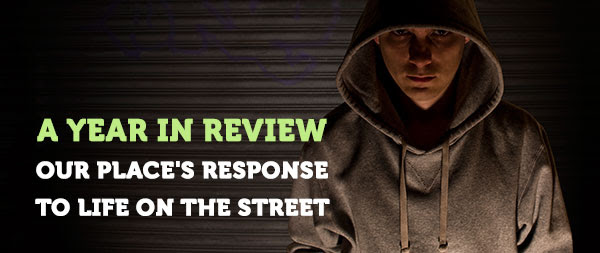
Our Place Year in Review

Below is reproduced an e-mail I received from Our Place, a drop-in center for “Kids-at risk” in Brooklyn. The statistics below are unfortunately not exaggerations. I spent a year working there and saw the work they do, and if ever there was an organization worthy of someone else’s money, it’s Our Place.
Many organizations exist which claim to help teens in these terrible situations, but none of them hold a candle to Our Place. The two most striking differences between Our Place and any other organizations I’ve seen or been involved with is the truly unconditional love shown by the staff to the kids who drop in, and the unwavering commitment to putting the kids before the institution. To quote Chaim Glancz, even though he would probably object if he saw this, “There’s no point to the institution if we put it before the kids. We’re here to help them–that’s why we exist. If the institution ever comes before the kids then we should just shut down.”

I felt both of those attributes strongly, not only while volunteering, but even subsequently, after I left; every time I visit I’m greeted as lovingly as I was when I worked there. I don’t usually make it my business to tell people which organizations to support, seeing as there are so many that do important work, but Our Place is the only organization I vocally support and promote because I know for a fact that every penny they receive is put toward helping children directly. Please give what you can; you are literally saving lives.

CLICK HERE TO MAKE YOUR END-OF-THE-YEAR GIFT TODAY
Life on the Street
90% of teens and young adults that benefit from Our Place services are struggling with substance abuse and/or addictionsOver 85% of Our Place youth have been abused during their pre-teen and teenage years – emotionally, physically, and/or sexually

70% of high school-aged boys that frequent our drop-in centers are not enrolled in a high school

10% of Our Place teens are homeless; 20% do not live at home

Over 50% of Our Place teens have been arrested before the age of 18

Over the past 15 years, the Our Place staff has been called upon to assist in burying over 40 teen victims of suicide and drug overdose

The our place Response
The Our Place network services almost 1,000 Jewish teens & young adults annually230 teens attend our drop-in centers, at least once a week; over 750 attend annually

For many teens, the nightly dinner served at Our Place is their only meal of the day

100 teens are sent annually to Detox; 90 are placed each year in Rehabilitation Centers

The Living Room has serviced 250 long-term members over the past decade, with 90 active participants currently attending

Our Place assists 30 students annually to enroll in Metro Area college programs

5-10 teens enlist in the Israel Defense Forces each year

80% of Living Room Members celebrate 1-year of sobriety and drug-free living; 65% have stayed active in a 12-step program for 5 years or more

85 Our Place teens undertook paid employment this past year through the assistance of an Our Place employee or volunteer

150 Our Place teens currently attend Yeshivot in Israel; many others make Aliya

CLICK HERE TO MAKE YOUR END-OF-THE-YEAR GIFT TODAY

Our Place in NY Inc. is a registered Non-Profit 501(c)3 organization. All donations are tax deductible

For more information on Our Place, visit http://www.OurPlaceNY.org

44 Wall Street.2nd Floor. New York, NY 10005 – Tel: 212-248-4141

Standard

Olam Hafuch Ra’isi

Ever since the Weberman trial, something has been bothering me. It’s something I’m having a very hard time reconciling. I find myself trying to shoehorn lyrics about this conundrum into the melody of How Do You Solve a Problem Like Maria. How do you solve a problem like Williamsburg. Or New Square. Or Lakewood. How do you catch a cloud and pin it down. It’s a rude awakening the day you realize that the world you idealized, the people you looked up to, respected, aspired to, perhaps, were so much darker than the rosy images they projected. Kind of makes you just throw your hands up sometimes, and wonder how reality could slip past you and degenerate without you noticing.

I look around my community and see wonderful people. People who learn all day, or who work and learn to both provide for their families and still make time for spiritual improvement. I see people in hospitals giving of their time and resources to make sure that families visiting loved ones have where to sleep, what to eat, chargers for their phones, and someone to talk to. I see organizations devoted to making women with fertility problems able to have children. I see a free ambulance service that’s not only entirely volunteer, but faster, better, and more reliable than 911. I see free loan societies, and free wedding gown rentals, organizations that take care of burial and shiva from start to finish. I see so much good. And then I see the bad.

I see people who stand hand in hand with child abusers, abusers who have ruined the lives of tens if not hundreds of children respectively. I see rabbonim—people we refer to as gedolim—vilifying the father of a child abused by his rebbi, calling him a moser, besmirching his name publicly, despite the fact that the father had a ruling from an equally prominent rabbi allowing him to go to secular authorities. I see a woman driven to suicide by people who turned her children against her, and those same people taunting and harassing the people who came to mourn her. I see men who would torture another man for the right price. Olam hafuch ra’isi.

I can’t reconcile it, and it’s driving me nuts. I don’t understand how people, who claim, by their claim of being Jews, to be rachmanim b’nei rachmanim, could be capable of such cruelty. I don’t understand how they can harbor the empathy that would compel them to perform such kindness for people they don’t know while simultaneously thinking nothing of such barbarism. The worst part is that they don’t even think they’re doing something wrong. A child picking the legs off a spider knows that what he’s doing is wrong, but does it anyway because he finds it satisfying. This is different. This is such a subtly constructed, and heavily justified cruelty that its perpetrators don’t even understand that it’s wrong. To the contrary, they believe they are doing God’s will—fighting the good fight, so to speak.

Am I being too idealistic when I expect people who can be so kind to understand that despite differences in religion, race, upbringing, or circumstance, we are all created in the image of God? That they should see good, and be able to distinguish it from evil and cruelty?

When I was in high school, I made a flippant joke about a natural disaster that had claimed the lives of over one hundred people. I thought it was funny. My classmates thought it was funny. My rebbi didn’t. I asked him later what the problem was with what I had said; I mean who cares, right? They’re goyim anyway.

No, my rebbi said. They are fellow creations made in God’s image. They are human beings with emotions, and feelings, and thoughts just like me, people who feel joy and sadness, pain and pleasure, worry and satisfaction just like me. They are creations like me, and what kind of person could I possibly be if I could so easily dismiss the suffering of my fellow creation simply because of a difference in religion and circumstance. It jarred me. It changed my worldview. I had been brought up thinking of goyim as “shkutzim,” as something beneath me. Unworthy of me or my empathy. Of people who had gone off the derech as unfortunates, something between misguided and mentally ill. Of baalei teshuva as never quite good enough. I had been chosen, not them. God favoured me, not them. I was better because I proudly called myself frum, whereas they had chosen to rebel against their heritage. I had forgotten that God created them in His image, just as he had created me.

It made me approach the world and its diversity differently. I learned that just because someone might not be of my faith, or of my belief, that doesn’t make them any less of a human being worthy of my empathy. I can disagree with their beliefs or actions, but that shouldn’t make me disagree with their existence. Opinions, beliefs, and faiths can change, but underneath it all is a person just like me.

I think that’s what has to fundamentally change, the approach that these puzzlingly dichotomous people take to the world. They need to be shown the value of a human being beyond what they’ve been brought up believing. I don’t think they believe that they’re doing something wrong, because they believe they’re doing it to someone who never had the same right to existence as they do; They don’t believe that people who don’t fit into their worldview are quite as valued by God as they are. They believe the world was created for them, and that anyone else ranges from extra to someone who should, by all rights, serve them. They need to be taught that we all exist for a purpose, that we all have value, that we were all created in God’s image, from Jew to Non-Jew, religious to irreligious, Reform to Charedi, and everything in between. Then the reality perceived will actually be reality, without the dark layers hiding just below the surface.

To be honest, I have no idea how to get this message to the right people. Most of the people who read this will probably already agree with it; it will sound like nothing new. The target audience of this piece is unfortunately not the audience that needs to read it. But who knows, it might come to the attention of someone who does, and that person might consider these ideas, and might even improve. A man can hope. And if it changes even one person, then that’s a very good start.

Standard

The Gift of Tears

‘For these things I weep; mine eye, mine eye runneth down with water; because the comforter is far from me, even he that should refresh my soul; my children are desolate, because the enemy hath prevailed.’

I couldn’t say those words. I was sitting in my room, alone, reading Eicha, and I could not say those words. Every time I tried, I choked up. I was remembering all those years I cried alone, as I was crying last night, and there was no one there to comfort me. I remembered the stories of what happened to my friends, how I felt hearing them, how powerless I was to make the people I loved feel safe. I remembered the phone call I got a few months ago from someone I love more than anyone or anything in this world, telling me about how she had been raped the previous night. I remember crying with her, beating the walls because I couldn’t beat her rapist.

I remembered my grandfather and the stories he told about being in the concentration camp at 19 years old. The atrocities he described, the bravery that people exhibited when the world lost its humanity, the lengths to which people went to preserve their faith, and the horrifying barbarity to which the world succumbed. But also the despair following the Holocaust; how so many people, the remnants of a world torn apart, had lost sight of a god who couldn’t possibly have existed and allowed such atrocity. True, we’ve rebuilt both spiritually and physically, but we lost a part of ourselves in the Holocaust.

Who ever cries about anything; when is it ever acceptable? Every morning, I put on my happy face and go about my business. I don’t let people see underneath because it would scare them and depress them. Most people are like that, really, hiding the part of them that isn’t happy, either because they know people don’t want to see it, or because it betrays a weakness that they don’t feel they can afford. Twice a year it becomes acceptable to cry, to remove the mask and show what’s underneath. On Yom Kippur we cry for forgiveness, and on Tisha B’av we cry in mourning for the losses we’ve suffered.

People dread both days because of their sepulchral nature (albeit for different reasons), but in truth both are a gift of sorts. We all do things we feel guilty about, but since guilt is generally at odds with our constant pursuit of success, we push guilt aside, or justify our actions to make them easier to live with. Yom Kippur is the one day a year when we can bare our souls to ourselves and our God, face our demons, and beg forgiveness, without worrying about what others may think or how it may adversely affect our lives, because everyone else is similarly confessing their own sins and iniquities. Thus, instead of causing divisiveness, this communal confession actually becomes a bonding moment between a “nation of sinners,” thereby bringing us closer to each other, and God.

Tisha B’av, too, allows us a day to express publicly what we keep hidden in the innermost recesses of our hearts. Crying is an intensely intimate experience, not just for oneself, but for everyone else around you. It’s something most people never let themselves see, let alone other people, but one day a year, we all sit on the floor, mourning, crying together over the losses we’ve experienced, both personally and as a nation. It raises us together to a different level, a level that that is equal and free of class, or caste, or position. We all sit on the floor and show our deepest vulnerabilities. On both days we are united by tears.

Yom Kippur and Tisha B’av are gifts that, while they may start of as an imposition, end as uplifting and unifying experiences because they force us to embrace the gift of tears.

Standard

Tonight I Mourn

It’s not even tisha b’av yet and I’m crying my eyes out. Most people I know go through the motions, mourning some abstraction, a glory they’ve heard about like a copy of a copy of a copy, retold for two thousand years. A building, representing God’s glory on this earth and a place where we could connect with Him, almost undeniably. But it was destroyed twice. Who can even remember.

So once a year we sit around and we try to eke tears from our eyes, eyes dried by luxury and complacency, by a lack of understanding of what true devastation entails, by smugness and arrogance, position and power, by lack of any emotional connection to one another. We try to cry because we have to. Cry if you can, but I almost wish I couldn’t.

For me, the destruction of the Temples is not an abstraction, because while I can’t remember its sacking millennia ago, I see it’s consequences. The tragedy of this world, the barbarity of which humanity is capable, and by the same token, the callousness. I suffered for years while no one helped. I cried for years and no one cared. My abuser was given everything she wanted and I had to fend for myself, even if it meant addiction, and dropping out of school, and getting my heart torn to pieces witnessing what was happening to my grandmother, and I was always the bad one. Olam hafuch ra’isi (an inverted world I see).

I have too many friends with similar stories. They cried for years along with me, even though we didn’t know each other. Countless people crying in unison as their lives are destroyed one abusive act at a time. No one cares. Tonight I mourn for myself, because no one will mourn me. I mourn for my friends because no one can hear them. I mourn for all those people who took their own lives rather than live on this sickening planet one minute longer.

We lost our grandeur because we hated our fellow man. In two thousand years, have we learned nothing? Tonight, I mourn for the conscience that died in all those people who made us suffer.

Standard