Stop Writing Letters For Pedophiles

People often assume that I’m the founder of ZA’AKAH because since assuming its directorship in December of 2016 I’ve become such a public face for it, but the truth is that when ZA’AKAH first started I didn’t support its aims. ZA’AKAH was started by 5 Footsteps members who were use that name to organize a protest the Internet Asifah in 2012, an event planned by a wide array of Charedi community leaders for the purpose of declaring the internet banned. The event was planned for May in Citi Field, where the Mets play baseball, and was going to include many speeches by Gedoilim, many of whom would be in attendance both from the Chassidish and Litvish worlds.

The ZA’AKAH organizers felt that if the community was going to spend so many millions of dollars on something as asinine as banning the internet, they could and should devote at least some of that to helping survivors of sexual abuse access justice and resources to help them heal. The Orthodox community is notorious for denying that the community is suffering an epidemic of sexual abuse, and equally notorious for retaliating against community members who dare to report fellow community members for sexual abuse. To be clear, sexual abuse is not a uniquely Orthodox problem, but the manner in which the community goes about silencing survivors and punishing those who speak out is unparalleled in the broader Jewish community.

 It is still the stated policy of many in the Charedi community to require permission from a rabbi before reporting sexual abuse to secular authorities, and even when such permission is granted survivors still face the threat of backlash for reporting. Survivors regularly lose access to jobs, schools, marriage prospects, and community standing for speaking out publicly, and risk other severe consequences. Resources for survivors are almost nonexistent, and most survivors find that their abusers have ready access to full-throated public support from rabbis and community leaders than they do.

Against this backdrop, the ZA’AKAH organizers sought to point out the hypocrisy of the community in declaring all-out war on the internet while doing nothing about the issue of sexual violence. For my part I was skeptical about the comparison. I was still very much part of the community, Charedi in my outlook and observance, and I didn’t see why a community couldn’t hold two values simultaneously: That the internet was a pernicious spiritual threat, and that sexual violence was a scourge that must be dealt with properly. Contrasting the two made no sense to me. I commended the organizers for organizing, but urged them to do something more productive with their time. Being that I was a 20 year old pisher who knew nothing about the real world at the time, they humored me and carried on.

A month or so before the Asifa I walked out of my office in Boro Park and saw a sign on a lamppost advertising a fundraiser for Nechemya Weberman, a former unlicensed therapist in Satmar Williamsburg who had been arrested (and was since convicted) for repeatedly raping a 12 year old client of his. Incensed at this brazen and disgusting public display of support for a pedophile I called one of the ZA’AKAH founders and suggested that if they wanted to do something actually productive they should organize a protest outside the fundraiser.

Despite that call taking place the day before the fundraiser, they managed to organize a very successful protest outside which called national attention to what was happening in the case. They then continued with the Asifa protest as planned. That protest was much smaller than the Weberman protest, but it got good press coverage nonetheless, and continued ZA’AKAH’s momentum. Not believing in the logic behind the Asifa protest I didn’t attend. I now regret that decision.

As I got older and more involved in advocacy on behalf of survivors of sexual violence in the Jewish community, eventually assuming the directorship of ZA’AKAH, I began to better understand the thought behind the Asifa protest. As the years went by, I saw how some of the worst people in the community were publicly supported without question. I saw rapist after rapist, pedophile after pedophile, provided with the best lawyers money could buy while their survivors drank, drugged, binged, purged, starved, hurt, and killed themselves to make the pain go away. I spent countless hours on the phone with survivors who were losing their homes, jobs, families, communities, marriages, children, sanity, health, and futures while the people who caused their suffering were honored at dinners, defended by rabbis, and supported by fellow community members.

My heart broke over and over again as I told survivor after survivor that I couldn’t help pay for their therapy, even though I didn’t know if they’d be alive long enough for treatment to be expensive, that I couldn’t provide them with access to justice because the rabbis they grew up revering were fighting and paying to make sure that never happened. I had no answer when survivors asked me why no resources were available for them when heaven and earth moved whenever a crook or abuser in their community asked it to.

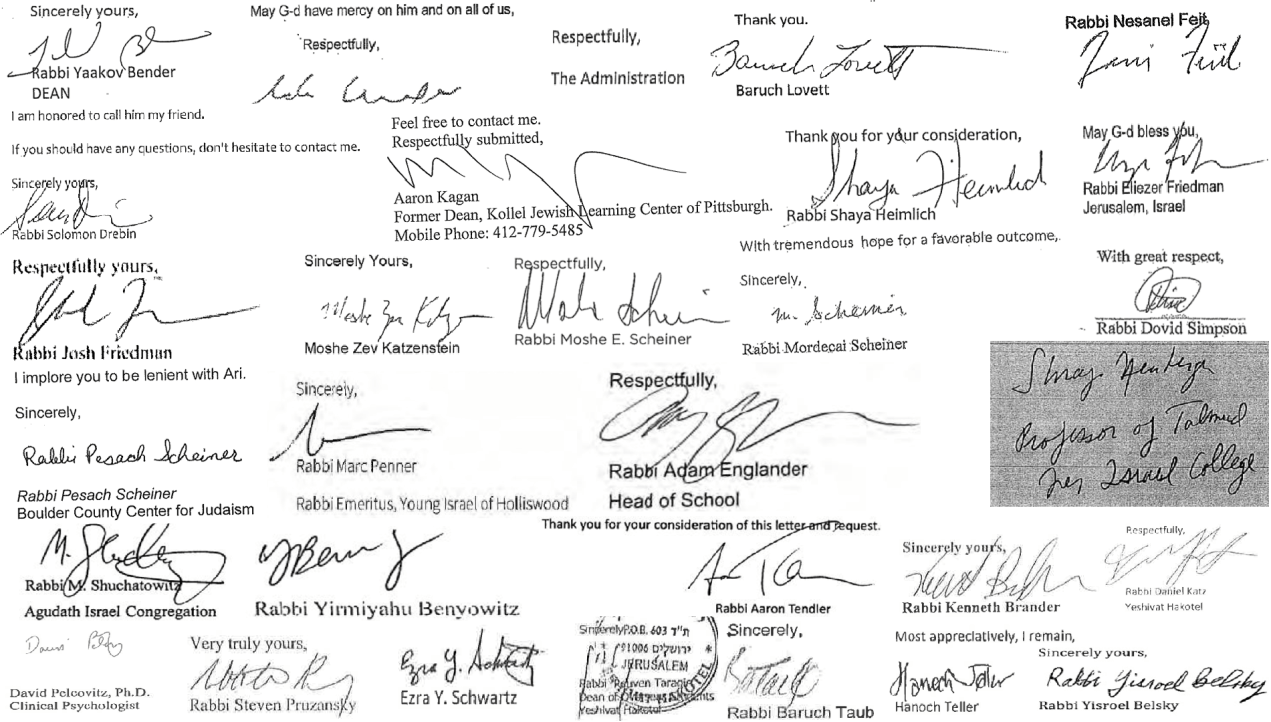
And then I started reading letters written by rabbis on behalf of convicted pedophiles, rapists, and abusers, rabbis I knew in many cases had had a personal hand in either covering up the abuse in that case or in other cases. That’s when I understood what animated the original ZA’AKAH organizers to protest the Internet Asifa: Is it possible for a community to hold two priorities at once? Sure. But a community whose priorities are so focused on minute stupidities would never be able to focus on the real problems. A community spending millions to ban the internet would never take the issue of sexual violence seriously because they were spending so much time focusing on such a stupid problem.

If the internet was to them such a big problem that it was worth spending millions, and millions of dollars, and who knows how many man-hours gathering together every Charedi community within a 100-mile radius to hear speeches about how evil it was, then they would never care about sexual abuse. They were demonstrating their priorities clearly and emphatically, telling anyone who would listen to them, that they didn’t see anything else as worthy of attention.

That’s what writing a letter on behalf of a pedophile, rapist, or sexual abuser says to the community: That you just don’t care about the issue. Is it possible to care about the wellbeing of people convicted of crimes and facing incarceration as well as the wellbeing of those who suffer sexual violence? In theory. In practice, however, when no expense is spared to help the abusers, and no resources are available to help the victims, the message to survivors is very clear: You are an inconvenience at best, a blemish at worst, and we would much prefer if you left, died, or stayed silent forever.

It’s so rare for rabbis to publicly support survivors that if such instances exist, they can be counted on one hand. It’s so common for rabbis to publicly support abusers that it’s impossible to recall all the examples.

Consistently, abusers can count on the best representation in court, whether civil or criminal, including appeals, support for their families in the rare instances they incur judgments or are sentenced to prison, rabbis telling their communities not to talk about it because it’s lashon hara to discuss abuse cases, and the presumption of innocence or teshuva, even post-conviction, even if there’s no evidence of either. Survivors, on the other hand, can expect nothing but vitriol or callous indifference.

So sure, when we have a community where rabbis truly understand the experiences of survivors, speak out publicly against abusers, write public letters of support on behalf of survivors being mistreated by their communities, publicly raise funds for the mental health, legal, and material needs of survivors, create safe communities oriented around best-practices based abuse prevention and response policies designed to keep children in the community safe and protected, when survivors can assume that they’ll be believed, protected, supported, and healed, when abusers legitimately fear punishment for their crimes – then we can talk about whether or not it’s ok for rabbis to write letters for pedophiles, rapists, and abusers. Something tells me that once we’ve accomplished all that, whichever rabbis are left will think better of it if asked.  

Standard

What You Need to Understand About Suicide

Author’s note: This post is very triggering. Please do not read it if you don’t feel you can handle it. Take care of yourself. If you are feeling suicidal, please call the National Suicide Prevention Lifeline at 1-800-273-8255. 

On the way home from a road test in New Rochelle this morning, I turned on the radio to listen to the Geraldo show. Larry Mendte was filling in, and the topic was Robin Williams’ suicide. Since I saw the story online last night I’ve been reading articles, tributes, compilations of his greatest acts and quotes, and, of course, watching his movies. I’m in middle of Dead Poet’s Society. Robin Williams was a great man who not only inspired countless people, but touched every one of our hearts with his comedy. Who hasn’t watched Mrs Doubtfire at least 10 times? He will be sorely missed by the world, and we all mourn his passing.

Except, apparently, for Larry Mendte. No, instead of opening with a tribute to Robin Williams, Mendte decided to open the show with a ten minute diatribe about how selfish, unforgivable, disgusting, and cowardly Robin Williams was in taking his life. He touched upon all the usual talking points whenever suicide finds its way into the news: It’s the easy way out; It’s the coward’s choice; It’s selfish; How could he not think of his children and wife? Mind you, this was after Mendte admitted several times that he had neither suffered from depression or suicidal ideation in his life, nor had any education on the subject. And yet, somehow, he felt qualified to give his tens of thousands of listeners his opinions.

And then he opened the show for callers. He asked his callers to please explain to him, because to him it was unfathomable, how a man could do something so terrible. First two callers up agreed with Mendte’s assessment of Williams’ suicide. “You’re right, Larry, it is selfish and wrong, and I will never forgive him for what he did to his family.” “It’s the pharmaceutical companies. They overprescribe medicine and it makes people do crazy things like this.” Finally a call came in from someone who actually suffered from depression, and I thought oh maybe just this once a talk show host will accept education when it’s offered. Nope. The caller described his experience and his history of depression and suicide pretty well, but after he hung up, all Mendte could say was that he didn’t know, couldn’t understand it, and still found Williams’ suicide unforgivable.

Meanwhile, I nearly hit a barrier on the FDR drive I was so angry. And it’s not just talk show hosts and people who are paid for their opinions. These are commonly held beliefs. People think depression can be cured by funny cat pictures or a motivational speech. They think that depression is something people pretend to have because it gets them attention. They think that suicide is something people consider lightly, that someone standing on the edge of that bridge, or with a gun in his mouth, or a fistful of pills hasn’t considered the impact their action will have on the people they love. They think it’s a selfish act. And you know what? It is. But not in the way they think.

I speak as someone who attempted suicide more than once, has suffered on and off with depression for three years of my life, and who grew up with someone who was rendered quadriplegic by a suicide attempt. Depression is not a bad day. It is not laziness, or a lack of proper motivation. It is an utterly debilitating inability to feel. Anything. It is an emptiness that cannot be filled by any amount of money or any number of people. It’s your soul taking a hiatus. And sure, a person suffering depression can smile, or laugh, but that smile is a mask, that laugh is a lie. They don’t penetrate beyond the depth of the skin and flesh required to make them. We laugh and smile because we desperately wish we could feel it, and we never show you our true sadness and emptiness because we either care about you too much to worry you, or we don’t think you’ll understand.

This is what people don’t understand about suicide when they call it a selfish act. Human beings are born selfish—there is nothing more selfish and demanding than an infant. As we grow older we learn to take care of ourselves, and to empathize with other people and their needs. We train ourselves to temper our self-interests for the benefit of the people we care about, but as human beings with needs, sometimes we need to be a little selfish. Sometimes that selfishness takes the form of alone time, and we blow off a friend because we just can’t deal with people at the moment. Sometimes it takes the form of a shopping spree we know we can’t afford just because we need to be cheered up. Sometimes it’s telling a friend that they’re toxic and that you need time away from them, or a significant other whose heart you know you need to break because the relationship has to end.

We who suffer with depression and suicidal ideation have gotten into the habit of being selfless, of stifling our needs, our feelings and emotions, for the benefit of those around us. We put on that mask every day because someone counts on us, or because we don’t want to burden you. We put others first constantly, neglecting ourselves to help others. That’s why, so often, the nicest, most thoughtful, most caring people you meet suffer from depression. We understand how it feels, and we deprive ourselves every day to make sure no one else needs to feel the way we do. And no, it’s not healthy, and we should take care of ourselves, but that is the nature of the beast. We don’t feel enough self-worth to value ourselves before others.

Suicide is the culmination of all those times we weren’t selfish, all those times we forced ourselves to smile, or to laugh, or go out, help you move, drive you to the airport, not take those sick days or vacations. It’s all those times we thought of maybe telling the world to go to hell for a few hours and doing something for ourselves, but then chose not to because of our obligations to the ones we love and their expectations. It’s the end game, where we look back on all the pain, all the suffering, all the sadness, the anger, fear, uncertainty, dread, anxiety and hopelessness, all the times that people dismissed our misery, trivialized our experiences, called us liars, abused us—it is that single moment of devastating clarity when we realize that we are human beings, and we are entitled to be selfish every now and again, and we jump, we pull the trigger, we swallow those pills because once—just once—we decide to look out for ourselves and make the pain and emptiness just go away.

In that moment, when I stepped in front of that bus, I apologized to everyone I’d be hurting, but I kept walking. I thought about all the responsibilities I’d be leaving behind, the void that would need filling in my absence, and I looked at that bus and I walked toward it. And in those few seconds as I stood there, hoping the bus wouldn’t swerve out of the way, I felt free and in control for the first time in my life. I felt like I was finally—for once—doing something just for me.

Standard

The Alchemy of Agony

Author’s note: I know people find this topic very sensitive, so I would like to open with a disclaimer. It is not my intention to compare any two tragedies, only to derive, if possible, some meaning from my and my grandfather’s experiences.

I was raised by Holocaust survivors. I was fed a steady diet of heroic stories of those who died at the hands of the Nazis. The Holocaust was always portrayed as something horrific that had been done to us out of hatred by the Nazis, sanctioned by God for some indeterminate reason, which, much like the process by which nature produces diamonds, beat, burned, and forced the best out of the Jewish people. To this day I still can’t sing ani maamin without crying, as I picture the lines of Jews walking toward their deaths, defiantly singing that haunting yet hopeful song, a song that told both the Nazis and the Jews still left in the camps, that no matter how dark the night, dawn will come. I was raised believing that this was the norm during the Holocaust, and that the Jewish people, even when cast down into the lowest and most hellish of depths, still not only overcame, but rose higher, and became greater than they had been before.

Then I grew up a little. I read Elie Weisel. It hurt me to read the way he described what Jews did to each other during the Holocaust. None of us have a right to judge anyone who lived through that period (certainly not any more than we have a right to judge anyone in whose shoes we haven’t walked), but the depravity to which so many sunk floored me. It hurt me. It shattered my image of pious men with long beards and fiery eyes marching proudly to their deaths, God in their hearts and faith on their lips. I read accounts of Jews who collaborated with Nazis, outed other Jews in hopes of saving themselves. Jews who took advantage, sexually, of other Jews. Jews who participated in the torture and beatings of other Jews. I’m crying as I write this because I’m mourning the innocent part of my soul that died when I learned these things.  My grandfather, in all the stories he told me as I lay on the couch in the dining room after our Friday night meals, never once mentioned any of this.

Or maybe he did. Maybe he did begin to scratch the surface of the darkness surrounding the real story of the Holocaust. Maybe he did begin at the time to temper my starry eyed reverence of people whose strength was indeed legendary, with stories of those who were not as fortunate. He told me about the people who managed to get as far as the fences and instead of trying to escape, flung themselves at the fences, killing themselves rather than suffer another day; about the people who committed suicide immediately following liberation because they couldn’t imagine life after what they had experienced. Perhaps the rosy image I grew up with was a manifestation of a child’s mind, reinforced by the hagiographies recounted through spruced up stories of rebbes and chassidim.

It took years until I could reconcile the two sides I know about the Holocaust. I’m still working on it. But my life thus far has provided me some insight to the power, for good and for evil, of trauma and tragedy.

There’s something transformative about pain, I’ve found. It drives us to our extremes. People like to ask themselves, as I have many times, “What would I do in that situation?” I like to think, as I’m sure most people who consider this question would, that they too would die heroically, giving their lives in defiance of a genocidal oppressor. Others are very clear in their position: They would either be one of those killed immediately, or they would defect to the other side out of sheer self-preservation. The real answer? It’s impossible to know. Tragedy takes a person, spins him around, confuses him, and then exaggerates whatever’s left when the spin cycle stops. It turns your life upside down. What you believed before no longer seems important, and what you knew no longer seems true. You’re left having to rebuild yourself from scratch.

Pain and tragedy breaks, to some extent, everyone it touches; that part is always the same. What subject to change is the aftermath, the part where you rebuild yourself. It is possible to transcend pain, transform it into something beautiful. Eric Weiner, in his book Man Seeks God, describes a man named Pieter, whom he met on his travels. Pieter’s son died a few weeks before he was set to graduate high school. He tried running from his pain, biking from Holland to Turkey, cursing the world, God, the Higher Power, what have you, as he went. As he traveled, the people he met realized his pain and took him in for the night, fed him, gave him shelter. “It was beautiful,” said Pieter. “There is pain. There is beauty. There is help.” Pieter transformed his pain into an art form and became a dervish. Weiner describes what he saw in Pieter as the “Alchemy of agony. Suffering not blunted, but transformed.” Pieter discovered a purpose to his pain, not necessarily an explanation or a reason, but a purpose: a way to transform something terrible into something beautiful.

My grandfather transformed what he experienced in the Holocaust into something beautiful. I saw it in his eyes every time he looked at his grandchildren. The proud defiance, the purpose to his pain, the ultimate good of his suffering. He saw us as not just a replacement for the lives lost in the Holocaust, but as a transcendence of what was done to him, a living testament to the possibility of hope and rebirth in even the darkest places. We have a very large family. I have close to fifty first cousins, many of whom have children of their own. So many children, in fact, that I’ve lost count.

Unfortunately, my little part of the family went to hell pretty early. I don’t have much to do with the rest of them. When I was approximately one year old, my grandfather guessed what would happen to me if I stayed with the family—with my mother—and arranged for my sale to another family. I was to be sold for $1 million to another Jewish family in the area. My mother was in a mental institution at the time, and the transaction was supposed to happen before she got out. It didn’t. She found out and stopped it. For some reason she saw fit to tell me this story as a young child, no doubt she thought it would illustrate her “love” for me. Now that I’m older, though, and can appreciate its significance, there’s something that bothers me about it. Most people wonder about what would have happened to them had they been born into a different family, or in a different era. Generally the question is purely theoretical, but in my case it was almost a reality. I wonder, sometimes, if I could go back and make sure the sale was completed, would I?

It’s a tough question. On the one hand, I may have had an easy life. The family buying me would have undoubtedly have had a lot of money, evidenced by the spare million they were apparently willing to spend on me, odds are they wouldn’t have abused me the way my family did, and I would have led a very simple religious life. On the other hand, perhaps I would not be the person I am today. Then again, perhaps I would be. Perhaps I would still be the writer I am today, with all the same insight and understanding, the same curiosity, the same combination of belief and skepticism with which I try to approach every situation. Perhaps. Then the question becomes, is it worth it? Is everything I’ve suffered worth what it may or may not have made me?

I don’t have a concrete answer yet, but even that’s progress. I’ve gone from wanting to be dead to using what I’ve learned to try and help others currently experiencing what I’ve experienced. I honestly don’t have an answer to whether or not it was worth my life to be the person I am today, but until I have the answer, I still have my pain and what it made me. I’m not sorry for what I am now, even though I may sometimes wish what I am now would never have been necessary.

Yom Hashoah is an interesting day for me because on the one hand I can’t ever imagine myself living through that kind of hell. I can’t see myself surviving it. To build a life afterward is, to me, unfathomable. And yet, it happened for so many. For many it didn’t, but for so many it did. They came here, or moved elsewhere and build homes, businesses, families, fell in love, wrote, sang, cried, laughed—they not only lived but transcended; they became everything the Nazis tried to take from them. Those who didn’t magnify the tragedy. I still have no idea why some people can transcend their experiences and some can’t. I don’t believe it has to do with mental, emotional, or physical constitution. I honestly have no idea what determines who transcends their pain and who doesn’t. I leave that up to God. What Yom Hashoah represents to me is not only a memorial of the people who died, the people who fell, and the people who suffered, but the people who rose, the people who built, the people who transcended. To me it represents hope.

Standard