Nechemya Weberman’s 103 Year Sentence Vacated, Resentenced to 18 Years

The hearing began with the judge stating that he would be granting the motion to vacate Weberman’s original sentence. Weberman had originally been sentenced to 103 years, but that sentence had been reduced by law to 50 years because of caps on incarceration. Weberman was then given an opportunity to address the court and his victim, who was present in court with her husband, her lawyer, friends, and advocates.  

Weberman read from a prepared statement saying that he was not there to revisit the past. He said that he stood ready to take full, unconditional responsibility for the harm he caused. He said that he had misused the position of authority that was given to him and had desecrated God’s name. Turning to his victim he told her that she deserved a protector, and instead he had violated her. He told her that she had done nothing to deserved what had happened to her, that she had been an innocent child.

He then said that his time served – 13 years – had paid his debt to her, and that he stood before the court as a changed man. He pleaded to his victim, saying that he wasa truly, and deeply sorry.

The ADA, Joe Alexis, then asked Weberman to be more specific about what he was apologizing for. He asked Weberman if he accepts that his victim was 12 years old, and Weberman said he didn’t remember exactly, but that she was a child. The ADA then asked Weberman what specifically he had done to his victim. Weberman said it was sexual abuse. When asked to be more specific, Weberman bristled, saying he didn’t want to get graphic. His family was sitting in the courtroom, including two of his children.

He said that he’d been in jail for 13 years and couldn’t remember the specifics well enough to graphically say what it was, but it was sexual abuse, and that he didn’t want to think about it.  The ADA asked him if he didn’t remember anything about it, and he said that he remembered what he’d said – that it was sexual abuse, but that he wouldn’t be using graphic language and it wouldn’t be true if he said it was this or that. The ADA asked him what he did remember. Weberman said “let’s call it sexual abuse.” The ADA pushed him, saying that Weberman kept saying that, but what did it specifically mean.

Weberman again, getting impatient, repeated that it was sexual abuse, inappropriate touching, inappropriate things, sexual abuse. The ADA then asked him if he had put his hands on his child victim’s breasts. Weberman said that he wouldn’t remember exactly how and where the abuse was. The ADA asked him if he was saying he didn’t remember if he did that. Weberman said that he would paint a picture of it, but not exactly say specifics, but that he knew what he did was wrong. The ADA cut him off and said he was glad Weberman was saying it was wrong, but pushed him again asking if Weberman had put his hands on his victims breasts while she was a child.

Weberman, who participated in the hearing remotely and had one lawyer with him and one in court, turned to the lawyer next to him instead of answering. His court lawyer objected saying this wasn’t an allocution, he was already convicted. The judge seemed upset at the games being plated and forcefully said that while Weberman didn’t have to say anything he can do what he wants, but that the judge had to decide where justice lay and that Weberman was making his job harder.

After a long pause, Weberman answered yes to the original question. The ADA then asked if Weberman had only said that because of what the judge said. Weberman said that it happened, he put his hands on her breasts. The ADA then asked if Weberman had put his hands on his victim’s buttocks. Weberman said he didn’t remember. The ADA, expressing credulity at that, moved on, asking Weberman if he had placed his hands on her vagina. Weberman said he didn’t really remember.

The judge, looking annoyed, said that he found it hard to believe that Weberman didn’t remember, but that they didn’t have to ask any more questions. The ADA asked to continue to make a record, and then asked if Weberman remembered putting his mouth on his victim’s breasts. Weberman said that he did. The ADA asked if Weberman had put her mouth on his penis. Weberman recoiled and denied doing that. The ADA remarked for the record that Weberman had said he never did that. Someone in the crowd audibly said “Baruch Hashem” and the court officer snapped at him to be quiet.

After a long pause Weberman admitted to putting his victim’s mouth on his penis. The ADA then asked where this had taken place, and after a short back and forth Weberman said that it had happened in his office. The ADA asked if Weberman’s victim had been his patient, and Weberman said that she wasn’t a patient because he wasn’t a rabbi, he was a rabbi and she had come to talk to him. The ADA followed up clarifying if she had come for counseling, and after another back and forth Weberman said that she had been coming for rabbinic counseling.

The ADA then asked if in addition to the crimes they’d already discussed he had also committed an additional crime in her home when he was laying in her bed with her. Weberman looked confused and disdainful, and took a long pause before asking if the question was if he had done anything in her home, and then answered yes. The ADA then pressed on, asking if he had rubbed his penis against her vagina while laying in bed. Weberman said no, and turned to his lawyer to talk briefly before asking for the question to be repeated. After a long pause he said yes.

After that tortured exchange, Weberman’s victim spoke.

She started out describing how Weberman wouldn’t flinch when he burned her. His need for control and power over a child, she said, turned him into a monster who had violated her body, her emotions, her soul, and her wellbeing as a child. That violation, she said, didn’t stop, but followed her into adulthood. The cruel psychological and sexual abuse was so severe, she said, that 10 years of therapy hadn’t erased the wounds. She said she was grateful to God for creating the life that she now finds worth living, but that she’d be lying if she said that in that life worth living she didn’t experience turmoil in such important areas of her life.

She said that she accepted that what she experienced may never go away, that the scars were too deep from the abuse she experienced while she was developing. The impact, she said, was woven into her developing soul. She then said that it was our responsibility to protect the public interest, to protect vulnerable children. She invited the judge to see the bigger picture, that this wasn’t just a case about one violated child, but about an older man who was well aware of what he was doing, and strategically placed himself in positions of power, including on the advisory board of her elementary school, taking an elitist place in the community as a member of the Malachim, and placing himself in a position of rabbinic authority in the community.

Additionally, she continued, placing himself as a counselor working without a license to work with children, teens, and vulnerable adults and couples, all arranged by himself to get access to not one but dozens of struggling children, teens, and adults. His highly regarded position, she continued, gave him authority of them, and there was no question he used his position to sadistically violate and control his victims for years.

Both throughout and after the trial, she said, she received many messages from women, girls, and men, all of whom were survivors of Weberman. Many, she said, came to the trial in quiet support, wishing to testify but barred by the statute of limitations. Other, she said, were still within the statute of limitations but were too scared to come forward because they had seen what the community had done to her, harassing her father, ostracizing her family, closing their businesses, throwing relatives out of yeshiva. They were scared they wouldn’t survive, she said.

Weberman, she said, matched the description of a God complex, behaving with a deep sense of control over others, using threats, coercing, and messing with the minds of children while sexually abusing them. His uncontained need for control, she said, led him to burn her while laughing, mocking her when she started to bleed as he penetrated her, utterly without care for the human being he was shattering.

This case, she said, was not the kind of case where a judge would be showing mercy to an innocent man suffering for a crime he’d long paid for. Weberman, she said, earned every moment of the 103 years, and even then, there was no doubt in her mind, she said, that there’s a specific place in hell for him and his supporters. Society, adults, this court’s obligation, she said, was to keep others, especially young, at-risk kids safe, and anyone turning a blind eye, or helping those dangerous to the public held deep responsibility.

The first sentencing, she said, was the first time she saw that perhaps the world was not corrupt, that maybe there was some justice and safety. Despite knowing, she said, that not everyone in the system was corrupt, it took only one judge to make a decision against the corruption and demonstrate an unwavering commitment to protecting children. She said she was well aware that God was the ultimate judge and that he has messengers. She said she was confident the honorable judge would consider this and choose to protect children above all.

In closing she shared one comment from researcher Carl Hanson who wrote an 2024 article about the likelihood of recidivism by the 5% highest risk sex offenders. They had the following features, she said: first, sexual deviance, and pedophilia. Second, antisocial traits, including engaging in a pattern of disregard for the wellbeing of victims without remorse. Third, manipulation, grooming, and controlling people to serve their power or interests through a deliberate process to build trust and gain control of people for the purpose of abusing them. Fourth, cross-age and cross-gender victimization. Weberman, she said, had all 4 risk factors, and was clearly in the highest risk category for offenders.

Many offenders, she said, have a low risk of reoffending, but the top 5% had over a 40% chance, and the top 1% had over 67% chance of reoffending. Weberman, she said, would continue to molest if released, especially due to the fact that he had and has community support, will be welcomed back, and will be trusted by the community. He may resume mentoring, she said. It would be a tragedy, she said, if someone else is back in front of the judge in 5 years describing similar abuse. Addressing the judge she said, you can prevent that.

Weberman’s video had cut out at some point toward the end of the victim’s statement, and it took a while to get him back. When he got back on, the lawyer with him said that the video had cut out in the middle of the statement. The judge asked if he wanted the rest of it read out from the court reporter. Weberman asked if it was very long and said he didn’t really care. The judge read out the portion of the statement that Weberman had missed.

Addressing the victim, the ADA said that she was remarkable in every regard, that she had survived unspeakable crimes while a child, and that her abuser was a fully grown man who had abused his position of power and authority to prey on her. He said that there were no words to describe the courage she showed during every moment of these crimes. Turning back to the judge the ADA said that they stood by the conviction, and said that candidly he had come to court with prepared remarks, but that he was going to deviate from them.

Weberman had read a prepared statement, he said, but when asked specific questions about what he’d done his memory failed, and he voiced a series of denials only to then eventually admit it. 103 years, the ADA said, was disproportionate, which was why they didn’t oppose the 440 motion. In preparing for the hearing, he said, they had reviewed sentencing for defendants convicted of similar crimes and the average time was between 15-25 years. The ADA said that he had been authorized to recommend 15 years but that he wouldn’t be doing that. Instead, he said, he would be leaving it to the court to determine an appropriate sentence between 15 and 25 years.

He followed by saying that the defense answers to questions saying he couldn’t remember was confusing to him because no one could forget something like that, and he found it troubling that Weberman had said he couldn’t remember. Especially, he continued, since Weberman’s victim could never forget them.

It should be noted that Weberman, in his brief, had been seeking a resentencing to 13 years, essentially the time he’d already served, and was hoping to be let out of jail today. The DA’s office authorizing the ADA to ask for 15 years was not much different. A sentence of 15 years, 13 and change of which had already been served, would have been immediately eligible for parole, so while they would put on a good show of pretending that they weren’t just rolling over and caving to Weberman, in fact they would be. Weberman could have been out within weeks if the sentence had been 15 years. Weberman took that away from himself by acting with contempt and sneering at the questions being asked by the DA about what he’d done to his victim.

Finally, Weberman’s court lawyer, Donna Aldea, argued against the recommendation made by the ADA. Her arguments largely centered around the sentence being disproportionate to other sentences for similar crimes committed in recent years. She referenced letters by a number of judges submitted along with the motion saying that Weberman’s sentence had been disproportionate, and brought up flaws in the arguments raised by the cases cited by the victim’s lawyer. She also fiercely contested the narrative that had been built around the additional victims who had come forward during the original trial saying that those were hearsay, and wondering out loud where they’d been for the last 10 years if there was any substance to their claims.

Weberman’s lawyer even went as far to cast doubt on the victim’s trial testimony saying that she had been unable to remember specific details about incidents while testifying and on cross examination. She then referenced the character letters submitted on behalf of Weberman, She concluded asking the judge to sentence Weberman to time served, a sentence proportional to other sentences in similar cases.

Weberman then spoke again briefly to reiterate that he took full responsibility for repeatedly sexually abusing his victim. He said he was really sorry that he didn’t answer right away, and that he’d been shocked by the questions.

Finally, the judge rendered his sentence. He started by saying that they were there to achieve justice, but that justice wouldn’t be done that day because there was no undoing the harm that had been caused. He said that he’d read in an article that there is perhaps no moment in the work of a judge more harrowing and morally demanding than sentencing, the moment at which he or she decrees the suffering of another person. Then again, he said, we can’t just look at justice as ideal because it is a weighty reality. The offender’s actions, he said, can’t be the final word. Where does justice lie?

Listening to everyone’s submissions, he said, it’s obvious to the court that the original sentence of 103, even as it was reduced to 50 years, is unduly harsh and severe even given the horrible physical and emotional betrayal. It doesn’t reflect a proportionate balance of justice, he said. Therefore, he continued, he sentenced Weberman to 18 years, plus 10 years of supervision, which he said remained a substantial and meaningful penalty that recognizes the seriousness of the offense, promotes and achieves respect for law, and is proportional.   

Standard

Mendy Kiwak Sex Abuse Trial Begins – Pretrial Motions & Jury Selection

The trial of Menachem Mendy Kiwak started on Monday morning with pretrial motions and jury selection. Three issues came up before jury selection about how the trial would proceed.

The first was a question of whether the defense would be allowed to question the victim about whatever prior relationship she may have had with Kiwak prior to the alleged sexual assault on September 15t, 2022. It should be noted that at the time it was a crime for a therapist to have a sexual relationship of any kind with a client, however Kiwak fell into a loophole in the statute that didn’t include his particular license as an LMHC. That law has since been changed, in large part as a result of this case which exposed the loophole.

Nonetheless, since at the time of the alleged offense Kiwak’s license excluded him from that law, part of his defense seems to be that if anything happened it was part of a longer running consensual relationship with the victim, although his lawyers still firmly maintain in their arguments that no sexual relationship ever existed. Regardless of the law and its loopholes, it is expressly forbidden under the code of ethics that governs Kiwak’s license for a counselor to have a sexual relationship with a client, and Kiwak could have his license suspended or revoked if he loses this trial. This may be why he is bothering with the trial rather than taking a plea.

For its part, the prosecution wanted to elicit testimony about the escalating nature of the relationship while she was a client, including the escalation of alleged impropriety against the victim culminating in the alleged assault on 9/15/22. They wanted to elicit testimony about the general power imbalance between the two of them, the control the victim felt Kiwak had over her, and the reasons why she continued going back to him, as well as context about the community, how it operates, and Kiwak’s place within it.

The judge ruled that she would allow testimony about any relationship that existed prior to the alleged assault but limited to the fact of its existence, that it increased, and the narrative of the assault, nothing else.

Then there was a discussion about whether to allow the victim’s therapist who she went to after Kiwak to testify as an outcry witness to the initial disclosure of abuse by Kiwak. Generally secondhand information is considered hearsay and not allowed to be presented as evidence at trial. Witnesses are generally supposed to have experienced or seen what they’re testifying about firsthand or have some kind of physical evidence that they’re presenting testimony about. There is a long list of exceptions, though. One of them is outcry testimony. An outcry witness is generally the first person a survivor of sexual abuse discloses to. According to the Guide to New York Evidence, “The “premise” for this evidence, as stated by the Court, is that “prompt complaint was ‘natural’ conduct on the part of an ‘outraged [complainant],’ and failure to complain therefore cast doubt on the complainant’s veracity; outcry evidence was considered necessary to rebut the adverse inference a jury would inevitably draw if not presented with proof of a timely complaint.”


The defense argued against some of the specifics of the outcry to the therapist and more broadly that the outcry wasn’t made promptly enough since it was almost a year after the alleged incident. This is not uncommon in sexual assault cases where delayed disclosure is a well-recognized feature of the case. The judge ruled that the outcry would be allowed but only about the alleged sexual assault, not about any prior relationship or contact before 9/15/22. She later ruled additionally that the same outcry witness would be allowed to testify about the victim’s outcry to her husband which identified Kiwak as the alleged assailant which was made in the presence of the therapist.


Next was a motion by the defense to allow cross-examination of the victim to include details about her mental health diagnosis. According to the victim she had originally sought help from Kiwak for postpartum related depression and anxiety. Kiwak’s lawyers argued that her later diagnosis should be fair game to impeach her credibility by arguing that what she believed happened was perhaps a delusion as a result of that diagnosis. The judge did not seem to appreciate that argument and denied that motion, limiting them to cross examining in good faith about whatever relationship may have existed prior to the assault and anything that comes up during direct examination.


The defense also requested to be able to cross-examine the victim about prior suicide attempts which they argued was necessary to give context to the nature of the treatment Kiwak was giving her, and context to text records they claim show her thanking him repeatedly for helping her. Their defense strategy seems to be impeaching her credibility based on her mental health, claiming that she got nothing but help from Kiwak, claiming that she made up a lie about Kiwak to redirect her husband’s attention and anger toward Kiwak instead of the issues they may have been having in their marriage, that whatever relationship may have existed prior to the alleged assault (which they don’t concede happened) was consensual if it occurred (which they don’t agree happened at all).


In general the judge’s approach to questions about what would or wouldn’t be allowed under cross examination seemed to be that anything obviously improper wouldn’t be allowed but everything else would have to wait until the witness testified to see what the allowable scope for cross-examination would be.


Next, jury selection started. Jury selection, for those who haven’t experienced it, is long, detailed, mostly boring, but also a fierce battleground between the two sides to try and pick jurors whose biases align with those of each side. The stated ideal is to pick jurors who are fair, open-minded, willing to set aside bias to judge impartially, and who represent a fair cross-section of the community. In reality what each side wants is actually jurors who are more likely to sympathize with them. Men accused of sexual assault are going to favor more right-leaning men, and prosecutors prefer women who are a little more left leaning in their sympathies. The goal for each side is to find a way to bounce the jurors they don’t want off without being accused of bias, and hope that when the final jury shakes out they have something to work with.


It began with some general questions from the judge about the law, whether they’d feel comfortable following it, whether they could set aside their biases, whether they believed in the presumption of innocence, and whether they understood that the defendant has a right not to testify, and similar questions in the same vein. This was followed by more detailed questioning by the judge about each juror’s background and life circumstances. Then each side got to question the jurors about whatever they wanted to ask.


The primary concerns for the prosecutor seemed to be whether jurors would be able to return a conviction on testimony alone without any physical evidence of the alleged crime (things like DNA, video surveillance, the kind of things you tend to see more on SVU), whether delayed disclosure from a survivor of sexual assault made any of the jurors suspicious of the allegations, how they generally assess witness credibility, how they differentiate between a witness being nervous while testifying and a witness being evasive and dishonest, and how they expect a victim of sexual assault to appear while testifying.


The primary concerns for the defense seemed to be whether they would hold it against Kiwak if he didn’t testify in his own defense, whether they are more inclined to believe one gender over the other in a sexual abuse case, whether they could be unbiased when presented with sexual abuse allegations, how they feel about the phrase “believe women” (that question was asked deliberately combatively to see how they’d react to being accused of not believing women in a post #MeToo era), and about whether the jurors would subconsciously shift the burden of proof to the defense by expecting them to prove why the alleged victim might be lying.


Six jurors were empaneled by the end of the day, and the two alternates were selected on Tuesday morning.


One other issue that arose on Monday that carried over until Tuesday was a last-minute amendment to the complaint requested by the prosecutors. Kiwak practiced in multiple offices in Boro Park and they requested that the judge allow them to amend which office the alleged incident happened in. The prosecutors argued that this was a small issue akin to a typo that needed changing. The defense objected saying that they had structured their defense around what was written in the complaint and that they would be prejudiced by this last-minute change.


The judge allowed it because it was a small administrative error that didn’t change the substance of the allegation.


On Tuesday, after the alternate jurors were selected, the defense raised an issue with the amended address on the complaint. They claimed that according to the case law they cited the court didn’t have the authority to change the complaint because changing the address is a substantive change. Since the criminal complaint is sworn by the alleged victim it goes to her credibility if she said it occurred at one address and it actually happened at another. The law doesn’t allow such a change to be made, they argued, without filing another charging instrument like a superseding complaint, or prosecutor’s information.

The prosecutors seemed caught off guard by this renewed argument over what they no doubt thought was a settled issue, and tried arguing that the case law cited by the defense cited to a case that said that as long as the location being amended was within the general jurisdiction of the court, in this case Kings county, it shouldn’t be an issue to amend the address since all other details, including the county in which the alleged incident occurred, were correct.


The defense pointed out that the case law referred to by the prosecution wasn’t applicable anymore because of a law that was changed which reformed the criminal procedure laws after that case had been decided. The prosecutors requested a recess so they could do a little more research on the issue.
After the break the defense asked for the case to be dismissed on the basis that the amendment was improper, that the alleged victim had sworn the complaint with an incorrect address and could have been changed during the entire pretrial period and wasn’t, and now the prosecution had essentially admitted that there’s an element of the complaint that they can’t prove because it’s wrong. Additionally, the defense argued that the jury was prejudiced at this point as well.


During jury selection, one of the questions the prospective jurors were asked was whether they had any familiarity with the address where the alleged incident happened, and were told not to go to the location to see it. After the judge granted the prosecution’s request to change the address she told the prospective jurors what the new address was to refresh the instruction she’d given.


The defense argued that since the judge had already taken a position by telling the potential jurors the defense was prejudiced by the change, and so were the jurors.


The prosecutor responded saying that the address wasn’t really relevant to any element of the alleged crime. The exact location isn’t important here. All that’s required in the complaint is the jurisdiction – in this case Kings county – and that was correct on the complaint. The defendant, they argued, had multiple offices, and which one the complaint listed was not relevant to whether or not it happened.
The defense responded pointing out that in their response they hadn’t argued that the amendment was allowed, just that the case shouldn’t be dismissed for having an incorrect address on the complaint. The prosecution didn’t dispute that point and conceded that they didn’t need to amend the complaint. Regarding the dismissal the judge ruled that an incorrect address on a complaint wasn’t enough of a reason to dismiss since the underlying information is still facially sufficient to proceed with the case.

With those matters taken care of the trial was ready to begin. Next post on the case will cover opening arguments and the alleged victim’s testimony.

Standard

Yeshiva University Doesn’t Deserve to Exist

“The second an institution matters more than the people it serves, it no longer deserves to exist.”

This was one of the first and most powerful lessons I learned when I began volunteering, and it’s a value that has struck with me and informed every step of my advocacy career. It is ZA’AKAH’s guiding principle. An institution’s job is to serve people. The institution only deserves to exist – only fulfills its own values – as long as it does that. The second it begins serving its own interests above those of the people it claims to serve, even if it believes it’s doing so in service of serving its constituents, it has violated its values and lost its right to exist.

This holds especially true if an institution’s excuse for violating its own purpose and hurting the people it serves is so that it can continue serving those it doesn’t intend to hurt. Take an institution like Yeshiva University, for example. Throughout the second half of the twentieth century its leadership was aware of a number of profligate sexual abusers like George Finkelstein, Macy Gordon, and Richard Andron, abusers who had dozens of victims, and took no action to protect students from them, bring them to justice, or help their victims heal. On the contrary, they engaged in systematic coverup so effective that all three remained respected members of the community even after finally leaving Yeshiva University.

The coverup was so effective that the rabbis involved, chief among them Norman Lamm, are still referred to with their honorifics. Lamm in particular is considered one of thee Gedolei Hador of the Modern Orthodox community despite the dozens of destroyed lives he’s responsible for enabling.

This is not new information. The Modern Orthodox community is well aware of the damage Yeshiva University and its leadership is responsible for, and yet Yeshiva University prospers. According to their most recent tax filings, they are in possession of over $1B in assets following a number of remarkably successful fundraising years. Their president, Ari Berman, was invited to deliver a benediction at the inauguration of Donald Trump, a shanda in its own right. Things have never looked better for Yeshiva University. And all the while, the dozens of children, now men, who were abused by staff at Yeshiva University, and whose abuse was covered up by its leadership, await even the barest attempt at teshuva.

When I talk to people about this they don’t express shock. They sigh and ask what choice they have. Yeshiva University is the flagship institution of Modern Orthodoxy, they say. It’s the only place we can guarantee our children won’t face antisemitism, they say. It’s where our whole family has gone to college and rabbinical school for generations, they say. What exactly is the alternative, they ask, as they send their children and money to step over the bodies of Finkelstein’s, Andron’s, and Gordon’s victims on their way to Yeshiva University.

Rabbi Norman Lamm Ztz”l was Gadol whom we have a lot to learn from, and who among us hasn’t made mistakes, they say, as the institution he led for decades while covering up the dozens and dozens of children molested at MTA threatens witnesses into not giving depositions, hire armies of increasingly expensive lawyers to engage in frivolous and costly motion practice, attempt to expose the names of the victims they’ve already hurt by sexually abusing, and engage in increasingly predatory and invasive discovery.

All the while they expect the community to continue sending their children and money to this place because where else are their children going to be educated in accordance with Torah values? Modern Orthodoxy begins and ends with Yeshiva University, and who really cares what crimes they’ve committed, how many lives they’ve destroyed, how many victims died fighting for justice – it’s made itself too big to fail and the reward for that is that they get to abuse children with impunity and force the rest of us to continue supporting this. The second Modern Orthodoxy becomes more important than the people it serves…

What’s maddening about this is that it isn’t some mystery what happened to Mordechai Twersky, Jay Goldberg, Barry Singer, David Bressler, Zachary Belil, Mark Lowell, Jeff Rockman, John Doe 1, John Doe 2, John Doe 3, John Doe 4, John Doe 5, John Doe 6, John Doe 7, John Doe 8, John Doe 9, John Doe 10, John Doe 11, John Doe 12, John Doe 13, John Doe 14, John Doe 15, John Doe 16, John Doe 17, John Doe 17, John Doe 18, John Doe 19 (deceased), John Doe 20, John Doe 21, John Doe 22, John Doe 23, John Doe 24, John Doe 25, John Doe 26, John Doe 27, John Doe 28, John Doe 29, John Doe 30, John Doe 31, John Doe 32, John Doe 33, John Doe 34, John Doe 34, John Doe 35, John Doe 36, John Doe 37, John Doe 38, John Doe 39, John Doe 40, John Doe 41, John Doe 42, John Doe 43, John Doe 44, John Doe 45, and the many others.

It isn’t a mystery. We know. They know. They know the full extent of it, too, thanks to a report they commissioned through Sullivan & Cromwell which they are currently fighting to prevent from being produced to the victims in discovery. They allowed Finkelstein, Andron, Gordon and the others to abuse dozens of children that we know of, covered it up, and felt no guilt for the lives they destroyed.

It’s not even like they learned anything from the experience and did better in the future. When a student at Stern was raped by a member of the basketball team they did what they have always done, pretended to care, did nothing, and fundraised a fortune off the basketball team.

To add insult to injury, RIETS board chair, Lance Hirt, is also the board chair at Hebrew Academy of Long Beach, which itself has been engaged for years in litigation related to an elementary school rebbi, Yossi Ungar, accused of sexually abusing a student. HALB, pretending to follow best practices in response to the lawsuit, hired their own defense attorney to carry out a sham investigation into the allegations. Naturally their own defense attorney was unable to find any indication of abuse. Following a public letter written to Camp Kaylie, who also employed Ungar, about another allegation made by a second victim, HALB announced they were conducting a second investigation, this time hiring a reputable outside firm.

While they claimed through that firm that they would commit to releasing a summary of that report, it’s been 3 years with no sign of any report, summarized or in full, being released from HALB. Perhaps Lance Hirt was elevated within Yeshiva University leadership precisely for his expertise in institutional malfeasance in handling sexual abuse cases.

Mordechai Twersky recently wrote an op-ed in which he detailed the disgusting, invasive, and predatory tactics being used by Yeshiva University against the victims suing them. They are spending millions on defending themselves against allegations we all know are true. By the time Yeshiva University is finished paying for their defense, through trial, through appeals, and by the time they’re finished paying judgments, many of their victims will have died never having received an apology, and never having seen them held accountable. They will have died while watching two generations of students come in as freshmen and graduate with masters degrees and rabbinical ordinations, all while never receiving so much as a “sorry” from the people responsible for hurting them.

The second an institution becomes more important than the people it serves, it no longer deserves to exist.  

Standard

Stop Writing Letters For Pedophiles

People often assume that I’m the founder of ZA’AKAH because since assuming its directorship in December of 2016 I’ve become such a public face for it, but the truth is that when ZA’AKAH first started I didn’t support its aims. ZA’AKAH was started by 5 Footsteps members who were use that name to organize a protest the Internet Asifah in 2012, an event planned by a wide array of Charedi community leaders for the purpose of declaring the internet banned. The event was planned for May in Citi Field, where the Mets play baseball, and was going to include many speeches by Gedoilim, many of whom would be in attendance both from the Chassidish and Litvish worlds.

The ZA’AKAH organizers felt that if the community was going to spend so many millions of dollars on something as asinine as banning the internet, they could and should devote at least some of that to helping survivors of sexual abuse access justice and resources to help them heal. The Orthodox community is notorious for denying that the community is suffering an epidemic of sexual abuse, and equally notorious for retaliating against community members who dare to report fellow community members for sexual abuse. To be clear, sexual abuse is not a uniquely Orthodox problem, but the manner in which the community goes about silencing survivors and punishing those who speak out is unparalleled in the broader Jewish community.

 It is still the stated policy of many in the Charedi community to require permission from a rabbi before reporting sexual abuse to secular authorities, and even when such permission is granted survivors still face the threat of backlash for reporting. Survivors regularly lose access to jobs, schools, marriage prospects, and community standing for speaking out publicly, and risk other severe consequences. Resources for survivors are almost nonexistent, and most survivors find that their abusers have ready access to full-throated public support from rabbis and community leaders than they do.

Against this backdrop, the ZA’AKAH organizers sought to point out the hypocrisy of the community in declaring all-out war on the internet while doing nothing about the issue of sexual violence. For my part I was skeptical about the comparison. I was still very much part of the community, Charedi in my outlook and observance, and I didn’t see why a community couldn’t hold two values simultaneously: That the internet was a pernicious spiritual threat, and that sexual violence was a scourge that must be dealt with properly. Contrasting the two made no sense to me. I commended the organizers for organizing, but urged them to do something more productive with their time. Being that I was a 20 year old pisher who knew nothing about the real world at the time, they humored me and carried on.

A month or so before the Asifa I walked out of my office in Boro Park and saw a sign on a lamppost advertising a fundraiser for Nechemya Weberman, a former unlicensed therapist in Satmar Williamsburg who had been arrested (and was since convicted) for repeatedly raping a 12 year old client of his. Incensed at this brazen and disgusting public display of support for a pedophile I called one of the ZA’AKAH founders and suggested that if they wanted to do something actually productive they should organize a protest outside the fundraiser.

Despite that call taking place the day before the fundraiser, they managed to organize a very successful protest outside which called national attention to what was happening in the case. They then continued with the Asifa protest as planned. That protest was much smaller than the Weberman protest, but it got good press coverage nonetheless, and continued ZA’AKAH’s momentum. Not believing in the logic behind the Asifa protest I didn’t attend. I now regret that decision.

As I got older and more involved in advocacy on behalf of survivors of sexual violence in the Jewish community, eventually assuming the directorship of ZA’AKAH, I began to better understand the thought behind the Asifa protest. As the years went by, I saw how some of the worst people in the community were publicly supported without question. I saw rapist after rapist, pedophile after pedophile, provided with the best lawyers money could buy while their survivors drank, drugged, binged, purged, starved, hurt, and killed themselves to make the pain go away. I spent countless hours on the phone with survivors who were losing their homes, jobs, families, communities, marriages, children, sanity, health, and futures while the people who caused their suffering were honored at dinners, defended by rabbis, and supported by fellow community members.

My heart broke over and over again as I told survivor after survivor that I couldn’t help pay for their therapy, even though I didn’t know if they’d be alive long enough for treatment to be expensive, that I couldn’t provide them with access to justice because the rabbis they grew up revering were fighting and paying to make sure that never happened. I had no answer when survivors asked me why no resources were available for them when heaven and earth moved whenever a crook or abuser in their community asked it to.

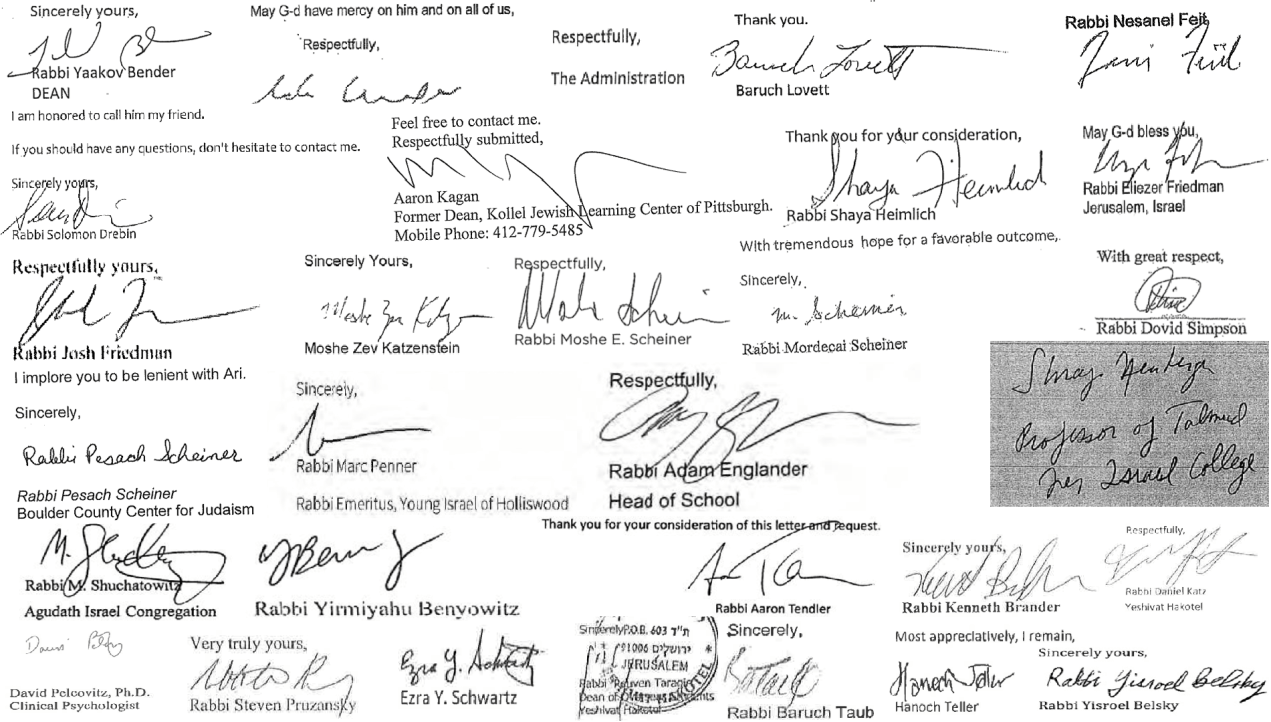
And then I started reading letters written by rabbis on behalf of convicted pedophiles, rapists, and abusers, rabbis I knew in many cases had had a personal hand in either covering up the abuse in that case or in other cases. That’s when I understood what animated the original ZA’AKAH organizers to protest the Internet Asifa: Is it possible for a community to hold two priorities at once? Sure. But a community whose priorities are so focused on minute stupidities would never be able to focus on the real problems. A community spending millions to ban the internet would never take the issue of sexual violence seriously because they were spending so much time focusing on such a stupid problem.

If the internet was to them such a big problem that it was worth spending millions, and millions of dollars, and who knows how many man-hours gathering together every Charedi community within a 100-mile radius to hear speeches about how evil it was, then they would never care about sexual abuse. They were demonstrating their priorities clearly and emphatically, telling anyone who would listen to them, that they didn’t see anything else as worthy of attention.

That’s what writing a letter on behalf of a pedophile, rapist, or sexual abuser says to the community: That you just don’t care about the issue. Is it possible to care about the wellbeing of people convicted of crimes and facing incarceration as well as the wellbeing of those who suffer sexual violence? In theory. In practice, however, when no expense is spared to help the abusers, and no resources are available to help the victims, the message to survivors is very clear: You are an inconvenience at best, a blemish at worst, and we would much prefer if you left, died, or stayed silent forever.

It’s so rare for rabbis to publicly support survivors that if such instances exist, they can be counted on one hand. It’s so common for rabbis to publicly support abusers that it’s impossible to recall all the examples.

Consistently, abusers can count on the best representation in court, whether civil or criminal, including appeals, support for their families in the rare instances they incur judgments or are sentenced to prison, rabbis telling their communities not to talk about it because it’s lashon hara to discuss abuse cases, and the presumption of innocence or teshuva, even post-conviction, even if there’s no evidence of either. Survivors, on the other hand, can expect nothing but vitriol or callous indifference.

So sure, when we have a community where rabbis truly understand the experiences of survivors, speak out publicly against abusers, write public letters of support on behalf of survivors being mistreated by their communities, publicly raise funds for the mental health, legal, and material needs of survivors, create safe communities oriented around best-practices based abuse prevention and response policies designed to keep children in the community safe and protected, when survivors can assume that they’ll be believed, protected, supported, and healed, when abusers legitimately fear punishment for their crimes – then we can talk about whether or not it’s ok for rabbis to write letters for pedophiles, rapists, and abusers. Something tells me that once we’ve accomplished all that, whichever rabbis are left will think better of it if asked.  

Standard

A Follow Up on Carlebach and The Abuse He Committed

Two years ago, following a “Carlebach Shabbos” at my former shul, I wrote an article in which I described the conflict I felt hearing Carlebach being praised for his selflessness and kindness, while simultaneously aware of allegations that he had molested women. I left the article open ended, simply giving my two sides, and left it open for my readers to responded. And boy, did they. The responses flooded in; comments, emails, Facebook messages, even some in-person responses. They came in heavy, heated, and varied. It’s been two years, and I’ve had time to reflect more on the subject, discuss it with more people, and gain some perspective on the issue. Furthermore, since then I’ve spoken to quite a number of his victims, three of whom left comments on my original post. I’d like to address a few things.

Right off the bat, people challenged me on the ethics of sharing an article alleging that someone who is dead and cannot defend himself committed abuse that has never been proven in court. Many people have claimed it’s simply lashon hara, and therefore refuse to even listen. Setting aside whether or not those same people are as careful about the laws of lashon hara when the person under discussion is not one of the spiritual idols, I’ll take it at face value.

It is lashon hara. But one of the exceptions to the prohibitions against speaking lashon hara is when there’s a to’eles, a purpose. Most notably, if there’s a general purpose in the community knowing, if it will prevent some harm, then it is permitted to speak lashon hara. The benefits of discussing Carlebach’s crimes are twofold. First, it sends a message to the community that abusers will have to pay, in one way or another for their crimes, that death is not an escape by which sexual abusers can dodge the repercussions of their crimes; that even if they can’t personally answer for their crimes in life, their legacies will in death. It’s a powerful message to send because there are so many victims out there whose stories are kept hidden by coercion and fear, because the people who keep those secrets are terrified of what their families, their communities might say or do to them if they dare come forward. The more stories are made public, the more people come forward, the more victims will feel safe and secure in coming forward and telling their stories, exposing their abusers, and pursuing justice against them.

Second, for decades Carlebach’s crimes were covered up. For decades, all his victims heard about him was constant praise bordering on deification, any criticism quashed, any attempt at bringing his crimes to light hushed and suppressed. It wasn’t just his followers either who were complicit. Perhaps they can be forgiven because they were blinded by his charisma and façade, but his right-hand men, his gabba’im were aware of the allegations, and actively suppressed the accusers. And for years all his victims heard were stories of Carlebach’s greatness, the constant praise of a man who could do no wrong, simultaneously invalidating their experiences and exalting the man who hurt them. They deserve to have their stories told, to have their experiences validated, and there are enough of them to constitute a to’eles harabim.

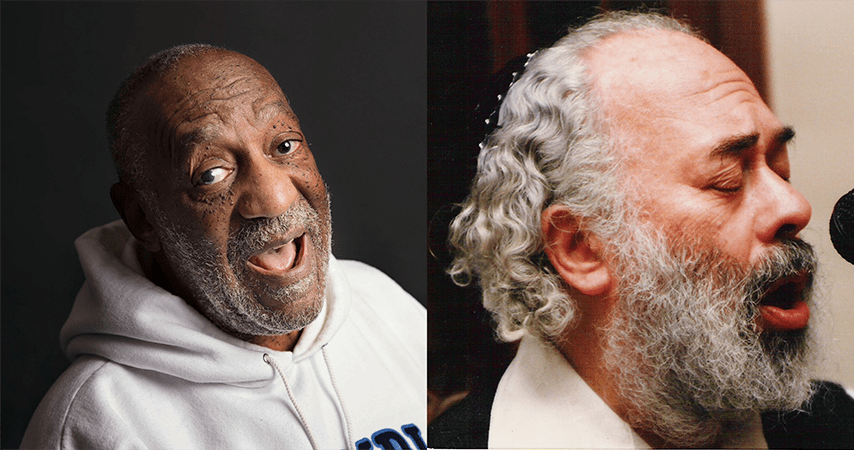
The next thing that bothered people about my article was the comparison to Bill Cosby, a man accused of drugging and raping over 50 women over the course of his life. How could I compare “Reb Shloime,” they asked, to a menuval like Bill Cosby? Carlebach doesn’t stand accused of drugging and raping anyone, just molesting them. And besides, he was a complicated man, everybody knew, nebach, he was probably lonely. It’s nothing like Cosby.

A few things. First, the article was written when the Cosby story was breaking. But more to the point, the comparison is not necessarily to the crimes committed (I’ll get to that in a bit, bear with me), but to the cultural significance of both accusations. Cosby wasn’t just some funny-man any more than Carlebach was just a singer. Both were leaders in their communities. Both had moral messages for their communities, and represented something so much bigger than just the art they each produced. Both were symbols of something greater. And both were accused of just about the most immoral thing a person can do: Violating, in such a heinous and personal fashion, the trust that people had in them and what they represented.

But more importantly, there’s a fundamental misunderstanding people about sexual assault. People assume that if the assault isn’t penetrative, that the trauma isn’t really anywhere near as severe as it would be if the assault were penetrative. Or that if the assault was penetrative, there’s a difference between penetration by a penis, a finger, or a foreign object. That somehow the violation, the trauma, is somehow lesser or more acceptable, or easier to forgive, or easier to do teshuva for simply because the law assigns penalties differently in each case. A sexual assault is a sexual assault, and it is the height of callousness to claim that just because the law needs to make gradated distinctions in penal code in order to actually have a functioning legal system, the trauma is any less severe. Whether penile or digital or with a foreign object, penetrative or non-penetrative, conscious or drugged, sexual assault is a massive violation of a person’s sovereignty over the only thing they really control: their body and their sexuality. Seeing it minimize it in the interest of making one group of people feel better that the guy they revere is not as bad as the guy another group reveres, is disgusting.

This past weekend, after sharing my article again this year in “honor” of Carlebach’s yahrtzeit, two women posted their stories as comments on the article. I’d like to share them below, because it leads me to my final point. The first is by a poster who used the name Shula.

“I was a 15 year old Bais Yaakov girl, enthralled with his music. I was in seventh heaven when he offered me a ride home from a concert. The driver and another person sat in the front, and he sat with me in the back. When he put his arm around my shoulder I was stunned but delighted; and then his hand started massaging my breast. I was 15 and completely naive, had no idea what was happening, but somehow felt embarrassed and ashamed. I just continued to sit silently without moving. This continued until I was dropped off at my house. He told me to come to his hotel room the next morning, and I did! He hugged me very tightly, and I stood frozen, not really understanding what was happening. Then the car came to pick him up, and again I went with him in the car and he dropped me off at school. And I never said a word to anyone, never! I’m a grandmother today, and can still recall that feeling in the pit of my stomach, the confusion and feeling ashamed. I never spoke about this, ever. But all of these comments of denial make me feel I have to confirm that these things happened. He was 40 years old, I was 15. He was an experienced 40 year old man and I was a very naive 15 year old Bais Yaakov girl. In those days we never talked about sex. I had never even spoken to a boy! I didn’t associate him with ‘a boy’ – he was like a parent figure, he was old. But I felt it was something to be ashamed of.

Your article is extremely important – these are conflicts that we have to deal with in life, but if no one ever brings them up, then each person, in each generation, has to over and over again re-invent the wheel of faith. The struggle for faith is hard enough; when these issues are so wrapped in secrecy (and I’m one of those that kept the secret for 53 years!).”

The second was written by a woman who went by the name Jerusalemmom:

“Dear Shula-I had an almost identical story to yours…I was a religious high school girl. 16 years old. I went to his house for a class-his wife opened the door and told me to go downstairs to wait for him. I was the first person there. As I was looking at his incredible library of Judaica he came down-hair and beard wet from the shower. Before I could blink he was on me. One hand down my blouse, another up my dress. I froze in fear. I was so lucky that other people came minutes later for the class and I was “saved.” It has taken me close to 40 years to talk about it. Why bother? People who were his followers give answers like “I can’t believe that” -or “we don’t want to know.” Or “he’s dead and can’t defend himself.”

May g-d grant you peace of mind and may you heal completely. Enjoy your grandchildren and teach them to NEVER EVER let anyone touch them without their permission.”

What’s interesting about Jerusalemmom is that this is the second time she’s shared her story on my blog. The first time she was attacked by Natan Ophir, author of the Carlebach biography, Rabbi Shlomo Carlebach: Life, Mission, and Legacy who claimed she was lying. According to him, over the course of his research for his “500 page academic biography” about Carlebach, published in 2014, he had interviewed the women in the Lillith article I quoted in my article, and none of them had stood up to rigorous examination that met his academic standards. I soon found out why.

He started out by asking me to put him in touch with Jerusalemmom. I emailed her and explained to her that Carlebach’s biographer was interested in interviewing her about the claim she’d just made in my comments section for his upcoming biography. I also explained that I got the feeling he’d be adversarial. She asked me for time to think about it, and I went to sleep, expecting to have a response in the morning. The next morning I found a bunch of comments awaiting moderation attacking the veracity of what some unidentified user on my blog had to say in an unverifiable “calumny.” Post after post awaited me in the moderation queue, all of the same kind, along with a slew of emails to my personal account to boot. When Jerusalemmom found out what he was doing, she asked me to remove her comments from my blog, and not contact her again regarding this. I apologized, and removed her comments from the article.

A few days later, the article was posted in a popular feminist Facebook group. Instantly, women started messaging me about their abuse at the hands of Carlebach, and posting comments on the page. Within the hour, Natan Ophir, who just happened to be lurking in that group despite never having participated before, popped up and started attacking anyone in the thread with anything negative to say about Carlebach. He was quickly booted out of the group, not for the comments, but for private messaging several of the women who had left comments on that thread.

In the interest of “fairness,” he sent me the chapter of the book he was writing in Hebrew about Carlebach for review. He said he had included some stories about Carlebach’s “darker side,” which, after reading that chapter, to him meant the claims that he was having contact with women other than his wife. Nothing about the allegations of abuse. When I asked him about it, he claimed he couldn’t find anyone with a sufficiently credible story, despite having spoken to dozens of women about it, one of whom actually confronted him in that Facebook thread about distortions he had made in quoting her in his book.

This all took place in December-January 2014, 20 years after his death. Which leads me to my final point. The third thing people say when these allegations come up is, “Why didn’t these women come forward when it happened? Why are they waiting until he’s dead for twenty years to come forward?” Or, “Oh, it was probably a bunch of women who slept with a celebrity, woke up the next day with buyer’s remorse, and cried sexual assault. You know how it is.” And I’d like to address those claims, because they are worryingly relevant.

The women I spoke to were terrified to come forward publicly. Despite the fact that there’s very little in their lives that they have to lose by doing so at this point. They have families, they’re grandmothers now, for the most part, and they don’t have jobs that hang in the balance if they come out and tell their stories about Carlebach. But they do have to worry about people like Natan Ophir following them around harassing them. They do have to worry about the hatred that Carlebach’s followers seem to have in endless supply for people who have a different, more troubling story about their beloved leader. At this point, many of them feel that it’s just not worth fighting that battle.

But as to why they didn’t come forward sooner? They did. Or rather, they tried. Many of them tried to confront Carlebach about what he did, but when his gabba’im found out about why they wanted to talk to him, they made sure to keep them away. When his followers found out that someone was harboring such an accusation, they made sure to shut them out, and make it plain that they were no longer welcome. The legend they’d built in their minds and their hearts was too big and too fragile to fail. And the truth is it’s not unexpected. Carlebach, to so many, represents the very essence of their Judaism. For many he’s the very reason they have any connection at all, whether spiritual, cultural, or religious, to Judaism. For many, his message of love and acceptance, of connection to God rather than strict observance of a set of laws, of following the spirit to transcend the letter. Without him that message is lost, and without that message they lose their connection.

I feel for such people. I do. And that’s how we return to the original question: Is it possible to separate the art from the artist; the message from the man. Two years ago, when I wrote the article, I didn’t know the answer. But now, to me, the answer is clear. I’ve decided to let it all go. I no longer listen to or sing his music. I don’t feel personally that it’s appropriate to listen to the music and stories of a man whose art gave him the power and status he needed to get away with abusing so many women. I can’t honestly stand at the Amud and sing L’cha Dodi to any of Carlebach’s tunes and feel anything but dirty. I can’t tell myself that God wants my prayers when they come packaged in such poisoned melodies.

I don’t know if that’s the appropriate decision for everyone to make, but that’s the decision I’ve made. But whether people decide to keep listening to and singing his music, or they decide to let it go and find other sources of inspiration, the man and the artist have to die. The legend has to die. Perhaps the message and the music can live on, but not through him. Not through someone who hurt so many people. He doesn’t deserve our praise.

Standard

Megillas Esther: A Story of Theodicy

So here are some thoughts that have been on my mind for the past week. They’re still a little disjointed, so bear with me.

The question of theodicy is one of my biggest intrigues in religion. I love reading about the subject, and trying to understand all the sides to the question, and the (non) answers we have for it. In going through NaCH, the question is addressed many times, each with similar answers. Most notable is Iyov, where the question of theodicy plays out on a grand scale, when the Satan dares God to test Iyov’s faith, and God, for some reason, takes the bait.

With each successive test of faith, Iyov refuses to renounce or curse God, and yet, in chapter three, he curses the day he was born, and expresses anger and despair at his situation. Maintaining his innocence throughout the book despite his “friends'” accusations, all Iyov wants is an explanation for why bad things happened to an innocent man. What’s particularly difficult about reading Iyov is the fact that throughout the book you know God’s reason – to win a bet – while Iyov agonises for over thirty chapters.

Even more unsatisfying is the ending, where Iyov finally does get his answer, which amounts to “shut up, I’m God, you don’t get to understand my plans.” the answer inspires both faith and distrust in God. Faith because given God’s omnipotence we can assume that in the next world if not in this one all debts are reckoned and all wrongs are righted. Distrust because God gives such a high and mighty answer (I created the world, I created great creatures to play with, I created rivers, oceans, mountains, etc) to cover up such a petty reason for torturing a person.

Parenthetically, I think it’s important to note (and I believe this often gets overlooked) Iyov is not a particularly flattering book for God, and yet it was included in the canon. Obviously God didn’t really have much of a direct say in that, but to me it speaks further to an acknowledgement on the part of our forbears that God is meant to be grappled with, questioned, confronted, that these are elements of any relationship in conflict, where one party has a claim against the other; an acknowledgement that it’s not healthy to hold it all in, but to let it all out, and ultimately resolve it. I may be taking liberty with that interpretation, but that’s what the inclusion of Iyov says to me, in addition to its message on theodicy.

But Iyov only answers one aspect of theodicy – it only serves to justify God’s position in the question. It does nothing to instruct us, the people who suffer from God’s mysterious plan, how to handle the question. Because God’s answer is unsatisfying, in Iyov. All it says is that God has a reason, and we shouldn’t question it. It implies that debts will be reckoned, and wrongs righted, but it doesn’t tell us why an omnipotent, omnipresent, and omniscient God couldn’t come up with a better plan.

And that’s where I believe Megillas Esther comes in.

A lot is said about the fact that God isn’t mentioned once in Megillas Esther. There are different explanations as to why. Either because politically it was dangerous to gloat too much, and rub a foreign God in the faces of the Persians, who didn’t just magically start loving Jews simply because the Jews killed a bunch of them. The Megillah says that a fear of the Jews fell on the people, it says nothing about love. Or because God was in a state of hester panim, hiding God’s face, because of the sin of attending Ahasuerus’ feast. But I think there’s another, perhaps stronger message there.

There are different circumstances under which miracles happen in the Torah. Sometimes it’s out of necessity. The Jews were complaining about food, so God sent them food. They complained about water, so God sent them water. They were languishing in Egypt, worshipping idols, and God came and saved them. Many of the miracles in the Torah required no action on the part of the Jewish people, with a few notable exceptions.

Most notably, at the splitting of the sea (well, at least according to midrash). Pharaoh’s army is converging upon them, as they stand with their backs to the Red Sea, asking Moshe if he took them so far into the wilderness because there weren’t enough graves in Egypt. Except this time, no miracle happened. The Egyptians kept coming, and the sea didn’t split. Until Nachson ben Aminadav walked into the water and nearly drowned himself. That’s when the sea split. God needed a stronger reason to perform that miracle than just the complaints of the Jews. God needed an active testament of faith.

But more to the point, God seemed absent in the situation until there was an active testament of faith. Very much like the story in Megillas Esther.

Esther is another quintessential story of how theodicy should be handled, not as a theological question, but practically. Esther is gathered along with all of the young women if the empire, and stuck in the king’s harem. She refuses all accouterments and cosmetics in an attempt to repulse the king. Despite that, the king, for some reason, picks her to be Queen. There are opinions that claim that the entire relationship was non-consensual. There are further opinions that Esther was already married to, Mordechai.

Further in the text, we see that Esther has fallen out of favour with Ahasuerus. This woman, Esther, whom he chose not as another concubine in his harem but as the Queen of his empire, whom he wanted so badly despite how plain she made herself, just a few years into their marriage, had not been summoned to the king in a whole month. My guess is that he got sick of her being unenthusiastic about the whole non-consensual thing, but was stuck with her as Queen. In any event, she was stuck in a pretty horrible situation, and the question of theodicy had to be on her mind.

And then the decree to annihilate the Jews reaches her from Mordechai, and Mordechai asks her to approach the king, illegally, after he hasn’t wanted to see her for thirty days. And her response, as you can imagine, was not enthusiastic. His answer, though, is the nugget here. “And who knows if this is exactly why you came to be Queen?”

I didn’t fully appreciate this question until last week, but it’s incredible, really. He’s not telling her that God’s purpose was definitely so she could be in position for this. In fact he tells her that he believes salvation will come from someplace else if she doesn’t want to take any action. But what he’s really saying is, “Esther, I know things are terrible for you. I know you don’t understand why bad things are happening to you. But what if – what if – the purpose is what you make it? What if, despite never being able to ask God why God did this to you, you hew your own purpose from this personal tragedy, and make that purpose the salvation of your people?”

And that’s when the miracle happened. Not in a blaze of Godly glory, but in an almost incontrovertibly miraculous series of coincidences catalysed by Esther’s active testament of faith in accepting that there was a plan, acknowledging that the true purpose will remain unknown, but finding her own purpose, and acting upon it, even though it might have led to her death. God saw this active testament of faith, this personal answer to theodicy, and the miracle began.

Because sometimes miracles happen, and sometimes we make miracles happen. And sometimes they’re grand and glorious and obvious, and sometimes they’re subtle and almost coincidental. But while the big obvious miracles may seem more significant, it’s actually the smaller, less obvious miracles that are the true testament to faith. The miracles that happen when we don’t just sit back, complain, and wait for God to do something miraculous, but when we proactively decide to take action, ascribe meaning and purpose to our situation, and do something about it, not certain if it will actually work, but with a belief that if we take the first step, if we act on that purpose, that we will receive some kind of quiet (or not so quiet) heavenly assistance. Because that’s the ultimate testament of faith, and that’s the real answer to theodicy (insofar as we get any answer), and Purim is the celebration of that faith.

Standard

Chanukah Brings Out the Jew in Me

I was raised religious in a very yeshivish/mildly chassidish/Hungarian type family in Boro Park. I stayed religious until around age 17, and then I stopped believing, mainly because the cultural ills of the community made me stop believing in Jews, and once I lost my faith in Jews, I lost my faith in the God that chose them. For three years I struggled with faith. I searched for answers, some meaning to life. I constantly debated the existence of God, and found myself alternating between both sides.

At age 20, I found God. Not the god to whom I’d been raised to pay lip service, but God. I came to recognise a God I could love, a God I could talk to, a God I could pray to. I also came to recognize the God I could scream at, swear at, blame for all the wrong in my life. I guess I came to recognise God the therapist, the enigmatic planner, the riddler, the parent, the king. I came to recognise a very complicated God with whom I knew I could forge a complicated relationship that would have its ups and downs, but that would always be true and honest.

But there were still Jews. The same Jews who had made me suffer. The Jews who had created the culture that had stifled my pain for the benefit of their image. I was religious. I had God, and I had a list of rules which told me how to “please” God, but I had lost a people, a national and cultural identity. I tried as hard as I could to erase my Jewish identity. I identified strongly with our history, but I felt ashamed of what we’d become, so I did my best to stamp out as much of it as I could in my life.

I grew my hair out a little, and got a more modern hairstyle. I got rid of my velvet kippah and replaced it with a smaller, more inconspicuous knit one. I worked hard to get rid of my yeshivish accent, and sound like a regular American. It gave me no small pleasure when Jews talking to me on the phone mistook me for a non-Jew, and used ‘Saturday’ instead of ‘Shabbos,’ or ‘holiday’ instead of ‘yom tov.’ It made me feel like I’d finally successfully jettisoned the part of me that was associated with the culture that drove me away from a religion I now loved.

Halacha and rationality keep me tethered to Judaism. They’ve given me a new outlook on Judaism, and a culture that appeals to me because of how contrary to the culture I’d been raised with it is. What makes me a Jew now? Not the shul I go to, or a rebbe I worship, a uniform, or a set of cultural norms to which I adhere. No, now Shabbos makes me a Jew. kashrus makes me a Jew. Tefillin makes me a Jew. Following the law, believing in God, and grappling with my faith makes me a Jew.

But there’s something missing from that kind of Judaism. There’s nothing that marks me as Jewish. Not really, anyway. My kippah is small, black, and knit. My tzitzis are tucked into my pants. There’s nothing about me that screams how proud I am to be a Jew. Except Chanukah. Because on Chanukah, following halacha necessitates a cultural statement. The requirement for pirsumei nisah necessarily makes the statement that I am proud to be a Jew.

When I open my window, and light the menorah for passersby, be they Jewish or not, to see, I am telling the world that I am proud of who and what I am. That I am proud to be part of God’s people. That as much as I complain about my fellow Jews, as much as I feel they still need to change, and as much as I hold them responsible for our social ills, I am still proud to count myself among them. Chanukah forces me to stop hiding behind nomism, behind rationality and the soapbox of my blog, and culturally express my Judaism.

Staring at the flickering candles of the menorah on my windowsill, I can’t help but feel the love, the connection to my people. I can’t help but be proud of what we can and should represent. Chanukah makes me love being a Jew and express it in a way no other holiday can. It may not be the most important holiday on our calendar, but it holds a very special place on mine.

Standard

May It Be My Worst Problem

I used to get very ordinary haircuts. I’d go to the closest barber about once every two or three months, and get a number 4 buzzcut right over the top. No frills. But then I started dating, and more than one of my girlfriends told me that they liked my hair and wished I would stop shearing it all off. And if a girl who liked spending time with me wanted more of my hair, who was I to say no. I told her I’d go to whichever salon she recommended. She picked a place, and I made a reservation for a week later. The price was a bit steep, but anything to make her happy, right?

I got there at 7 PM, and entered a room made for men. Animal skin throw rugs, rich, plush leather chairs, mounted trophy heads, a magazine rack holding everything from Car and Driver to Playboy, a beer tap, large selection of scotches, and, of course, four beautiful women doing the styling. It was a stunningly chuckleworthy caricature to masculinity. I suspect she chose it because she thought it would appeal to me. It did, but more to my sense of irony. As soon as I walked in, the receptionist greeted me, asked to take my jacket, and offered me a drink. I could get used to this.

I’m pretty introverted by nature. It may not seem like it to people who know me online, mainly because of how much I talk when they finally meet me in real life, but my close friends know that I don’t really do well with new people. It takes effort to get me to talk to you, because even if you do walk over to me and say hi, I’ll just smile and politely say hi back, and then go back to staring at a fixed point on the wall to your left, until you decide to say something else. I was still getting used to the amenities included in the $100 haircut experience, but what I wasn’t ready for, or comfortable with, was the conversation that seemed to be included.

The other men seemed to enjoy it just fine. Their stylists would play to their fancies, asking them about work, and vacations, and cars, and bars, and girls, and they’d go on and on, goaded forward by the stylists who were committed to making the haircut as enjoyable an experience as possible. And what more enjoyment can a man have, really, than having his vanities indulged by a beautiful woman. For me, it was a whole lot more uncomfortable, though. I had nothing in common with those men. I didn’t have apartments in other cities, or the pocket change necessary to fly off to wherever whenever I felt like it. More to the point, I really didn’t like talking. The conversations were like pulling teeth; she’d ask me some perfunctory questions about work, or travel, I’d give her short, clipped answers, and we’d fall into silence, until it was time to get rinsed.

After about six months of this, we finally developed some kind of rapport. The conversation was a little easier, and I felt more comfortable about it. When she asked about my life, I’d actually tell her about it. But something funny started happening. Somehow, right before my monthly haircuts, something unfortunate would happen to me, or several unfortunate somethings would happen to me, and I’d be compelled to tell her about it when she asked. One month my car was wrecked, another it was towed and I had to spend 6 hours getting it out of the tow pound, next month I’d broken up with someone I was dating, and on it would go, one long series of unfortunate events. And even though I told her these stories with a smile, laughing them off like they were insignificant, they bothered her, to the point where she (politely) asked me to stop talking about them, and changed the subject. I think the fact that I was laughing about things that to her were so plainly terrible made it even worse; how twisted does someone have to be, or how bad must things have been, to make someone laugh at things that make other people cry.

This month was going to be different, though. I was actually looking forward to my haircut so I could tell her about the wonderful time I’d had with my friends over the recent holidays. It really was fantastic. Atlanta for Rosh Hashana, Crown Heights for Yom Kippur, Boro Park, Canarsie, and Flatbush for Sukkos, including trips with friends for Chol hamoed. It was honestly the best time I’ve ever had on Yom tov. And I was so looking forward to finally having some good news for her, maybe make her smile instead of rolling her eyes. And then everything went pear shaped.

It started with the laundromat. I brought all of my clothing in on Erev Sukkos, but the computers were down. One of the workers handed me a slip of paper, told me to write down my name, phone number and address, and come back in a week for the clothing. When I came back, it was all gone. All of it. I even went behind the counter and sifted through all of the laundry myself. Hundreds of dollars’ worth of clothing, gone. Which was made even worse by the fact that because of Yom Tov, I haven’t worked a proper week this month, and barely had enough to pay my rent, let alone my credit cards. As if that weren’t enough, a student of mine crashed my car during a driving lesson last Friday, causing $1600 worth of damage to my car, and another $800 to the other guy. My car is going to be in the shop for a week, during which time I won’t be able to work.

I was able to borrow a coworker’s car for the weekend to drive myself back home, and on the way I decided to check in on the laundromat to see if they had, by some miracle, found my clothing. They hadn’t, and rather than just give me the claims form to fill out, had me stand there for a half hour while they turned the place upside-down looking for a bag that was clearly not there, all in the hope that they could avoid having another claim from their store logged with the main corporate offices. Eventually everyone gave up, and I filled out a claims form for the lost laundry. As I was walking back to the parking lot, I dropped my car keys over a drain.

As I saw them fall, I almost didn’t care anymore. Of course this would happen to me. Of course. And right then. A perfect end to a perfect week. But then they bounced. The key had hit a piece of the latticework over the drain, and bounced off onto the pavement. And as I bent to pick it up, I couldn’t control myself, and burst out laughing. Some guy across the lot thought I was crackers, but it was the most incredible thing. For five minutes I couldn’t stop, and all that was going through my head was “My God, imagine how much worse it could have been.”

It really got me thinking about everything in my life, all of the abuse, all of the pain, all of the unfortunate things I’ve been made to experience. I’ve spent the past 6 years blogging about everything that’s gone wrong, about the anger I’ve felt toward God, the constant adversity I’ve managed to overcome, but it hit me in that moment, how little time I spend being thankful and appreciative for everything that has gone right in my life, how much worse it could have been but for God’s intervention. And I couldn’t stop laughing because all of that complaining I do, whether or not it’s justified, in that moment seemed so ridiculous, because the good is right there in front of me, constantly, and all I need to do, really, is open my eyes and see it. It felt like my whole life, everything I’ve ever experienced, had to happen to set the stage for that moment when I’d see my keys fall toward that drain, and they would bounce away onto the pavement.

I’ve had a very difficult life. But I’ve also had a very blessed life. I’ve been blessed with the best friends on the planet, a community of people whom I consider my new family, incredibly charitable people who opened their hearts and pockets when I had nothing, the most amazing and supportive readers on the internet (seriously, my comments section is wonderful). I’ve been blessed with health, and a job that (usually) pays the bills. I have a landlady that most tenants would kill for, a boss who is nice to a fault, coworkers who somehow manage to put up with me, and clients who pay on time. So what if things go wrong every now and again. What’s a night at the tow pound in the larger scheme of things. Dented cars can be fixed, clothing replaced, debts deferred, and wounds healed. May they be my worst problems. I have everything I need. And hey, at least my keys didn’t fall down the drain.

Standard

Dancing in My Chair – The Rest of My Story

It was the same every Simchas Torah, which is why I kept going back to Young Israel Beth-El of Borough Park. I tried other places, but I could never get comfortable. The men and children would gather excitedly around the bimah, anticipation in their eyes, the long-awaited release of the singing and dancing as they circumambulated the bimah, Torah scrolls held reverently to their chests, or high in the air by some of the stronger folks, celebrating the yearly completion of the Torah. Ana Ad-nai hoshia na! And they’d be off.

Slowly at first. My favorite part was always the beginning, slowly chanting the first verse of the portion designated to each of the seven hakafos. All the places I went to skipped the rest. The verses are all from the latter part of Psalms 19 and recited in order at the beginning of each hakafah respectively, yet somehow nobody in the places I’d go seemed able to keep a handle on which verse was said when, and what the words actually were. I always prided myself on knowing the correct verse, and often my voice would be the only one chanting the words while the rest of the congregation took a momentary break to consult a prayer book. We’d start low, slowly chanting, building the melody, our voices rising, higher, until the climax where we’d profess loudly, and joyously, children and Torah scrolls held aloft, our belief in the absolute truth of the Torah, and in Moshe, the greatest prophet who ever lived. And then the dancing would start.

Well, I say dancing. It’s more like running in circles. It’s kind of nice, though. Everyone joins hands, or holds the shoulder of the person in front of him, forming what amounts to a large, circular conga line, typically focused, and dancing, around something important in the middle. At weddings, it’s the bride, or groom. On Simchas Torah, it’s the bimah, where the Torah is read. It gets much livelier than it sounds a few rounds in. Some people grab the person next to them and go off to the side to form their own, faster paced circles. Some people grab the person in front or to the side of them, and encourage them to sing a little louder, smile a little broader, and dance just a little harder.

That’s why I loved going to Young Israel. None of that ever happened there. No one ever grabbed me, or bumped into me. No children ever wrapped their arms around my leg, bumming a ride around the bimah. There were a grand total of three young children in a congregation of older and middle-aged men. I could dance around without holding anyone’s hand, or having anyone touch my shoulder. I don’t like when people do that, but it’s hard to tell people you don’t like being touched. They start looking at you funny, like you’re some kind of damaged leper. Sometimes they ask what happened to you, and actually expect an explanation. Most of the time I put up with it without complaining too much, because that’s what’s expected of me, and honestly I just don’t have the patience to explain to everyone in shul that I really want to be a part of the group, but only if no one touches me.

Sometimes I can handle it. Sometimes I can’t. I wasn’t in Young Israel this year, and I really couldn’t handle it. The night of Simchas Torah I managed to last for two hakafos, and then had to leave shul or risk punching the next person whose hand reached for mine. The next day, I deliberately came late. I told the friends I was staying by that I was hung over from the previous night and overslept, but the truth is, I just didn’t want to deal with hakafos. I wandered into shul around 11 o’clock and sat in a pew watching the merriment. Some people tried to get me to dance, taking pity on that guy in the corner sitting alone, but honestly I’ve become very happy watching from afar. I’m not sad, and I don’t feel alone. I’m with them in spirit. Dancing in my chair.

I’ve disliked being touched for as long as I can remember. Until just a few years ago, I couldn’t remember ever liking hugs, or feeling loved by kisses. I never felt camaraderie from an arm around my shoulder, or a pat on the back. Touch always made me feel intensely uncomfortable, as though anywhere in the world would be better than where I was in that moment. I never really knew why, or gave it much thought, I just knew I didn’t like it. And then one night a few years ago, while working on the manuscript for a memoir I’ve since scrapped, I made a terrifying connection. I was writing a paragraph about how I’ve always hated being touched, and how I’ve never had a hug I liked, and this connection I had never made before hit me like a ton of bricks. I ran over to my blackboard and wrote it all down before the realization went away. As I wrote, it jarred me, left me shaking, but I set it aside and went on with my life.

Two weeks later, I was in a chatroom for an online support group in which I was a member, and we were talking about my aversion to touch. One of my friends in the room asked me if I remember ever liking being touched by anyone, and that same connection hit me again, and this time it was there to stay. I told them everything.

I told them how I could remember hating being touched by my mother. How she used to hover over me all the time, and touch me more than I was comfortable with; how I did ask her to stop every now and again, but she never listened. I was her son and she was entitled to certain things. She hugged me whenever she wanted to, kissed me whenever she wanted to, but sometimes those kisses made me feel funny. I had no idea why, but I knew it was not ok. I told her to stop, but she always told me that a mother is entitled to kiss her child. She would kiss me in places that made me feel aroused. Never on my mouth, or anywhere that would be considered overtly inappropriate. On my ears, my earlobes, my neck, my shoulders, and different parts of my face. I knew how it made me feel, and while I didn’t understand what that feeling was at the age of 5, I knew it was wrong.

She would do this until I couldn’t handle it anymore, and that feeling I was feeling became all-consuming, and 5 year old me knew it had to be relieved. So 5 year old me would masturbate. Sometimes I would do it in private, sometimes I couldn’t go somewhere private, so I would stick my hand in my pants off to the side and do what I had to. Sometimes she would be in the same room and I would try to hide it under the covers. Apparently she saw me doing it, because she would tease me about it when I finished. One name she’d call me when she saw me was “masturbating genius.”

The incident I recall most vividly is when I was 12 and she was kissing me like that at the Shabbos table. She would not stop, no matter how much I protested, squirmed, or tried to inch away from her. My whole family was sitting at that table and she was kissing me that way, and I felt myself getting aroused, and I didn’t know what to do. She would not stop. After about a half hour, I couldn’t contain it any longer, but I also couldn’t leave in middle of the Shabbos meal, so I went to the couch behind my grandfather, masturbated in my pants, and came back to the Shabbos table. She knew. I could see she knew. She started kissing me again. She teased me about it later. This happened for ten years of my life.

When I finished telling my friends in the chat, I was shaking, crying, having a panic attack, and all I wanted to do was die. The shame was unbearable. I felt so dirty, so disgusting. What kind of sick freak masturbates when his mother kisses him. And which mother doesn’t kiss her children? Those other kids never masturbated when their mothers kissed them, what excuse did I have? Was what she did really different? Was it really wrong? I didn’t know. My friends were telling me it wasn’t my fault, but I couldn’t understand how it wasn’t. I had put my own hand, down my own pants, stimulated my own penis, until I reached orgasm. She hadn’t done that, I had done that. And no matter how many times my friends told me that it was her fault because I was a child and she knew what she was doing, it would not sink in.

My friend, who ran the online group, drove in from where she lived, picked me up, brought me to her house for the weekend, and arranged for me to see a therapist the next week. I told my therapist this story, and she also told me it wasn’t my fault, and again, I refused to believe her. “If you had a video,” she asked me, “of what she did to you, what would you think was happening? Would it look like a mother kissing a son?” I thought about it for a second or two, and told her “No. It looks like foreplay.” I had to know, though. “Did she know what she was doing? Did she know that what she was doing was making me aroused?” My therapist asked me if she had ever had sex before. I’m living proof she has. “If she’s ever had sex, which she obviously has, she knows what arousal looks like in someone else. She knew what she did, and what she did was wrong, and it was not your fault. You have nothing to be ashamed of.” No one had ever told me that before.

Even after discussing, and dissecting it with my therapist, I never spoke about it with anyone. It sort of became this festering secret that I stored in my mind’s attic, encrusted in mothballs and collecting dust, until the day I’d be forced to drag it back out and stare it in the face. I don’t know why I’m doing this now. I guess because I’m sick of being that lonely-looking guy in the corner of the shul. I’m sick of having to either go along or leave instead of asking people to respect my boundaries. I’m sick of being the freak.

This doesn’t mean I’m magically going to start liking touch. I’ve known this stuff for years, already, and it hasn’t made me any more comfortable being touched than I was when I didn’t know why. It’s a work in progress. It’s weird, though, I love being touched by the right people. I love a good hug from a close friend. I crave it, and need it, and hate going without it. But there are only a few people whom I trust enough to let touch me. I wish I could carry cards around and hand them out to people explaining my situation and asking them to respect it. Perhaps that’s too much to ask.

I don’t know if I’ll ever be ‘cured’ of my aversion to touch, and I don’t know that life would magically go back to normal if I were. But until that happens, please try to bear with me. If you see me sitting off to the side, smiling slightly, tapping my feet in time with the singing, please don’t come over and ask me to dance. I’m not lonely, and I’m not sad. I’m with you. In spirit. I’m dancing in my chair.


Standard

How Rosh Hashana Returned Me to My Culture

Author’s note: This started as a post I started writing in the Project Makom Facebook group, but I felt it deserved to be shared with a wider audience. I am deeply grateful to all of the organizers of this shabbaton, and to all of the people who make Project Makom possible. 

So a bit of thanks and a bit of confession. Firstly, thank you so much to Mindy, Yoel, and Shlomo. Rosh Hashana was incredible, and by far the most meaningful I’ve ever experienced. Thank you so much to everyone who came; it was great meeting all of you. Thank you for putting up with me, even if (and especially when) I was shouting my opinions at everyone.

Now for confession. I’ve always had a big problem with the cultural aspects of Jewish life. I love the ideology, and I’ve come to love God, and through loving God I’ve come to relate to the Torah and halacha, but the cultural aspects of Jewish observance have always made me feel somewhere between uncomfortable and repulsed. For example, zemiros on shabbos or yom tov make me want to be anywhere else but the table at which I’m sitting. Singing in shul makes me wish I hadn’t gone. Making a yehi ratzon on the symbolic Rosh Hashana foods make me feel stupid. It’s not because I’m some hyper-rationalist who thinks that religious practices based more on emotion and spirituality are less valid than logical legalism.

From age 11 onward, cultural religious expression in my family meant that life was about to get very dangerous, or at the very least very bizarre. Before age 11, when my grandfather was still alive, cultural religious expression was beautiful. Kiddush was soulful, zemiros were emotional, prayer in the home was inspirational. After he died, everything changed. He was no longer the family’s cultural spiritual leader, so to speak. That fell to my grandmother. She tried for a year or so, but we missed my grandfather, and as hard as she tried, she could never step into his shoes. Eventually she gave up. The zemiros stopped. The prayer stopped. Kiddush was mumbled. Shabbos meals were a family obligation rather than a blessed opportunity to bond. Religion became entirely ideological in practice; we lost the cultural, spiritual, hard to quantify but oh so real aspects of our family religious observance.

Which was fine. I had nothing against cultural religious expression, it just wasn’t something we did anymore at home.

But it wasn’t so simple. My mother had bipolar disorder, and mental illness has a funny way of manifesting in religious observance. When my mother was irreligious, it meant she was stable. Hearing the TV on shabbos, while heartbreaking and disgusting to a child raised to believe that religious Judaism is the only valid way to live life, meant that she was on her meds. It was when she was being frum that things got scary.

See, when she was stable, she knew that God didn’t care about her. She knew that God didn’t matter, and that being religious is for superstitious idiots or people graced with such privilege they’ve never had to wonder why God can be such a bastard while claiming to be benevolent. But when she was off her meds, she was just crazy enough to think God actually cared, to think that if she put on enough of a show, God might actually give her what she wanted. But things had to be just so, because God doesn’t stop being a tyrant just because you start listening. Everything had to be perfect for God to be impressed enough to give her what she wanted.

So if she was lighting candles, I had to stand there in silent contemplation. If she was singing zemiros, I had to either join or sit silently. If she was praying, I had to listen intently. If she was covering her hair, I had to dress as though I was standing before the King of Kings. Because the show had to be perfect if God was to be entertained enough to bestow God’s beneficence. And God help me if the show wasn’t perfect.

I came to hate all of it. Even after I stopped hating God. I still hated all of those little acts I’d been forced to put on. Even after I started loving God again, I was never able to bring myself to express that love the way everyone else finds so natural, but to me feels dangerous. I stopped singing in shul. I sat silently at the shabbos tables of my friends. I made excuses why I wasn’t singing when people pressed me to participate. I’d hurry through public expressions of religion as though I was ashamed of it, when really I was never ashamed of it, but terrified of it.

Somehow, though, that was different this Rosh Hashana. I don’t know what it was, but I felt safe, comfortable, and accepted enough, to dip my toe in the water again, and join in not only the legal, halachic observances of Judaism, but the cultural and spiritual observances and expressions of Judaism as well. And it was ok. It was scary as all hell, but it was ok. Nothing happened. It felt ok. Like I was finding something I’d lost and come to fear. And I know it’s weird, and a little off putting to attach this kind of serious significance to something as casual and lighthearted as a friendly roadtrip to Atlanta for Rosh Hashana, but in a sense this marks a milestone in my life, where I can say that a part of my religion has finally been unlocked for me – a part I’ve really missed.

And now we’re back to thanks. Thank you all for being a part of that, even if you didn’t know it was happening. Thank you all for being the ones who were there to share this experience with me, even if I was the only one to experience it. You’re all very special people and, I don’t think it would be an exaggeration to thank you for being a part of changing my life.

Standard