The Trial of Steven Shmuel Krawatsky: Day Two Part 1

The second day of the Krawatsky trial began with the second alleged victim being called to the stand by Jon Little. He was accompanied by his service dog, Maisie. The second alleged victim is currently 15 years old.

He began by saying that he went to Shoresh and did not have a good time. He didn’t remember how his initial contact with Krawatsky came about, but remembers Krawatsky being there as a counselor and identified him in the courtroom. He said he was at Shoresh for 2014 and 2015 and wasn’t excited to return the second year but doesn’t remember why.

After summer of 2014 he says he remembers having outbursts and starting to wet the bed again. He said he went back in 2015 and describes an incident where he was in a bathroom stall urinating and Krawatsky walked in wearing swim trunks, pulled them down exposing his penis, and then offered the second alleged victim $100 to touch his penis. He said he remembered no other incidents with Krawatsky.

He said he remembered seeing his then-therapist but doesn’t remember if he saw him before Shoresh. He said he knew the first alleged victim’s mother by name but not personally, and that he knows the first alleged victim but hasn’t seen him in a very long time. He said he remembers one session with his therapist and the first alleged victim, but doesn’t remember discussing what happened at camp with the first alleged victim, his therapist, or the first alleged victim’s mother, and also doesn’t recall talking to CPS about the case.

He did, however, say he remembered being given gifts by Krawatsky. Little then produced a ceramic plate and showed it to him. He recognized the exhibit as having been given to him by Krawatsky after a ceramics class at camp where he didn’t like the dish he’d made, and Krawatsky gave him a a plate instead. The plate said “Rabbi K” on it, and the second alleged victim said he didn’t write that there himself.

Benjamin Kurtz then rose to cross-examine him. His demeanor, as always, was combative.

Kurtz started by asking him if he was alone by the pool area where the alleged abuse happened. He said yes. Kurtz asked him if the first alleged victim was there, and he said he didn’t remember. Kurtz then started badgering him about what happened to him, asking if he remembered his prior depositions, if he remembers the first alleged victim being there with him, if he ever saw him being violated. He said he remembered the depositions but didn’t remember any details about the first alleged victim.

Kurtz then asked him if he remembered being raped repeatedly (which is not what he testified to on direct examination), and he said he didn’t remember being raped, repeatedly or otherwise.

Kurtz then moved in to ask him about the statement he made about Krawatsky pulling his pants down in the locker room, asking him if that testimony was the first time he mentioned that fact. He said that he didn’t think so. When Kurtz asked him when else he said it, he said he thought in one of the previous depositions.

Kurtz then showed him a deposition to refresh his recollection. After reading it Kurtz asked him if he now remembered saying that, and he said that yes, he just remembered having said it. Kurtz asked him if he had just remembered that day for the first time that Krawatsky was naked, to which Little objected and was sustained.

Kurtz then asked if it true he denied being touched from 2015-2016. That was objected to as well and the objection was sustained. Kurtz then asked if he recalled his parents and CPS talking to him in 2015, and if he remembered how he made his disclosure. He said he didn’t remember. Kurtz then asked about how often he talks about the allegations with other people, and he answered that he only talked about it in depositions, and maybe once with his therapist.

After cross examination, Little redirected to ask him to look at the deposition and see if he was ever asked about Krawatsky being naked. He answered no.

Little then called the father of the second alleged victim. The father is a well educated, well-spoken, affable person. He described choosing Shoresh because they knew some people who sent their kids there, and from the promos they saw it looked like a good place. Asked about why he sent his kids to an Orthodox camp when he and his family aren’t, he said that he liked what he saw with Shoresh and didn’t mind his kids seeing the other side.

He talked a little about the Orthodox community in general, saying that they tend to consult with rabbis more about both personal and legal matters, and feel it’s more important to prioritize Jewish law over secular law. He was asked if Orthodox Jews would consult with a rabbi before going to authorities, but that was objected to and the objection was sustained.

Talking about his son’s behavioral issues he said that his son had had some behavioral issues before Shoresh, and he suspected his son had ADHD because his other child did too, and sometimes he didn’t want to do assignments, but that everything got much worse after Shoresh, more explosive, in a way it never was prior. He discussed a specific instance in 2015 when they were discussing which camps the kids would go to and he told his son he’d be going back to Shoresh, a few days later the school called him to tell him his son was having an episode, being rude to teachers, and disruptive, which is when he noticed the shift in behavior.

He said his son didn’t say what was going on, but they put him in therapy, and he started ADHD meds. For the first three weeks his son was back in Shoresh, he said, his wife was working in the camp at the time so perhaps there were small issues he wasn’t made aware of because she could resolve them, but he wasn’t made aware of any issues. Then after 3 weeks, he said, they started noticing bedwetting, soiling the pants during the day, avoiding public spaces, and refusing to walk into any locker rooms even at other pools at friends’ houses.

He said his son attended the second month of Shoresh but was expelled two weeks in after being carried over to his mother by a staff member (Krawatsky) following a fight with another camper. He described Rabbi Dave Finkelstein calling after the expulsion to express concern and offer help, which he said he appreciated at first.

After session ended, right before CPS called him, Rabbi Dave called him again on his cell. CPS then called the next day to schedule a meeting to talk with him and is son. He said he scheduled the meeting for the following week after a planned trip with the family. On that trip he said that his son refused to go into any of the public bathrooms when the stopped and that he’d rather soil himself than use one. He said his son used the bathroom at the hotel, and wet the bed a bit, but absolutely refused to use any public bathrooms.

After returning, he said, they met with CPS in their home where they asked his son if Krawatsky had offered him money to touch his penis. The father said they weren’t prepared for such questions because he’d been given the impression by Rabbi Dave during the second call the night before CPS called that they’d be calling about an incident of physical violence with another child. He said that was the first time they heard about anything sexual happening.

After the meeting with CPS, he said, Rabbi Dave tried calling multiple times, as well as his son’s counselor calling several times. They didn’t pick up either of them. During his second cal with Rabbi Dave he’d gotten the impression that there was an issue with another kid, but he only figured out which kid after the father of the first alleged victim reached out to him on LinkedIn, trying to connect. The two were in the same industry so they had a lot of professional overlap.

The two spoke a few times by phone and finally met at the first CPS hearing where his son was still saying nothing happened. Following that hearing the two decided that they should have both their kids, who seemed to have been affected at camp, do something together. They proposed the idea to the second alleged victim’s therapist, and the therapist reached out to CPS and police to help decide if and how to make it happen.

They finally decided on the first supervised playdate at the therapist’s office to be held on November 22, 2015. The two kids were in the room with the therapist observing them. The first alleged victim’s mother was not present. He said they learned nothing from that first playdate so they arranged a second for a week or so later. The same people were present, he said, the session was recorded, and in that session the therapist asked him to go in and sit inside during the session. He said the therapist told him that he’d picked up on two things that indicate abuse happened.

He said the conversation between him and the therapist following the playdate was recorded, and following that conversation the therapist explained what happened to the father of the first alleged victim. The mother of the first alleged victim, who was at the office but not inside the playdate, asked if she could talk to the second alleged victim to try and get him to open up. He said that at first the therapist didn’t like that idea since he didn’t see the value, but she insisted, and the father of the second alleged victim agreed to let her talk to him just in case it helped.

He said he watched her talking to his son. He said she was intense, but not yelling, perhaps raised her voice, but he didn’t feel his son was afraid, intimidated, or scared of her. He said they spoke for less than 5 minutes. He said the discussion was not recorded.

After that he said he spoke with the first alleged victims’ mother a couple of times in person at their house, at dinner, and two CPS hearings, and on the phone about 10-15 times. He said he spoke to the first alleged victim’s father a little more, mainly by phone but also at industry conferences they both attended, mostly not about the abuse though.

He was asked to give his thoughts on Lashon Hara and explained it means evil speaking, saying bad things about someone that aren’t correct, and defaming him.

Asked why he wanted the initial CPS meeting with his son at their house and not at a Child Advocacy Center (CAC) he said that they offered both options and his son had an appointment with his doctor that morning so home was easier.

He was then cross examined by Benjamin Kurtz.

Kurtz began by asking him about his wife’s employment at Shoresh. The father said his wife worked there the whole time his kids were at Shoresh. He said his son had attended Shoresh in 2013 as well but that there had been no outbursts prior to 2014.

Then Kurtz started doing his Kurtz thing again of being combative with parents of alleged victims. Kurtz asked him about an incident involving his son flipping a piece of furniture over in school, which led to the classroom being cleared. He said he didn’t remember the particulars. Kurtz then asked him if his son was expelled for violence, and he said he didn’t know the exact reason.

Kurtz asked him how he didn’t know if his wife worked there, and he said he knows it was something between his son and another kid, that he hit him or fought or something. Kurtz sarcastically asked him about the incident he didn’t remember if his kid flipped a desk and if it happened in March 2014. He said no. Kurtz then asked him what did happen in March of 2014, and he said that he got a call from his son’s teacher saying his son was refusing to do assignments and being rude to the teacher.

Kurtz asked him to confirm that this was before he had any incidents with Rabbi K, and he said yes. Kurtz asked him if that incident at school necessitated him coming to get his son during the day, and he said no, he just had to come see the teacher after school, that the room wasn’t cleared and his son wasn’t kicked out.

He said that in 2015, after camp, is when the incident happened at school that necessitated the room being cleared.

Kurtz then started asking him why he didn’t know why his son was kicked out of camp, asking if any of his other kids had ever been kicked out of camp and whether it was disturbing to find out his son had been. He said that none of his kids had been kicked out before and that is was disturbing to find that out. Kurtz then asked why he didn’t ask why his kid was kicked out of camp, and he said he probably did, he just doesn’t remember now, but he remembers it being related to fighting with a kid.

Kurtz then asked him about the first CPS meeting with his kid, slipping in a snide remark about the father feeling free to wait a week to take his family on vacation before scheduling it, asking how many times they asked about the abuse. He said 4 or 5. Kurtz asked if his son denied it, and he said that his son had said he didn’t remember anything.

Moving on to the video of the playdate at the therapist’s office, Kurtz asked him if his son was led by the first alleged victim to say anything. That was objected to and sustained. Kurtz then tried to get him to say his son had denied the allegations in that room, and he insisted that he never said that, and that his son had just said he didn’t remember.

Kurtz then asked him essentially if at that point, after talking to CPS, police, and the first alleged victim’s parents, he decided to just make a disclosure happen because his son wasn’t saying anything. That annoyed the father and he said that he wouldn’t say that, the therapist was also trying to figure out why his son’s behavior had changed.

Kurtz asked him if the therapist orchestrated the meeting, and he said that it may have come about because the parents of the first alleged victim suggested it, but that the therapist is the one who made it happen.

Kurtz then started asking him about the involvement of CPS and police in organizing the playdates, showing him emails and asking him if he saw CPS or police people’s email addresses on them. When the father said no, Kurtz asked him if he himself had ever communicated with them about the playdate. He said no, and said that as far as he knew the therapist handled all that for him.

Kurtz then asked him about the CPS hearing to change the findings of CPS about Krawatsky’s alleged abuses. Kurtz, whether mistakenly or on purpose, misrepresented the playdates with the therapist as having happened after the settlement was reached with CPS to downgrade the findings. In actuality the playdates had happened a couple of months before those hearings.

Kurtz asked him if after that hearing and the decision he decided to work with the first alleged victim’s parents to convince his son to make an allegation.

That was immediately objected to and the objection was sustained.

Kurtz then asked him if the first playdate was recorded. The father initially said yes, but then clarified that it hadn’t. He said that the second meeting was recorded. Kurtz then asked him to confirm that there wasn’t a disclosure made at the second meeting, and he said that wasn’t true. Kurtz asked if there was a disclosure on tape why did the mother of the first alleged victim have to talk to his son. At that point there was an objection and it was sustained.

Kurtz then set up the narrative for his next question, saying that the father had initially not wanted to let the first alleged victim’s mother talk to his kid, but eventually allowed it anyway, that the father had his son in his lap when she came in, that she was very intense, getting loud with his kid, and loudly asking him to tell the truth, to say it happened, and things like that.

The father contradicted that narrative (that she had shouted and demanded specific things of his son) and said that she had just asked his son to tell his father what happened and that talking would make him feel better.

Kurtz then asked him if it was true that she said “Isn’t it true that he offered you money to touch his privates?” He said he didn’t remember her saying that (meaning that’s not what he believes she said).

Kurtz then asked him if his son was diagnosed with a seizure disorder in 2015. He said that his son had had a seizure but wasn’t diagnosed with a seizure disorder. Kurtz asked him why his son had been out on powerful seizure meds he’d had a strong allergic reaction to that almost killed him if he didn’t have a seizure disorder. He said it was preventative.

Next the second alleged victim’s mother was called by Ian Richardson. She said she first met K at Shoresh where she first worked as a counselor and then assistant director of Junior Shoresh, and that her relationship with him was just coworkers, not friends per se, but no reason to dislike him.

Her son, she said, the second alleged victim, attended Shoresh from 2014 – 2015, when she worked there. She said that in 2015 he was in the Shoresh lower boys division, which was 6-7 year olds to 10 year olds. That was the summer, she said, that he was expelled from camp because, as she understood it, he was hitting a kid or two. She said she was told about that toward the end of one day by Krawatsky who carried her son over to her, holding him over his shoulder.

She said her son was crying and kicking and not happy when Krawatsky brought him. She said she tried consoling her son, and doesn’t remember her conversation with Krawatsky at that time because she was more concerned with consoling her son.

After camp 2015, she said, she and her husband started noticing behavioral changes in their son. He was bedwetting every day, she said, didn’t want to do things they’d done before, and refused to go into locker rooms.

She said the last time she remembered her son bedwetting was when he was potty trained around 3 years old, and maybe the occasional accident, but it really started again more frequently, eventually stopping a few years later.

She also said that he would occasionally find himself in locker rooms during summer, when they visited a pool, or did sports, and he’d refuse to go in. To this day, she said, he has an issue entering locker rooms.

She said her son eventually disclosed that Krawatsky offered him $100 to touch his penis. She said that the disclosure came during their nighttime routine after he had a bath, got into bed, and they were doing storytime. She said he started talking about camp, and that’s when he disclosed.

She said she made a recording at the time (this is the recording that was played during Krawatsky’s side’s opening statement). This was the first time they were hearing such a disclosure from him, but they had heard about the allegations previously from CPS so it wasn’t a surprise necessarily, but they didn’t know it had happened to him specifically.

She said she recorded it because she wanted to make sure she didn’t miss anything, or for her husband to miss it, and she just wanted to get the truth. She said she wasn’t coaching him, and wasn’t trying to record so she could hand it to CPS or the police, she just wanted to ask him some questions and record it. She had not been trained in forensic interviewing, she said, she was just trying to understand what happened. She said she had no agenda, and wasn’t trying to make him disclose. In fact, she pointed out, at one point he corrected her about something she said.

Moving on to discuss Krawatsky, she said that she had received a video from him of her son at the Shoresh shabbaton. This, she said, was while she was employed at Shoresh, and as she understood it at the time employees weren’t supposed to use their personal phones during camp.

Direct examination ended with her talking about the pool and locker room and explaining that the divisions were sex segregated so the locker room was divided between boys and girls, and when either was swimming the other side would be empty.

Chris Rolle then cross examined her.

He asked her about the nature of her relationship with Krawatsky during her time working at Shoresh, and she said that they were just colleagues not friends. She said she had no concerns about him at the time and assumed he had gone through the screening to be employed there so that he was fit to work there.

He then asked her about the day he carried her son on his shoulder to bring him to her and whether she understood that her child was having difficulties over the summer. She said that it wasn’t the entire summer, just that one time he brought her son to her.

He then asked her if there was an allegation against her son that at camp he’d threatened to touch another kid’s rectum, and she said she didn’t remember that. He asked her about her role as head of the bus stop and she stated her responsibilities – checking every kid got on the bus – after which he asked her if she recalled her son ever having a negative interaction with kids at the bus stop. She said she didn’t remember.

He then asked her about what kind of contact junior Shoresh campers would have had with Krawatsky and she explained that while the lower part of junior Shoresh would have minimal contact, the final year of junior Shoresh was designed to help acclimate the kids to how lower division worked so they spent a lot of time together, thus exposing them to more of Krawatsky.

He asked her about behavioral changes she noticed in her son and when, and she said that she noticed changes starting to happen after summer 2014, and she believes that something happened with Krawatsky that year. She described seeing behavioral issues in his school where she also worked. She emphasized though that she wasn’t made aware of the issues because she was a worker there, but because she was a parent and that it was standard protocol to tell the parents when kids started acting up.

She said she remembered an incident in spring of 2015 where her son caused such a disturbance that the kindergarten had to be emptied.

He then asked her about her son’s seizures and whether he was diagnosed with a seizure disorder shortly after the incident in Kindergarten. She explained that, no, he didn’t have a seizure disorder, rather he’d had one febrile seizure when he was 2 years old, and they had been following with periodic MRIs to see if there were any changes. She said the doctor said there might have been something because he was noticing that her son seemed to be zoning out a little, and as a preventative measure to make sure he didn’t get seizures he gave her son medicine to alleviate it.

She said that this happened in 2015 but that she didn’t remember if it was before or after the playdates at the therapist’s office. Asked about the reaction her son had she said that he had a severe allergic reaction to the medicine, but rather than agreeing that he almost died she said that it was severe and that he was in the hospital for a while.

He then asked her about whether she knew if as a head counselor Krawatsky could ask permission to use his personal phone, and she said she didn’t know. He asked if she didn’t know if he had gotten permission and she said that you’d have to ask him. He asked her if she cared at the time that he was using his phone and she said she didn’t because as a parent she’d asked for updates and that it was pretty common.

Regarding the playdates with the therapist, he asked her if she was involved in setting them up. She said that her husband led on that but that she knew about them. He asked her if she knew that until the playdates her son had denied anything happened, and she said that he had just not disclosed. He asked her to confirm that he hadn’t disclosed several times to CPS, to the therapist, to her, and she said yes.

He asked her if she knew why the mother of the first alleged victim had reached out to her, and she said she didn’t know specifics, but she knew she had texted and wanted to talk about the case and the boys in general. He showed her a document of text records between her and the mother if the first alleged victim and asked again why the mother of the first alleged victim had reached out. She answered that according to what he’d shown her she wanted to talk about her son because their two sons were friends.

She said that the mother of the first alleged victim introduced herself as his mother and said that the social worker (CPS) suggested she reach out and that she was sure the mother of the second victim was as concerned as she was. He asked if she knew what that meant. She answered saying that her husband testified that they didn’t know why CPS was coming to them, and that text with the mother of the first victim happened before CPS contacted them.

He asked her about several further attempts by the mother of the first victim to contact her, mentioning in various texts that she was deeply troubled by what had happened with their sons, or that she heard they were having trouble with the Shoresh rabbis, or that they were the only ones who could understand what she was going through. She said she didn’t respond to any of these texts from the mother of the first alleged victim, but she did agree to have their two sons meet.

She said she didn’t attend the meetings and that her husband did, and that the purpose of the playdates was to get her son to say what had happened. She acknowledged that the mother of the first alleged victim spoke to her son at the second meeting and that before then her son had denied any abuse. He asked her if after the mother of the first alleged victim spoke to her son is when her own son finally disclosed, and she responded to contradict his implication that the disclosure was immediate, instead saying that it was 2 or 3 weeks later.

He then set out a timeline to set up a question: The playdate happened on December 3rd 2015, a while later on the 23rd there was a meeting with her son, the CPS social worker, detective Davies, and that she gave the recording she made of her son’s disclosure to CPS and Davies, and asked her if the reason she gave the recording to them was to get them to come back and do an additional interview with her son. She said she didn’t know.

He asked her if she knew that the second meeting with CPS at the therapist’s office happened, and she said she didn’t know the details, she wasn’t there.

He then set the stage for the jury regarding her son’s disclosure: He gets out of the bathtub doing his nightly routine, and then asks her if her family was at the time living at a hotel because of a severe fire that had required them to evacuate their house. She said that they could have stayed home if they needed to, the structure was still fine, but they decided to go to a hotel. He asked her if they were there during the fire and had to leave the house, and she replied that yes, that’s what people do in a fire, they evacuate the house.

He asks her about the general hullabaloo of it all, that there’s a fire, and fire trucks coming, and they’re evacuating, and it’s a big deal, and she acknowledges that. She says the fire happened Monday before Thanksgiving.

He states that they’re in the hotel in December in two adjoining rooms, and they’re in one of the rooms with their son, and he asks her what he started to say. She said that he started talking about camp – she assumes when she was in bed doing his bedtime routine – and that’s when she reached for her phone. She said she didn’t remember his exact words but when he started talking about camp she started discreetly recording without him noticing so he shouldn’t stop talking.

He starts playing the audio of that recording, the same audio that was played in their opening statement. First snippet he played was about her asking her son if he could tell her the person who hurt her, and if he had hurt anyone else. He asked her why that was her follow up question and she said that she had no training in how to handle a disclosure, she’s just a mom trying to see what happened with her son, and that’s why she asked what she asked throughout the recording.

Next snippet was her asking if her son knew the first alleged victim and he asked if that was her trying to tie that kid in with her own son’s experiences. She said no.

Next snippet is the allegation her son made then that Krawatsky had offered him $100 to touch his penis, and that Krawatsky had hurt him and said mean things. On one detail of it her son corrected her. She then asked if Krawatsky had hurt the first alleged victim as well, and Rolle asked her if she was trying to get her son to corroborate what the first alleged victim had said, and she said no. He challenged her saying that she at that point had known the first alleged victim’s allegations, and she said that this had all been very emotional for her and that her husband had been handling most of it.

Next snippet was regarding her son saying that he had been left alone on his own at some point on the Shoresh Shabbaton. He asked her why she was asking her son about that, and she said that kids shouldn’t be left unattended in camp. He asked if she’d ever heard him say he’d been alone at some point over the shabbaton before this point, and she said no.

Next snippet is her son saying that Krawatsky was rude and mean to other kids and that he knows because people told him. He asked her, referring back to her son being expelled from camp, if by the time this recording was made her son blamed Krawatsky for his expulsion. She said that at the time that was true.

Next snippet was her asking if her son and Krawatsky were ever alone and he said no. Then there were questions played regarding the sleepover at camp. He asked her if she was asking those questions because she thought Krawatsky had abused her son during the sleepover at camp. She said that she was just asking questions with no specific intent to identify a time and place, she just wanted to ask her son about things she knew he had attended. He asked her if the questions had anything to do with theorizing the parents of the first alleged victim may have shared with her, and she said no.

Next snippet was whether Krawatsky was with him at the shabbaton (no) if he saw Krawatsky at all (yes), if Krawatsky scared him, and how many times Krawatsky had asked her son to touch him. He then asked her if she had asked him over and over (implying that she was asking too many times to elicit a specific response). She said no, that they were talking about the shabbaton so she was asking her son if Krawatsky had touched him over the shabbaton.

Next snippet was her asking when the touching happened, and her son responded that it was the middle of the end of camp. She asks her son again about how frequently the touching happened.

Rolle asked her if she was asking so often because she was expecting a different answer, and she said no, that she knows with 7 year olds you have to ask them questions a few times before they answer it.

Next snippet is of her son not wanting to answer any more questions. She asks him a few more questions about what happened, and he says nothing and seems to get a little tired of answering. One of the questions is what her son wants to happen to Krawatsky.

Rolle asked her why she would ask her son such a question and she said because kids are taught at home and in school that actions have consequences.

Next snippet had some more questions about the first alleged victim’s son and if there was anyone else Krawatsky hurt.

Rolle asked why she was mentioning the first alleged victim again. She said it was because their children were close friends and she didn’t know any of the other kids. He asked her if it was because she knew the other kid had a story and she was trying to get another story (to corroborate that one), and she said no.

Cross examination ended, and Ian Richardson asked some redirect questions.

He asked her about the incident when Krawatsky carried her son to her at camp and if anyone else was with him when he was carrying her son to her. She said no. He asked her if the recording was her trying to get the truth, and she said yes. He then asked her if she wanted the truth to be that her kid was abused, and, crying, she responded no.

She was excused and they broke for lunch.

Standard

The Trial of Steven Shmuel Krawatsky: Day One

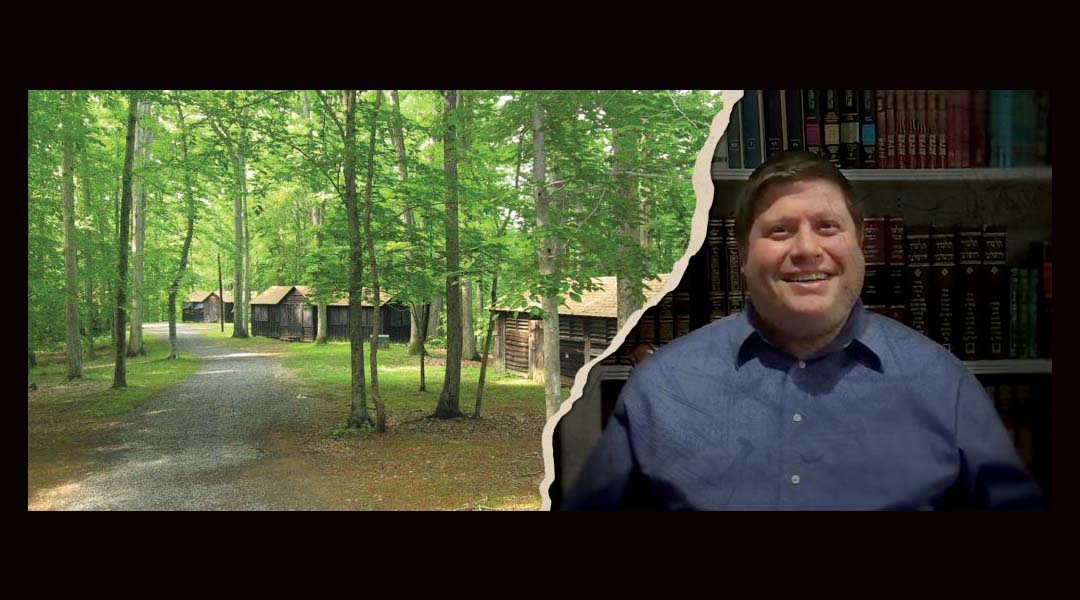
Yesterday began the civil trial between Shmuel Krawatsky and the families of his alleged victims. Krawatsky was publicly accused in a Jewish Week article in 2018 by 3 families of sexually abusing their children at Camp Shoresh, a day camp near Baltimore. Shortly following the accusation, Krawatsky filed a federal defamation suit against the families which was dismissed for jurisdictional reasons. Krawatsky then filed another defamation case in state court in September of 2018. In response the families filed a countersuit for the sexual abuse allegedly committed by Krawatsky against their children.

The case has dragged on for 6 years, bogged down in endless procedural fighting. A number of parties were dismissed from the case on both sides. The Jewish Week, and journalist, Hannah Dreyfus, who initially covered the allegations for the Jewish Week (now owned by 70 Faces Media), had initially been defendants in the defamation case, but were removed from the case in summary judgment. Camp Shoresh was also removed from the case after a ruling from the judge determined that they didn’t have sufficient notice to have known that Krawatsky was a potential threat.

This set the stage for the trial.

Given how complicated this case was, with claims and counterclaims against multiple parties, the judge broke the trial up into several parts. The first part, which began yesterday, is to determine whether or not the alleged abuse actually happened. Once the jury makes a determination on those claims the remaining claims can be decided.

The central allegations of the case are this: That at various times Shmuel Krawatsky repeatedly either molested, or orally or anally raped these three children in the poolhouse at Camp Shoresh. This part of the trial centers around whether or not those alleged abuses happened. Since this is central to the question of both damages for defamation and damages for abuse, and the burden is on the defense to prove their counterclaim, the defense is presenting its case first.

To simplify, the defense for the purpose of this post means the families accusing Krawatsky. The Plaintiff is Krawatsky.

The Defendants’ attorney offered his opening statement first. He began by laying out the context of case, where the burden of proof lies, and the meaning of the burden of proof – preponderance of the evidence. To illustrate the meaning of that burden he described a perfectly balanced scale, and preponderance meaning even the lightest feather weight tipping it in one direction.

He then reminded the jury about the ages of everyone involved at the time. Given that the abuse is alleged to have taken place in 2014 and 2015, the children would have been around 7 or 8 at the time. He showed pictures of each of the three children at those ages.

He then gave some details about the case, describing how the first alleged victim disclosed in 2015 after mentioning to his parents that he had had a dream in which Krawatsky had pissed on him. After discussion with his parents he eventually told them that Krawatsky would walk around the Shoresh locker room naked and regularly tickled boys. He also alleged that Krawatsky offered him $100 to touch his penis, and that Krawatsky anally raped him. The second alleged victim claims that Krawatsky offered him $100 to touch his penis, but doesn’t remember the rest. The third alleges that Krawatsky repeatedly orally and anally raped him over two summers.

He then laid out how the CPS investigations into these allegations shook out. Before getting into the specifics he laid out the three possible designations that CPS can give to a case after investigating: Indicated, unsubstantiated, and ruled out. Indicated means that CPS believes abuse or neglect happened and feels confident they can prove it. Unsubstantiated means that they believe abuse or neglect may have happened but don’t feel they can prove it. Ruled out means they don’t believe abuse or neglect happened at all.

He described how the first and second alleged victims’ CPS cases resulted in indicated findings, and the third resulted in an unsubstantiated finding. After an appeal by Krawatsky, the indicated findings were changed to unsubstantiated out of a desire to spare the boys from having to relive the trauma by testifying at the appeal.

He then preemptively addressed a potential strategy by the plaintiff, telling the jury that they may hear that the parents coached the kids to say that Krawatsky abused them for a specific reason. He told the jury to asked themselves what the parents stood to gain by doing that, and asserted that they were simply loving parents who stood up for their kids.

He told the jury that he would show them examples of Krawatsky lying during the course of the case, including him lying about having and using a cellphone while at camp (which is important because he is alleged to have taken illicit photos of the children on his phone despite claiming that he never had or used a personal phone at camp), and that he lied about giving the children gifts (which often is a tactic used by an abuser who wants to groom their victims), telling the jury that they would see an actual gift given by Krawatsky to the children as an exhibit in the case.

Next was the plaintiff’s opening.

He began by saying that they aren’t blaming the kids at all, that they were just young, impressionable children being pressured by their parents to invent these allegations against Krawatsky. He laid out an alternative view of the case: The first alleged victim first told his mother that he had a dream about Krawatsky pissing on him, but his mother doesn’t remember how she got from her son disclosing the dream to him alleging that Krawatsky had raped him.

He then reminded the jury that Krawatsky was the one bringing this case against the parents as a defamation suit to clear his name from these accusations. The only thing worse than being a child molester, he said, was being falsely accused of being a child molester. He then told the jury that this was a civil case, and that there was no criminal case because police and the DA had declined to prosecute.

He then told the jury that he suspects a lot of them believed the story when they initially heard it from the defense because why would 3 kids lie? He then laid out 5 reasons why the allegations shouldn’t be believed:

Location: The location of where they claim the abuse took place (which he explained in a later point).

Corroboration: Listen for what’s not there: No DNA, hair, blood, or corroboration of any of these allegations.

Witnesses: There are no witnesses to the event identified by the children except for one nonverbal child who was being shadowed by a paraprofessional.

Believability: The third alleged victim claims he was anally raped every day it didn’t rain (meaning every day there was swimming as an activity) for two summers in the pool locker room while lots of people were around. We will show video of regular day to day operation of this location. The claims this happened repeatedly with no one noticing are not credible. The only way into the pool is through the locker room, back and forth. Kids and counselors are constantly in and out.

He continued by saying that there are no other alleged victims of Krawatsky, and that it’s unlikely for a serial rapist who worked with children for 15 years to not have any other similar allegations.

Timeline: 3 boys at Shoresh, all in the same group, all swimming at the same time with the whole division – it’s unlikely that with that many people around that these rapes could have happened so frequently with no one noticing.

He then moved on to address claims he believed the defense would make about behavioral changes indicating abuse in the alleged victims. He said that 2 of the 3 boys had behavioral issues before the alleged abuse. Alleged victims 2 and 3 were already seeing a psychologist. The behavioral issues these boys had, he said, predated the alleged abuse and weren’t caused by it. He laid out how one of the boys had been expelled from Shoresh at one point, and that another child had never been away from his parents before, having been homeschooled, and was having issues being away from his parents for the first time. He reiterated that these issues were not caused by Krawatsky.

After camp, he continued, the first alleged victim had this dream, and that both of his parents reacted to it, but that neither could remember who first heard the dream from him. He then said that the camp reported to CPS (although it should be noted that in previous filings by the defense, the camp allegedly took longer to report than they should have, initially reaching out to Krawatsky to discuss the allegations and reassure him that they would stand by him), CPS interviewed the kids, and the first alleged victim claimed that the second alleged victim was with him, but the second alleged victim contradicted that account and claimed nothing happened.

He then said that he first alleged victim was interviewed by his therapist and also denied any abuse at the time. He then laid out the plaintiff’s theory of the case: That, desperate to get another kid to corroborate their child’s story, the parents of the first alleged victim colluded with the second alleged victim’s therapist and parents to allow them to speak to the second alleged victim directly at the therapist’s office, but that after two sessions the second alleged victim still denied that any abuse happened. He then said that the first alleged victim’s mother asked to talk directly to the second alleged victim, and that during that conversation she pressured him to say specific things, which, scared of her, he weakly acknowledged.

The plaintiff’s lawyer then played a recording of a conversation between the second alleged victim and his mother. The gist of the recording is that over the course of about 10 minutes of gentle questioning by his mother at the time, the second alleged victim repeatedly offered contradictory accounts of what had happened, at times reaffirming and at times denying the allegations against Krawatsky. At various times he referenced bad things other people had told him Krawatsky had done.

The lawyer then described proper interviewing techniques (not asking leading questions, not asking yes or no questions, or leading questions) and then claimed the kids were coached into their answers.

It should be noted that he never really articulated a firm motive for the three parents to go along with this, or for the first parent to instigate this beyond claiming she had a desire to pin what she believed happened to her son on Krawatsky. The central thrust of their argument is this: She was an attached mother who overreacted to her son’s dream, and therefore did everything she could to get other kids to make the same allegation and pin what she believed happened to her son on Krawatsky. He offered no motives for the other parents.

Next the first witness, the third alleged victyim, was called by the defense’s lead attorney. He is currently 16 year old, and walked up to the stand clutching a somewhat worn out stuffed rhino. Sitting in the back, on the floor, was the second alleged victim holding his service dog.

The defense attorney, Jon Little, opened by asking the third alleged victim about his stuffed animal. He answered by saying he liked rhinos because they’re strong and offer protection. Jon asked him about the second alleged victim, and if he knew him. He replied saying he didn’t. Jon then asked if he knew the parents of the first alleged victim, who are also his aunt and uncle. He replied that he does, but hasn’t talked to them in a long time.

Jon then asked him about Shoresh. He described the regular day to day schedule at Shoresh. Jon then asked him about Krawatsky. He said Krawatsky was in charge of his age group at the time. He then said that he was regularly alone with Krawatsky in the locker room, and that Krawatsky would come up with pretexts to get him alone, telling him he was getting punished for various reasons. These punishments, he said, consisted of Krawatsky putting his penis in the third alleged victim’s anus and mouth, and putting the third alleged victim’ penis in his own mouth. The third alleged victim said he remembered Krawatsky’s penis being hairy and tasking bad.

He then said that he didn’t tell anyone what happened because he was scared of Krawatsky’s threats that he would cut the third alleged victim’s ears off and kill his family. He restated these allegations for summer of 2015 as well, saying he hadn’t seen Krawatsky between the two summers at all. He reiterated his reasons for not reporting, namely his fear of Krawatsky’s threats.

After camp in 2015, he described his aunt, the mother of the first alleged victim, coming over and telling him a story about a child who exploded from keeping too many secrets. He says he didn’t disclose anything immediately, but didn’t feel coerced or pressured by the story, and he never saw her again. He said he never spoke to her about Krawatsky. He said he later disclosed to his mother, claiming that Krawatsky only touched his anus and penis, an allegation he also made to CPS in 2016. However, in 2017, he disclosed that Krawatsky had raped him. He said he made these allegations to his therapist, CPS, and in two depositions before testifying yesterday.

He also testified to an incident that happened in 2016 between him and his cousin, when both were around 7 or 8, that at a sleepover he “hurt” his cousin because he had been threatened by Krawatsky that if he didn’t, Krawatsky would hurt him. He denied that the mother of the first alleged victim ever told him what to say.

Cross examination was conducted by Benjamin Kurtz, whose demeanor was angry and combative toward the third alleged victim. He opened by asking the third alleged victim about his brother who was with him at Shoresh. The third alleged victim said his brother was never with him when the abuse happened, but was at swimming generally when the abuse was taking place in the locker room.

Kurtz asked him if he remembered if his brother ever asked him if anything happened, or if he ever remembers telling his brother that he was in pain after each day’s abuse. To both he responded that he didn’t remember. Kurtz then pivoted to asking him about the incident he described between him and his cousin. The third alleged victim said he didn’t remember what exactly happened but he believes it was sexual, saying again that he only did it because Krawatsky had threatened him.

Kurtz asked him why he thought Krawatsky would know whether he had or hadn’t abused his cousin, and he responded saying that at the time he was scared that Krawatsky had cameras in his house and would know. Kurtz then repeatedly asked him questions about the incident.

Kurtz then asked him about the rape he claimed (in an earlier filing) happened at a water park in Pennsylvania. He said he didn’t remember if anyone else was with him at that rape, and also said he doesn’t remember if he ever gave a different answer to that question in the past when asked. Kurtz at this point just straight up combatively asked him if after repeatedly denying being abused he only remembered the abuse after his aunt told him the story of a child exploding from keeping too many secrets. He said that no, he remembered, but was too scared to disclose to anyone.

Kurtz then asked what about that story made him not scared to disclose, and he responded saying that the story made him finally not keep it a secret.

In a moment that shocked the entire courtroom, Kurtz then angrily and sarcastically said essentially, so when you thought that it was your family that would be killed you stayed quiet, but only once you thought you would explode you decided you needed to speak up, very strongly implying that the third alleged victim was a selfish person in his motivations for disclosing. It was a shocking moment because what they were discussing was what took place when the third alleged victim was 8 years old.

In my opinion what he was trying to do was make the jury think of the 16 year old, full sized teenager in front of them as an abuser himself who had attacked his cousin, and then selfishly pinned it on Krawatsky to deflect. I don’t think it landed the way he intended. To everyone in the courtroom it seemed like he had just attacked a victim of child sexual abuse for what he had done and said when he was 8.

Following a break, the third alleged victim’s mother was called to the stand. Annie Alonso handled her direct examination.

She started by asking the mom about her impressions of Shoresh. She said she sent her kids to Shoresh because she attended an open house and it seemed like a good place, and because they had friends who were also going. When asked about her other son’s experience at Shoresh, she said he had a great time. Her other son, however, she said, struggled, frequently coming home in his bathing suit, even though they were supposed to change after swimming, saying he didn’t go swimming to avoid getting in trouble. She said he struggled to fit in and that he’d get in trouble.

She said she didn’t know Krawatsky before her sons went to Shoresh, and that she first communicated with him at an open house held right before camp started for parents to meet staff. She said she spoke to Krawatsky shortly after camp started after he called her to let her know that her son had almost drowned a kid. She said she was devastated, but that Krawatsky assured her that the child was fine, and that he’d taken her son aside and handled what had been done wrong. She said she was relieved her son was avoiding an expulsion thanks to Krawatsky and that the other kid was ok. She said she didn’t know what she’d do with her son if he was expelled as she worked full time.

She said she spoke to Krawatsky again on the phone. She said he called her after her son got frustrated at a soccer game after the game ended before he got a chance to be goalie. He told her he was teaching her son calming techniques, involving Krawatsky and her son squeezing each other’s hands, and him squeezing his own hands to calm down. She said she was happy at the time that Krawatsky was taking a special interest in helping her son with his struggles.

She said she spoke to Krawatsky again before a camp overnight to ask for permission to pick her son up late that night rather than having him stay overnight as he wasn’t ready to stay overnight at camp. She said Krawatsky said her son was a great kid and that he welcomed him back the next year.

She said that prior to Shoresh her son had behaviour issues, namely anxiety, and easily getting angry and frustrated, but that she did notice a behavioral change after Shoresh. In particular she said that he started smearing poop on the walls in the bathroom, screaming about monsters living in the bathroom, and needing her to sit outside the bathroom while he was inside it. She said his anxiety became more raw and fearful.

Alonso then asked her about the stuffed rhino. She answered that he had gotten into rhinos because they’re big and strong and have a horn to protect them. His first rhino, she said, he got in 2014 or 2015, and he got the one he was holding in court a few years later. She explained that it was kind of like his security blanket that he takes with him to highly anxious situations like court or depositions.

She then moved on to talking about her family, saying she is close to one of her brothers, but that she isn’t really in touch with her brother and sister in law, first alleged victim’s parents. She said that her sister in law had only spoken to her son once to tell him the story about the boy who exploded due to keeping secrets and that she seemed normal during that conversation. She said that her son didn’t immediately react to hearing the story. She said that she knew about the CPS investigation into the first alleged victim’s claims, but didn’t discuss them with her sister in law.

When asked if she knew the parents of the second alleged victim she said that she only met the father once in 2017, and only knew the mother from Shoresh and that they never hung out socially. She said she never met or spoke to the second alleged victim.

Asked about her son’s CPS investigation she said that when he initialy disclosed she just thanked him and told him she loved him and that she wanted to talk to his therapist about it. She said he was already in therapy at that point. She said CPS got involved in 2016 and that she spoke to them, and to police about it, and that she remembered that the result of the CPS investigation was unsubstantiated.

She said she continued her son in therapy and added another therapist to his treatment plan for some more specialized therapy. He recalled the 2017 investigation too, where her son disclosed the rape, that the investigators were the ones she spoke to, and that the result of that investigation was indicated. She recalled that the finding was appealed, and that she received a subpoena to testify at the hearing, but was anxious about it and didn’t want her son to have to see his rapist again. She said that the result of the appeal was that the finding was changed to unsubstantiated, but that the change in finding changed nothing about how she acted toward her son.

On cross examination she was asked if the day her son disclosed to her was the same day her sister in law told her son the story about secrets, and she answered yes.

Next the CPS worker, Brenda Lohman, was called.

She said that she worked for CPS since 2014 and described her duties working for them. She also described the training she got in interviewing techniques.

She said that she remembered investigating the third alleged victim’s claims in 2016 after being assigned the case, and that the first part of the investigation involved reaching out to the family to have the child come in for an interview. She said she didn’t record the interview because the county didn’t allow that at the time. She said she referred the child to the Child Advocacy Center for medical evaluation.

She then said she remembered interviewing Krawatsky and that he claimed he was never alone with the child. She said she next spoke to the father of another child who was identified as being able to corroborate the third alleged victim’s account and that after finishing her report her disposition on the case was unsubstantiated.

She said that in 2017 she was involved in the second investigation following the alleged victim’s disclosure of rape. She said the interview with the child was conducted by another CPS worker but that she watched it live on CCTV. She said she met with the third alleged victim’s parents and spoke to Krawatsky again.

She said she asked him about having a personal cellphone at camp and that he denied having one at camp. She said she didn’t have the power to subpoena cell records. She said that she initially found the case to be indicated but on appeal that finding was changed to unsubstantiated.

On cross examination she was asked by Krawatsky’s lawyer, Chris Rolle, about the particulars of an unsubstantiated ruling. She was asked if someone with an indicated finding could work as a teacher or counselor. She answered that if it was a teacher the info would be forwarded to the school and the teacher would most likely be fired, but that there was no specific protocol for camp counselors. Asked the same question about an unsubstantiated finding she said that they could work with kids in a school but it would be up to the employer. She wasn’t able to answer if an unsubstantiated finding would appear on a background check, but said they stay on CPS internal records for 5 years.

Regarding the phone records, when asked, she said she doesn’t have the power to subpoena phone records, but that police do. As far as she knew, however, no such records had been subpoenaed by the detective on the case

On redirect Alonso asked her whether the detective was with her when she interviewed Krawatsky and she said he was not.

Next the defense called the third alleged victim’s brother. Alonso handled this direct examination.

He described the day to day at Shoresh, and said he was 7 in 2014 when he attended. He was in the same age group as his brothers, an only boys group. He said he saw Krawatsky with his brother one day when they were going to play gaga coming up the hill with the nonverbal kid, and thought nothing about it at the time.

He said he never saw his brother alone with Krawatsky but on multiple occasions he noticed that his brother was just missing from the group, during color war, and scheduled activities.

He said his brother had talked to him about the sexual abuse he had experienced at some point. He said he talked to CPS in this case, doesn’t remember which worker, and that he was in 4th grade at the time. He said he didn’t know the parents of the second alleged victim, but that he did know the mother of the first alleged victim, but hadn’t talked to her in years. He said that no one, including his aunt and uncle, his brother, or his mom, had pressured him to speak in this case. He said his mom had just asked him to come tell the truth in court in response to a subpoena by Krawatsky’s lawyers.

On cross examination Kurtz asked him to elaborate on what he meant when he said his brother was missing. He said that his brother would be missing from archery, arts and crafts, lessons, etc, and that he never said his brother was never missing from the pool area during swimming.

This was the last witness of the day. The jury was dismissed, and after a few small procedural matters court was adjourned for the day.

Standard

Amudim is Part of the Problem

Here’s the problem with the way we’ve been conditioned to respond to things like Zvi Gluck deliberately lying to survivors about their rights under the Child Victims Act. We’ve grown so accustomed to the status quo being so incredibly terrible that we’ve lost sight of what the right thing actually looks like, and we’re therefore so much more willing to sycophantically lick the boots of the people who throw us enough crumbs to stay quiet than we are to hold them and the systems that protect abusers accountable.

To give an example. I just got off the phone with someone who called me regarding a quote I shared from Zvi Gluck in which he defended his decision to not publicly make his followers aware of their rights under the CVA, and lie about it in an op-ed he wrote shortly after it passed.

According to Zvi Gluck, director and founder of Amudim, one of the largest victim-service organizations in the Orthodox world, with an annual operating budget of $7 million, efforts not to publicize the one-year look-back provision and extended statute of limitations for civil suits were intentional, based on the organizations prerogatives.

Gluck said the organization chose not to speak out publicly because he did not want to “risk causing secondary trauma for survivors.”

“If we publicized about these new legal options and survivors chose to bring their cases back to court only for those cases to be dismissed, we could cause even more trauma for survivors,” he said.

Zvi Gluck to Hannah Dreyfus of the Jewish Week


The person I spoke to said that whatever my opinions of Zvi Gluck, didn’t I think think that what he was doing was a net positive? After all, he’s saying things no one else is saying in the community. He’s helping people no one else wants to help.

Those things are great, but here’s the issue: Zvi Gluck is part of the problem he claims he’s helping to fix.

Awareness was definitely an issue in the frum community ten years ago. To even discuss sexual abuse, to even acknowledge its existence was taboo. The people talking about it, like Nuchem Rosenberg, Shmarya Rosenberg, and Paul Mendlowitz, were considered fringe nutjobs yelling about something that people didn’t believe was a problem.

Ultimately, however, thanks to their efforts, the efforts of those who came after them, and increased general coverage of child sexual abuse in the press, the public is now aware that it exists and that it’s a problem. That’s not to say that awareness campaigns are not important. There are anyways people who remain unaware, and survivors who feel alone in their experiences who need to be reached. But the issue of awareness existing in the community has in large part been addressed. We’re aware. Now what.

When Zvi Gluck and people like him get credit for raising awareness in the community, what’s not being addressed are the systems in place in the community that actively silence survivors. It’s not because the community is unaware of sexual abuse that Yated, Hamodia, Mishpacha, Ami, and Yeshiva World don’t allow any mention of child sexual abuse in their publications. It’s because the rabbonim and community leaders who dictate what does and doesn’t get printed in those publications decided to either explicitly or implicitly forbid it.

If you’re aware of child sexual abuse, especially if you’re a survivor, and you look around you in the general world and see everyone talking about it, and then you look around in your community and see a complete moratorium on any public discussion of it, you get the message very clearly that the community does not care about you and does not want to hear or help you. That’s by design. It’s not due to a lack of awareness.

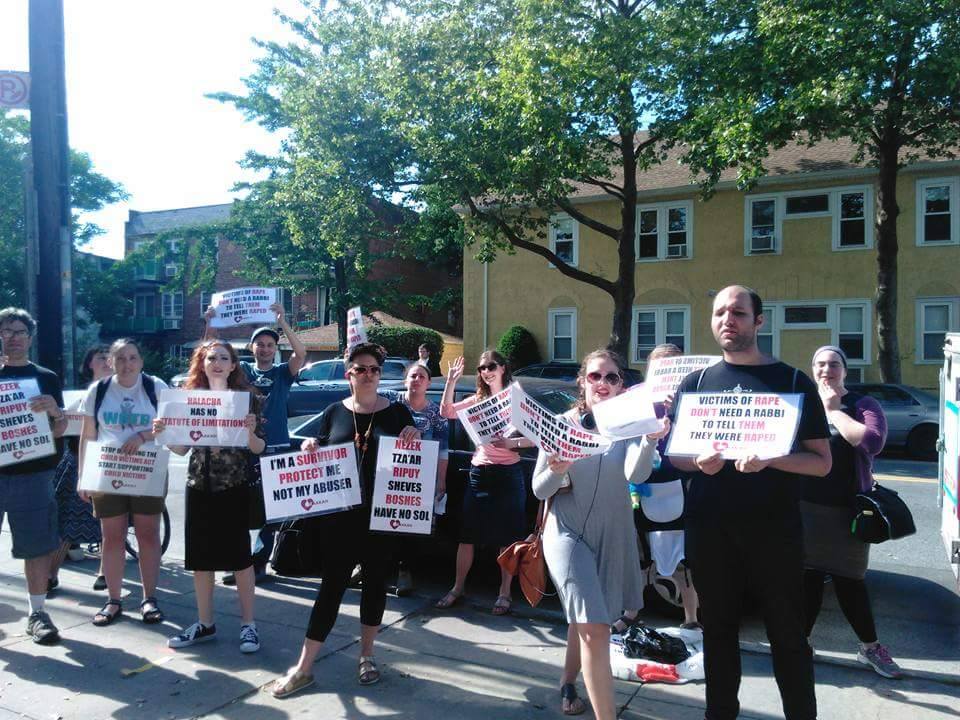
When I began leading protests for ZA’AKAH in the community, I expected a fierce backlash. I was doing something that hadn’t been done very much before, and I was being loud, rude, and in-your-face about it. We stood on street corners outside of shuls, and yeshivas, and we yelled and chanted about sexual abuse.

And the response was overwhelmingly positive.

People came over to us and offered us water. They took our fliers. They talked to us, and asked us questions. Some even waited until the end of the protests and thanked us, or asked us for help with situations they were dealing with. While there was some negative response, and even one violent incident, the response was overwhelmingly positive.

The awareness is there. The people know that sexual abuse is a prevalent problem. What they don’t have is anyone to stand up for them when they want to report sexual abuse. They don’t have anyone who will protect their jobs, their homes, their children’s educations, when they dare to come forward against their abusers and the people who enabled them.

And that’s really what they need, and they need it to be public and full-throated. They need to hear that reporting sexual abuse is the right thing to do. They need to hear that any rav who tells them otherwise is wrong. They need to hear that they’ll be supported. They need to hear from the people with the resources and communal and political capital that they will be supported if they come forward.

And Zvi Gluck could have been all of those things, but instead he chooses to protect the systems and institutions that continue to silence survivors.

That’s the real problem with giving people credit for simply saying things that no one else is saying without backing it up in action. We know, for the love of God, we know that sexual abuse is a problem. We live it. We’ve survived it. Amudim has an annual budget of 7 million dollars. It is run by a very prominent and well-respected member of the community, whose father is even more prominent and well-respected. The only excuse for such an organization to lie to its constituents about their rights under the CVA is if they’re trying to maintain the status quo. If anyone can get away with pushing the envelope, so to speak, it’s Amudim and Zvi Gluck.


And to the argument that they’re trying to change things from the inside I ask, but how many people are you hurting along the way, and how long must they wait for you to do the right thing? The community will not change until pushed, and until community leaders and rabbonim can no longer point to Amudim and use them as pretext to claim they’re taking the issue seriously, nothing will actually change. And when it eventually does in spite of them, it will come after hundreds and thousands of broken survivors who needed help but couldn’t find it.

It’s telling that the response Zvi Gluck gave the Jewish Week about why Amudim wasn’t informing survivors of their rights under the CVA was couched in concern for victims.

‘“If we publicized about these new legal options and survivors chose to bring their cases back to court only for those cases to be dismissed, we could cause even more trauma for survivors,” he said.”

Zvi Gluck to Hannah Dreyfus of The Jewish Week


Every other victims services organization like Safe Horizon, and Zero Abuse Project has to deal with similar issues. They field calls from survivors looking for help finding legal representation, and some people have viable cases, and some people don’t. Some people will win their cases and some people don’t.

The correct answer to that problem is not to lie to your constituents and pretend that their rights don’t exist for their benefit, it’s to be honest with them, inform them of the risks, and then make sure that they understand that you will be there for them and support them through whatever happens.

Survivors have been lied to for long enough. They’ve had their trust violated for long enough. They’ve been held hostage by oppressive community systems and silenced in the interest of institutional concerns for far too long. We’re all aware of it. Now what are we going to do about it?

Standard

Epstein, Wexner, and Our Communal Reckoning with Dirty Money

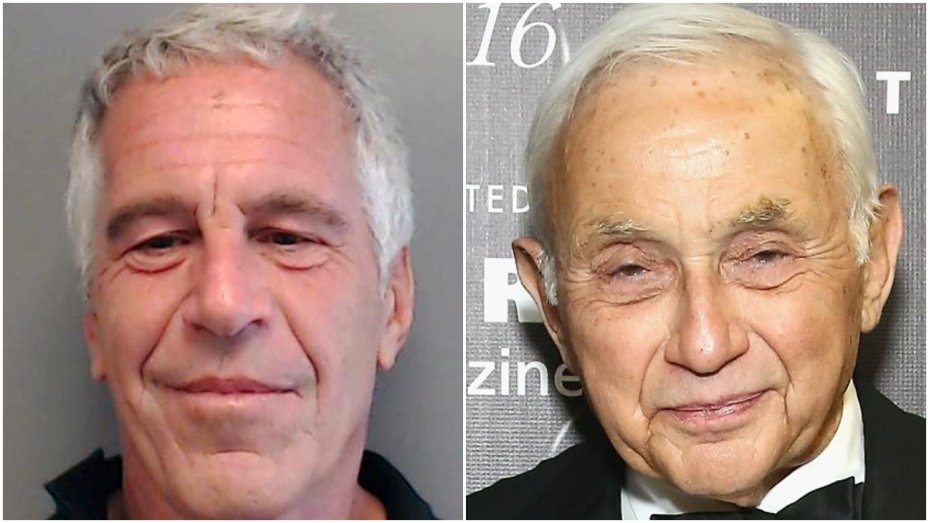
In the wake of the recent resurfaced allegations against alleged child sex trafficker Jeffrey Epstein, much attention has been given to the people around him who for many years enabled his well-known sexual abuse of children. Perhaps most notable among these enablers is Leslie Wexner, whose foundation has issued many scholarships to some of the Jewish community’s most influential up-and-coming leaders, and donated to many institutions across our community. When the allegations of Wexner’s complicity arose, we all knew that a reckoning was imminent, but it seems that Mechon Hadar has beaten everyone else to the punch, and not in a good way.

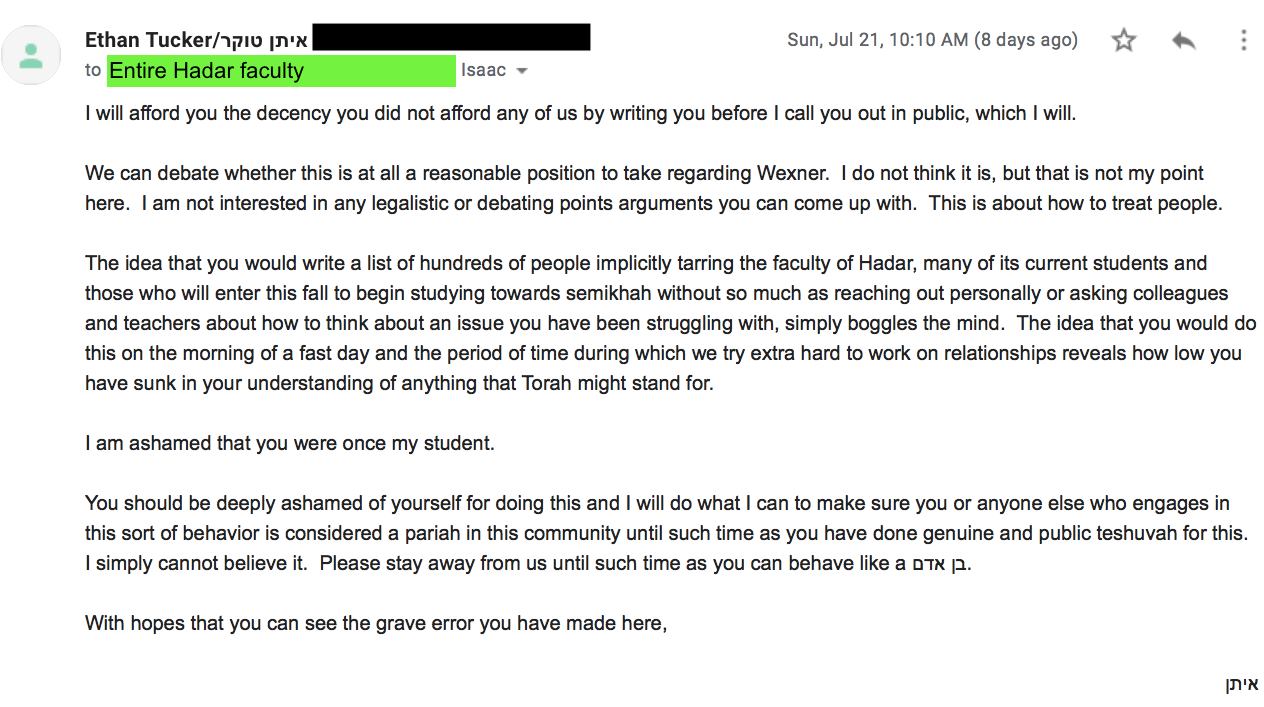
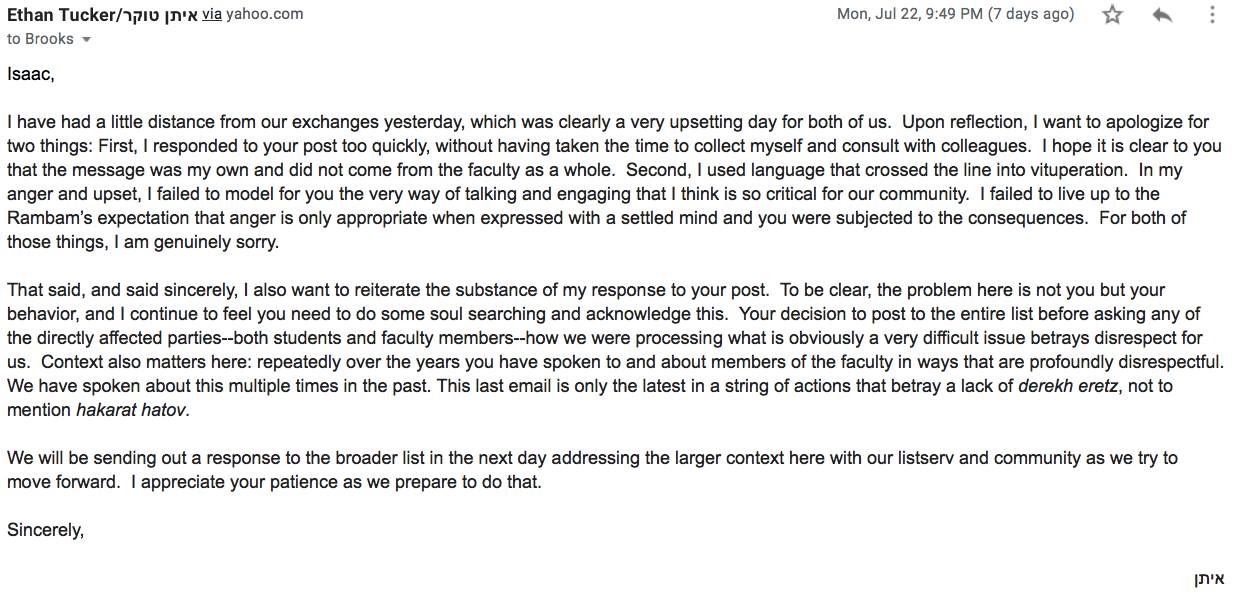
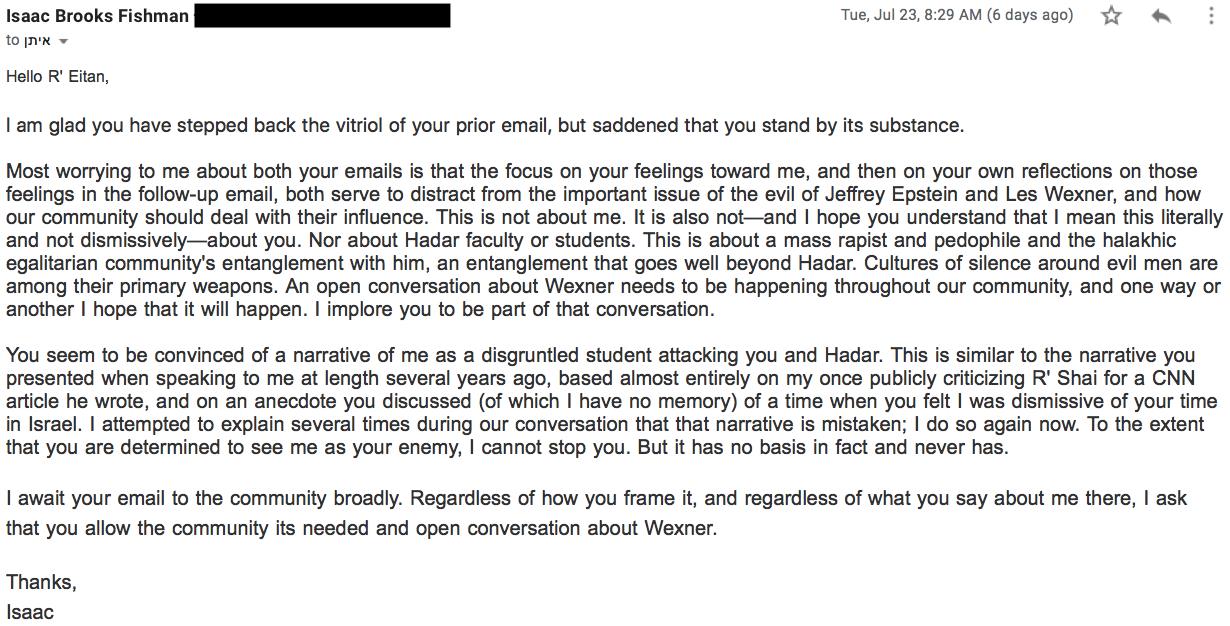
Above I’ve shared screenshots of an email conversation my friend Ike Brooks Fishman had with the Rosh Yeshiva of Mechon Hadar, Rabbi Ethan Tucker, regarding an email Ike sent to the Hadar community listserv. Ike had emailed the listserv to start a communal discussion about how the community would and could respond to its entanglement with Les Wexner in light of his close partnership with alleged international sex-trafficker and child rapist, Jeffrey Epstein.

It should also be noted for general context going forward that Wexner stands accused not only of being Epstein’s only public (and very wealthy) client despite almost undoubtedly knowing of Epstein’s horrific crimes, but also of allowing Epstein to sexually abuse women in his Ohio home. This was not raised in Ike’s emails, but it is relevant to the general conversation about how the Jewish community in general will have to contend in the coming months with Wexner and his various philanthropic endeavors.

Leslie Wexner is the founder and CEO of L Brands (formerly Limited Brands), which among many other things, owns Victoria’s Secret. This is notable because Epstein is accused of posing as a talent scout for Victorias Secret as early as the mid-90s, and using that as a pretext to lure models back to his hotel room for auditions, where he would sexually assault them. L Brands was allegedly made aware of this at the time and did not sever its relationship with Epstein, nor did it seem to take any steps to make Epstein stop representing himself as their employee.

He allegedly was also sent underage models to be sexually assaulted by a modelling agency used by Victoria’s Secret. Victoria’s Secret continued using that modelling agency despite allegedly being made aware of those allegations. As mentioned above, Wexner is also alleged to have done nothing after Epstein allegedly assaulted Maria Farmer at his Ohio home.

The closeness between Wexner and Epstein and his ever-growing list of accusers paints a clear picture of either active or tacit complicity on the part of Leslie Wexner in the crimes of Jeffrey Epstein.

The other thing Wexner is famous for, particularly in the Jewish community, is the philanthropic works of the Wexner Foundation, which invests in the future of Jewish leaders and institutions. One of the most sought after scholarships in the Jewish community is the Wexner Graduate Fellowship, which is awarded to 20 promising graduate students every year, and is a very prestigious line on any resume.

What makes the issue of Wexner particularly touchy for Mechon Hadar and Rabbi Ethan Tucker, is the fact that Rabbi Tucker, along with the other two founders, Rabbis Elie Kaunfer, and Shai Held are all Wexner Fellows. The Wexner Foundation website hosts a lot of content created by all three of them. The Wexner foundation has also funded several programs over the years in conjunction with Mechon Hadar. It’s unclear what the total amount of either actual or in-kind contributions Mechon Hadar has received from the Wexner Foundation, but it’s clear that there is a close friendship between the two institutions.

The Wexner Foundation for its part claims that Leslie Wexner severed his connections to Epstein 12 years ago, evidence to the contrary notwithstanding.

Which brings us back to Rabbi Tucker’s reaction to Ike’s initial email to the listserv. When the new allegations against Epstein broke, and Wexner was almost immediately implicated, there was a collective browning of many a pair of pants among the Jewish community and its institutional leadership. Wexner has donated millions over the years, given scholarship to scores of the most recognizable names in our communities, and that realization no doubt caused a panic in many of those people and institutions. Ike no doubt touched an extremely raw nerve with his first email, which is likely what caused Rabbi Tucker’s vitriolic response.

I am ashamed that you were once my student.

You should be deeply ashamed of yourself for doing this and I will do what I can to make sure that you or anyone else who engages in this sort of behavior is considered a pariah in this community until such time as you have done genuine public teshuvah for this.

Rabbi Ethan Tucker to Ike Brooks Fishman

But here’s the thing. This is not Hadar’s problem exclusively. It’s not Rabbis Held, Kaunfeld, and Tucker’s problems exclusively. This is about how we as a community are going to deal with the fact that one of our most prominent philanthropists now stands accused of at the very least enabling the rape and sexual assault of countless children. In the coming months the Jewish community at large will be grappling with questions like whether or not to scrub Wexner Fellowships from resumes, whether or not to return unspent Wexner Foundation grants, how to address the connections between the Wexner Foundation and community institutions, and whether or not the Jewish Community as a whole should turn its back entirely on Wexner, his foundation, and his money.

These conversation must be had in public. They must be had broadly among members of the affected communities. Silence is what allowed Epstein to continue committing his crimes against children. Silence is what enabled the shameful plea deal reached between Epstein attorney Jay Lefkowitz and then US Attorney Alex Acosta. Silence is what enables the abuse of children every day in our communities. Silence encourages impunity.

The faculty, student body, alumni, and communities surrounding Mechon Hadar have a difficult conversation in their collective future, but so do many other institutions and communities. Perhaps we in the broader Jewish community should all have known better. Perhaps we all turned a blind eye the first time Epstein was accused. Perhaps in the past we’ve been enticed by Wexner’s money, and the good things we believed we could do with it. But that era is over. We know too much to remain silent any longer.

I’m not going to pile on Rabbi Tucker and hold him uniquely responsible for disavowing Wexner and distancing himself from anything connected to him. That responsibility falls on all of us. What I will say is that this is a teachable moment that we shouldn’t allow to slip by unnoticed. The way Rabbi Tucker responded to Ike’s email while understandable is entirely inexcusable. The response to calls for transparency and reflection around the issue of sexual abuse can never be silence.

I wish Mechon Hadar, its leadership, its community, and all the institutions and communities within the Wexner foundation orbit much luck in the coming months as they address how best to disentangle themselves from his money and influence.

One thing is for sure. I and many others will be watching very closely.

Standard

The Yeshiva System’s ‘Perfect Image’ is Built on the Children It Discarded

Over and over throughout my time in yeshiva I heard this constant refrain, that we were better than the public schools because we had a higher graduation rate, and didn’t require drug screenings and metal detectors. And I believed it. I believed that the education I was getting was far better than whatever public school had to offer, and that I was intellectually and morally superior to my public school peers.

Then I grew up and realized that the world isn’t quite so simple.

I’m now seeing a resurgence of this ridiculous idea in the wake of the debate over private school curricular standards in New York State. Since that topic as a whole is very complicated and nuanced, and would require more than one post to fully flesh out my opinions, I just want to focus on this one specific aspect of it: The idea that yeshivas are academically and morally superior to public schools.

What really kicked my opinions of yeshivas in the teeth was when I started volunteering for Our Place, a drop-in center for Jewish kids at risk. Sure, I’d been abused for years in the frum world and had dropped out of yeshiva, but I still thought before that point that it was really just me and my life experiences, and that the image I had of the frum world in general, and the yeshiva world in particular, were sound and valid.

Just to give an example, the idea that yeshiva guys would do drugs or have sex before they were married was inconceivable to me. Mind you, I was 19 at the time, but I’d never really stepped out of my personal bubble. When I started volunteering at Our Place, reality came at me fast and hard. A lot of the kids there were regular drug users, some of whom were drug dealers, some of the kids were in gangs, some of them had knocked up their girlfriends, and so on. It was, to 19-year-old me, at once heartbreaking and eye-opening that this myth I had believed about the frum community and the people within it was nonsense.

More shocking even than that was the way a lot of the community seemed to interact with and feel about this group of boys. Many of them had been abused, the community had silenced it or covered it up, and when they inevitably started “acting out” as a result of their trauma, the community threw them out. One night I got curious and asked a bunch of the boys there whether they had been able to speak to their rebbeim about a range of topics. Unanimously they said no. They had been kicked out of yeshiva for asking. Then they’d been kicked out of the next yeshiva for asking, and so on. They were only taken seriously when they were finally sent to what they characterized as “babysitting/kiruv” yeshivas, where, since they were already at the rock bottom of the yeshiva world, the rebbeim had nothing to lose by engaging with them.

Why? Because at that point the yeshivas and rebbeim had nothing to lose. There was no longer any image of perfection to maintain because they were dealing with kids the community had rejected for threatening to shatter that illusion. Of course, by then these boys were soured on the community and yeshivas in general, and never lasted long in these places.

Every so often one of them would die. A suicide, or a drug overdose, or a gang-related killing. Not a word in the charedi press. Not a tear shed for them. Not a world written in remembrance. These boys die without so much as a peep from the community that excised them to retain this illusion of perfection, to prop up this ridiculous idea that we’re so much better than “them” both academically and morally.

Public schools don’t get to be selective with their student bodies, they have to work with whatever district they happen to be in. They have to find a way to make it work. If their district happens to be an a high-poverty, high-crime area, then they have to try to educate that population, even though the children in that district may have more immediate, existential priorities than learning their reading writing and ‘rithmetic.

Yeshivas, on the other hand, get to be selective. They get to choose what “types” of people they accept. They get to expel with impunity. They get to abuse, and cover up, and expunge the victim from their narrative, all in service of maintaining this lie that yeshivas are by definition better than public schools.

Setting aside the fact that many yeshivas actually do graduate and issue diplomas to students who aren’t, in fact, deserving of them by artificially inflating their grades, it’s very easy to claim academic superiority when you make your job easy by eliminating anyone who you think might disturb that illusion.

Comparing yeshivas to public schools in this regard is therefore disingenuous at best, and malicious at worst. The yeshiva world can’t have it both ways. It can’t refuse to serve, and in doing so deny the existence of, the kinds of children that public schools are compelled to and still maintain that they somehow by nature operate at a higher level. They don’t get to expel from school and ostracize from the community children who struggle with drugs, who have sex before marriage, who suffer from mental health issues, who come from broken, or abusive homes, who have questions of faith, and then claim that because they’ve washed their hands of such problems they are therefore better than the ones who haven’t.

The system is built on the blood of those discarded children, and that blood boils on the ground as these liars stand on their corpses to more loudly proclaim their lies.

Standard

Activists & Survivors to Protest Agudath Israel President’s Abuse Enabling Policies 1644 48th st 7/23 3 PM

For Immediate Release
Contact Asher Lovy
347-369-4016
Asher@ZAAKAH.org


Advocates against child sexual abuse protest President of Agudath Israel of America for protecting secrets, not children


(New York, NY): ZAAKAH, an organization that advocates reforms that will end child sexual abuse in the Ultra-Orthodox Jewish community, is protesting outside the President of  Agudath Israel on Sunday. The protest will be at the Novominsker Yeshiva – 1644 48th street in Boro Park – on  Sunday,July 23rd at 3 PM. The protest is against Agudath Israel’s opposition to the Child Victims Act and their policy that victims must ask a rabbi for permission before reporting sexual assault to the authorities.  


These two policies, coupled, are responsible for the coverups of thousands of cases of child sexual abuse. These policies, enacted and promoted by Yaakov Perlow, are in large part responsible for the continued sexual abuse of children in Charedi communities, and the continued apathy and indifference toward victims of child sexual abuse on the part of Charedi communities.Together, these two policies actually incentivise the coverup of abuse and coercion of victims by setting a goal for rabbis and community members who want to cover up abuse: Since the victim has to go to a rabbi, make sure the rabbi keeps the victim quiet until he turns 23, and it will no longer be an issue.” says Asher Lovy, organizer of the event.


“According to many studies, it takes, on average, between 10 and 30 years for victims to come forward about being abused sexually. Yaakov Perlow, President of Agudath Israel,  knows this. He knows the harmful effects of sexual abuse its victims – suicide, PTSD, eating disorders, addiction, problems with relationships, emotional trauma, physical trauma, to name a few – and despite being fully aware of the high costs of treating the effects of child sexual abuse, Yaakov Perlow, and the rest of the Moetzes, continue to set policies for Agudah that not only deny existing victims justice, but put our children’s futures and lives in danger by enabling the continuation of child sexual abuse. Yet they continue to oppose legislation to  eliminate the Statute of Limitations for child sexual abuse, and open a 1 year retroactive window for old cases, allowing survivors of child sexual abuse to get justice from their abusers and the institutions that protect them.” said Lovy.


The Child Victims Act (A5885A) will lengthen New York’s statute of limitations for child sexual abuse, which currently keeps most victims over the age of 23 from seeking any justice in criminal or civil courts. The bill will also allow victims over the age of 23 one year to sue their abuser retroactively.


“In New York, the statute of limitations on child sexual abuse prevents victims from pressing charges after their 23rd birthday. This means there are lots of dangerous sexual predators who are above the law and are working with children. This is a disgraceful thing for New York to do to its children and to abuse survivors”, said Andrew Willis, founder of the Stop Abuse Campaign.


ZAAKAH is dedicated to ending child sexual abuse within the Charedi communities. For more information email Asher@zaakah.org.

Standard

How The Gedolim Lost My Faith

Author’s Note: Here’s the link to the Facebook event for this Sunday’s protest of the Novominsker Rebbe’s, and by extension Agudah’s, rape-enabling policies: https://www.facebook.com/events/261681534310970/


I started off in activism, much in the same way every other activist starts, with a young, optimistic, incredibly naïve idea of what I could accomplish if I tried hard enough. The problem: children were being abused, suffering horribly at the hands of people who violated them in ways that would viscerally incense anyone possessed of a conscience. Surely the problem was one of ignorance. It seemed to me, as it seems to many young, upstart activists, that when apprised of the horrifying reality and pervasiveness of child sexual abuse, people of conscience, people who are otherwise God-fearing fellow Orthodox Jews, couldn’t possibly stand idly by and allow such injustices to continue. No, it must be ignorance, I figured, and ignorance can be educated.


At the time I was confused about my place in the Jewish faith. I’d been raised solidly Charedi in Boro Park, taught from a young age to keep shabbos and kashrus, to daven three times a day, to value torah, and to respect gedolim. Gedolim were the closest thing we had to prophets. They didn’t talk to God, but after a lifetime of devotion to God, the study of Torah, and living piously, living as an example for the rest of us to follow, surely they were the most qualified to tell us what God wanted of us.


But that sort of devotion surely must come at a price, a certain detachment from the mundane, from the day-to-day of our lay lives. It’s no wonder they didn’t do anything about the rampant sexual abuse in their communities, no wonder that when they were handed a case to adjudicate they made the incorrect choice. It wasn’t their fault, they simply didn’t understand the exactly nature of the problem they were adjudicating. They simply didn’t understand what it means for a victim to feel so abandoned, betrayed, and violated by their friends, family, and community that the only apparent way out is suicide. Surely they’d never experienced being in such a mental space.


Surely they’d never been in so much pain that the only way to numb it, to make it somewhat bearable, survivable, was to stay drunk or stay high for long enough to function. Surely they’d never felt so out of control that were compelled to stuff themselves to make themselves feel full of something other than pain only to empty themselves out again with a well placed finger down their throats; surely they’d never felt the need to exert a similar control over something – anything – in their lives by not eating.


No, they couldn’t possibly have experienced these things. And why would they? They were holy, as close to perfect as a human being could be, and God rewards those who follow God’s law so devotedly. It wasn’t their fault that they’d never experienced such pain. They’d worked hard for their rewards. Their lack of perspective wasn’t a flaw, but a testament to their righteousness. Their detachment was both a byproduct and a reward of the lives they’d led.


But surely these paragons, once informed of the pain we were experiencing, once confronted, not adversarially but respectfully, unlike those other activists who were just out to shame them, mock their torah, their communities, and their devotion to both, activists who were simply self-interested, ridiculing people who by contrast made them look like the pleasure-seeking self-justifying sinners they surely were – if they were approached by someone who walked in both sets of shoes, a survivor and a devoted member of their community – surely they’d have to take notice and act to help us.


I started to talk to people about getting me some meetings with the men I’d grown up revering. At the time I’d started writing, but still didn’t have my own blog, so I’d hand my articles to other blogs for publication. In Novemeber of 2012, Avi Shafran wrote an article for Cross Currents titled The Evil Eleventh, in which he responded to a 2006 New York Magazine article by Robert Kolker, which speculated that abuse in the Orthodox Jewish world might be more prevalent than it is elsewhere. Shafran, in his response, contended that since there are no statistics, Kolker’s speculative assertions were an “unmitigated insult to the Judaism,” and likened it, due to his reliance on information obtained by a handful of advocates and survivors, to “visiting Sloan Kettering and concluding that there is a national cancer epidemic raging.”


The rest of his response was a classic example of deflecting by focusing attention on the Jimmy Savile case in England, and engaging in No True Scotsmanism, declaring anyone who would do such a thing ipso facto not a religious Jew, thereby – somehow – making it not our problem.


Respectful as I was of gedolim at the time – many of whom Shafran represented as spokesman for Agudath Israel, and by extension the Moetzes Gedolei Hatorah, and distrustful to the point of disdain, at times, of the advocates and activists involved in the issue of child sexual abuse, I nevertheless wrote a response which I intended to publish on a friend’s blog. I figured, however, that it was only fair to send an advance copy to Shafran for comment before publishing.


After emailing back and forth about the article, it seemed that he agreed with my main points, and that my article, as I had intended to publish it, was unfair. He seemed like someone I could talk to, a reasonable person who genuinely cared about the issue, and, given half a chance, would do what he could to help. I told him I would not publish my response, and we set up a time to talk on the phone.


We ended up talking for four nights over the next two weeks, each conversation lasting a couple of hours. I had prepared notes. I knew I wouldn’t get anywhere on many of the topics I raised, but I figured I’d raise them anyway.


Issues like sex education in yeshivos, acknowledging the harm done – whether anything could be done about it or not – in segregating the sexes until marriage, acknowledging – whether anything could be done about it or not – the problems caused by our general reticence to use proper terminology when discussing physical anatomy or sexuality, refusing to discuss sexuality as a topic, and how much harder it makes discussing non-consensual sexual encounters when even consensual encounters are considered taboo. Then there was the fact that teachers, and yeshiva administrations in general are unwilling to allow students to discuss issues they’re having in their personal lives with faith, with the opposite sex, drugs, depression, etc, without fear of expulsion, and that by the time they reach a yeshiva that does allow such discussion between students and faculty, it’s too late.


Then we moved on to the problems caused by sexual abuse, and the terrible suffering it causes to its victims. I ran him through all the problems, both mental and physical, caused by sexual abuse, some which I’d developed having been abused myself for years.


Throughout all of it, he listened sympathetically, sometimes even empathetically. He acknowledged all of my concerns. He admitted that there were issues with the way our communities raise children, and he acknowledged the damage caused by all of these concerns. I thought I was getting somewhere. I thought, finally someone who’s on my side, who has access to gedolim, who can actually help me change things for the better.


And then we got to the psak.


Shortly following the 2011 Agudah Convention, Shafran posted the following psak on Cross Currents, which operates as Agudah’s de facto blog. The psak was posted by Shafran as an official Agudah statement:

  1. Where there is “raglayim la’davar” (roughly, reason to believe) that a child has been abused or molested, the matter should be reported to the authorities. In such situations, considerations of “tikun ha’olam” (the halachic authority to take steps necessary to “repair the world”), as well as other halachic concepts, override all other considerations.
  2. This halachic obligation to report where there is raglayim la’davar is not dependent upon any secular legal mandate to report. Thus, it is not limited to a designated class of “mandated reporters,” as is the law in many states (including New York); it is binding upon anyone and everyone. In this respect, the halachic mandate to report is more stringent than secular law.
  3. However, where the circumstances of the case do not rise to the threshold level of raglayim la’davar, the matter should not be reported to the authorities. In the words of Rabbi Yosef Shalom Elyashiv, perhaps the most widely respected senior halachic authority in the world today, “I see no basis to permit” reporting “where there is no raglayim la’davar, but rather only ‘eizeh dimyon’ (roughly, some mere conjecture); if we were to permit it, not only would that not result in ‘tikun ha’olam’, it could lead to ‘heres haolam’ (destruction of the world).” [Yeshurun, Volume 7, page 641.]
  4. Thus, the question of whether the threshold standard of raglayim la’davar has been met so as to justify (indeed, to require) reporting is critical for halachic purposes. (The secular law also typically establishes a threshold for mandated reporters; in New York, it is “reasonable cause to suspect.”) The issue is obviously fact sensitive and must be determined on a case-by-case basis.
  5. There may be times when an individual may feel that a report or evidence he has seen rises to the level of raglayim la’davar; and times when he may feel otherwise. Because the question of reporting has serious implications for all parties, and raises sensitive halachic issues, the individual should not rely exclusively on his own judgment to determine the presence or absence of raglayim la’davar. Rather, he should present the facts of the case to a rabbi who is expert in halacha and who also has experience in the area of abuse and molestation – someone who is fully sensitive both to the gravity of the halachic considerations and the urgent need to protect children. (In addition, as Rabbi Yehuda Silman states in one of his responsa [Yeshurun, Volume 15, page 589], “of course it is assumed that the rabbi will seek the advice of professionals in the field as may be necessary.”) It is not necessary to convene a formal bais din (rabbinic tribunal) for this purpose, and the matter should be resolved as expeditiously as possible to minimize any chance of the suspect continuing his abusive conduct while the matter is being considered.


While the first four clauses of the psak may not seem all that objectionable, despite the comparison of “reasonable causes to suspect” determined by mental health and law enforcement professionals to raglayim ledavar determined by average, untrained community rabbis, the fifth clause is what’s truly problematic.


The fifth clause seems to indicate that since the average person is not an expert in what constitutes raglayim ledavar, a rabbi should be consulted in every case, either to establish the presence of raglayim ledavar, or to affirm it. What that essentially means, to most people, is that regardless of whether or not your own common sense tells you that there’s clearly raglayim ledavar, you should consult your rabbi anyway just to make sure.


By then I’d been active long enough in survivor communities to have heard countless stories of survivors who had been browbeaten into silence by rabbis who were either ignorant of the damage caused by sexual abused and therefore felt more sympathy either for the abuser who could potentially face serious prison time, or the abuser’s family who would suffer if their loved one was arrested and publicly charged, or who simply persuaded and pressured survivors into silence because they had a vested interest in protecting the abuser. I’d seen the damage caused by this psak, and I wanted Shafran to address my concerns. Surely we could work something out.


I told him my concerns, and he told me that I had gotten the psak all wrong. That it didn’t actually mandate consulting rabbis in every case. That surprised me, so I asked him for specific examples of cases that would or wouldn’t require consulting a rabbi prior to reporting.


According to Shafran, if someone is the victim of abuse, they obviously have raglayim ledavar, and can report without consulting a rabbi. If someone is the parent or guardian of a child who clearly seems like they were abused, or clearly says that they were abused, then you have raglayim ledavar, and can report without consulting a rabbi. The only situation under the psak, according to Shafran, in which you’d actually have to consult a rabbi, is if a child tells you that something happened, but can’t or won’t elaborate, and you’re not sure what they mean.


While the proper protocol for such a situation is to take the child to a mental health professional for evaluation, this interpretation of the psak as laid out by Shafran seemed damned near reasonable. I was stunned. It actually seemed like a decent compromise, a promising starting point. The psak actually was progress. The advocates were wrong. But why did they have this misconception, and why didn’t Agudah do anything to remedy it?


I asked Shafran, still stunned by what he’d told me, why this psak wasn’t more widely publicized, more publicly explained? Why was this psak, as he’d explained it, not published in mainstream Charedi newspapers, like Yated and Hamodia? Why was Agudah not taking out two-page spreads to both defend themselves against the baseless accusations of angry bloggers, and to make sure that children in the community were protected under this new, progressive psak?


Because we don’t want the laypeople interpreting the psak on their own and misapplying it.


That was the response I got.


But why do community rabbis not know about this psak? How are they expected to make the proper decisions if they don’t even know the framework in which they’re expected to operate? I didn’t get a good answer for this.


Alright, but what about having a dedicated panel that’s publicly known to adjudicate sexual abuse cases, and evaluate whether or not they meet the criteria of raglayim ledavar, a panel that would be accountable for the rulings they’d render?


Well, Shafran explained, firstly such a thing wouldn’t be legal. Secondly, no rabbi would want to be the one to step forward and take the lead on such a thing. It would earn them criticism, and cause conflicts with the institutions they lead or represent, jeopardize their positions, or the financial futures of their yeshivos, and no one would want to accept that kind of responsibility.


What if the gedolim came out publicly and did more to raise awareness? Surely, if they took leadership on this, if they all made the issue front and center as a problem that the frum community needs to tackle head-on, rabbis who wanted to become more proactive in fighting against child sexual abuse would feel more comfortable making themselves available.


It was then that Shafran managed my expectations of gedolim.


They have the same problem. They don’t feel they can take that risk, because they still have to worry about their communities, institutions, and positions.


And right there, at that moment, is when the gedolim lost my faith.


“I don’t understand,” I exclaimed bitterly, “Is the dog wagging its tail, or is the tail wagging the dog?”


After I’d calmed down a little bit, apologized for my outburst, and assimilated this world-shattering piece of information, I got back down to business.


Ok, well, if the gedolim aren’t going to help, what can I do to raise awareness in the community? Could Shafran help me get a foot in the door with some of the frum newspapers and magazines so I could publish articles about abuse, and raise community awareness?


Yated, Hamodia, Mishpacha, Ami, and Zman would never take them, he said.


Not even if they were told to?


No.


So what do I do?


Start at the bottom. Go to the Flatbush Jewish Journal. They’ll be more likely to publish something about sexual abuse, provided its written respectfully, in a way that doesn’t accuse the whole community of complicity. Start there. Work your way up.


Can you call the editor in chief and tell him that you’re sending me along?


No.


Can I tell him you sent me?


No.


(In an email a week later he did offer to let me drop his name in an email to the editor of Flatbush Jewish Journal.)


So after four days of talking, after all the things we’ve agreed upon, after all the concern you showed, you can’t help me with anything? Even this? What have I gotten from this?


“.תפסת מרובה לא תפסת”


I’ve since been disabused of all the misconceptions I’ve had regarding gedolim. I should have known, but all the gedolim I’d tried to get meetings with had already met with survivors, had already heard everything I’d wanted to say to them, and their pain had similarly fallen on deaf ears.


I’ve since lost the illusion I had of gedolim as saintly beings with a holy disconnection from mundane reality. They know. But they’re people. They have self-interest. They have ambition. They like power, and money. They’re the same as everyone else. Nothing greater or lesser. Just regular people in charge of regular institutions. They don’t know God any better than the rest of us do. They don’t have any special insight that we don’t. Their ability to use their sechel isn’t any different from ours. There’s nothing innately special about any of them.


They’re gedolim because they have power. They run powerful institutions. They control powerful amounts of money. They have powerful amounts of influence. That’s it. Nothing special.


I lost a fair chunk of my innocence when I realized this. I no longer had heroes to look up to. I no longer had any paragons of virtue after which to model my life. But I’ve met some. There are people I consider tzaddikim. People who have literally stood between a gun and its intended target. People whose careers and public profiles have suffered tremendously because they refused to budge on their principles. People who have publicly acknowledged their complicity in protecting abusers in the past, but have since publicly taken accountability, apologized unreservedly, educated themselves about the issue, and have become some of the leaders in our cause.


Those are people worthy of respect.


And the key difference between them? They are respected but don’t demand respect. They are beloved but don’t demand love. They don’t command awe. They don’t command worship. They’re not the kind of people who would make you walk backwards out of a room they’re occupying so you don’t turn your back on them. They’re always willing to offer advice if asked, but would never demand that you seek their counsel.


They’re the real gedolim, but they would bristle at the title.


I only came to this realization about gedolim because I came close enough to see their weaknesses. Most people in their communities are too blinded by the mirages they see to recognize these weaknesses. That’s why we’re bringing the issue to the frum community. That’s why ZA’AKAH is protesting outside of the Novominsker Rebbe’s shul. To show the community that we’re not ignoring the issue just because the gedolim tell us to, that the gedolim are not operating in the best interests of our children, but the best interests of the institutions they lead, that there are people out there who see their pain, and care enough to do something about it, and that if they should choose to speak up, we’ll proudly give them a voice.


Join us this Sunday at 3 PM, in front of the Novominsker Shul at 1644 48th street, to protest agudah’s rape enabling policies. Because that’s all their psak does. That’s all Yaakov Perlow accomplished in issuing that psak. By requiring victims to consult a rabbi before reporting child sexual abuse to the authorities, all that’s accomplished is the enabling of coverups by community rabbis either too ignorant, or too biased to make the right decisions.


The only proper response to abuse is reporting to the authorities. And let no gadol tell you otherwise.
Correction: I deleted a sentence saying that Shafran refused to let me drop his name in conversation with Flatbush Jewish Journal. According to my recollection he did refuse during our conversation, but in an email a week later he did recommend that I drop his name in conversation with the Flatbush Jewish Journal. This post has been updated to reflect that change.

Standard
Protesting Agudah's Child Sexual Abuse Enabling Policies

Why We Protested In Midwood Last Sunday – ZAAKAH

Photo credit: Anya Shpilkovskaya

This past Sunday, ZA’AKAH took the issue of child sexual abuse and Agudah’s horrendous record on it to the heart of the Jewish community in Midwood, Brooklyn. We started outside the home of Chaim David Zweibel, and after an hour moved to Landau’s Shul, a block down. A lot happened during that protest, and I want to try and break it down, answer some of the more common questions we got, and talk about my experiences as the organizer.

First I want to talk about why we did this in the first place.

For over 20 years of my life, I was abused. It varied between emotional, physical, and sexual abuse, and it happened unchecked. My family did nothing to help me, in part because my abuser was my mother and they were more concerned with what would happen to her if they threw her out of the house, and in part because they were worried what would happen to our family reputation. I can’t even remember how many times I had ACS, CPS, or the NYPD in my house asking me if I wanted to make a statement, and every time my family pressured me to keep quiet. They said it would ruin my chances at a shidduch. They said I’d be taken away to a foster home to be raised by goyim and mistreated. They said I’d ruin my cousins’ chances at shidduchim. They told me that the neighbors would talk about me.

Never once did they consider me. Never once did they look beyond their reputations, their concerns over their shidduchim, their concerns over what the neighbors would say, and really see how much I was suffering. It was always about them and what they thought was best for them, best for my abusive mother. They didn’t understand what was happening to me. They didn’t understand that I was dropping out of school because I just couldn’t bring myself to care about math and science when I had to worry every night whether I could go to sleep safely, or whether my door would be broken down in the middle of the night. They didn’t understand that those bottles of booze they found in my drawer were my only way of hanging on to life in a world that with each passing day became crueler, less worth staying alive in. They didn’t understand why I stopped going to shul even though to me it seemed that God clearly didn’t seem to care.

Instead they blamed me. They accused me of making up the abuse to justify my aveiros. Relatives of mine who had seen the abuse firsthand, who had been in my house every day to see what was happening to me, suddenly seemed to have forgotten what they’d seen. I attempted suicide twice while living there, and neither time did they know. I didn’t bother telling them because I knew they wouldn’t care. I knew they wouldn’t understand. Suicide doesn’t happen to frum people. It’s assur. So I didn’t even bother telling them.

And that’s the thing. There’s such a pervasive ignorance in the frum world about abuse and its consequences, that the people who do know firsthand what abuse is and how devastating the damage it causes is don’t even bother speaking up. They know that their pleas will fall on deafened, ignorant ears. They suffer in silence. They lose their children in silence. They become addicted, cut themselves, develop eating disorders, attempt suicide, suffer PTSD, anxiety, flashbacks, trauma, relationship problems—they die in silence. Muffled by this stifling ignorance.

This ignorance is not accidental. It’s not incidental. It’s deliberate. It’s caused by rabbis and institutions who fully understand the nature of the problem, yet care more about their power, positions, money, and institutions to do anything about it. It’s caused by rabbis who tell their congregants that the people who talk about sexual abuse are anti-Semites, stirring up blood libels to make them look bad, mentally ill people with axes to grind. It’s caused by the terror people feel in the frum community at the very thought of shidduchim or yeshiva acceptance. It’s caused by a reluctance to accept that someone who ostensibly seems religious—yarmulka wearing, Torah learning, beard sporting B’nei Torah dressed in white and black—could ever do such a thing. It’s caused by an insistence on the infallibility of gedolim regardless of their obvious mistakes and misdeeds, under the guise of Emunas Chachamim.

It’s exacerbated by policies put forth by these gedolim—like Yaakov Perlow, the Novominsker Rebbe, President of Agudath Israel of America, and head of the Moetzes Gedolei Hatorah—that require victims of child sexual abuse and their families to ask rabbis permission before going to the police. It’s entrenched by their lobbying efforts against legislation like the Child Victims Act, which would eliminate the civil and criminal statutes of limitations—which are currently 5 years—for child sexual abuse, and open a one-year window during which people whose cases have already passed the statute of limitations could still file suit against their abusers, and the institutions that covered up for them.

And while the community as a whole may be able to claim ignorance, Agudah cannot. Many survivors and activists have sat with them. Negotiated with them. Poured their hearts out to them. Appealed to the consciences they hoped Agudah had. Nothing worked. They’ve protested outside their offices, outside their annual dinners. It’s gotten us nowhere. Agudah remains stubborn in its policies.

In fact, they do what they can to pretend they actually care. They sent David Pelcovitz around to hold seminars for teachers and educators on preventing abuse. Not once did he mention reporting to the police. When asked why not, he responded that he was told not to address that. They implemented preventative measures in schools, like putting cameras in classrooms, windows in doors, and instituting policies forbidding teachers from being alone with students. They even had some abusive teachers fired.

But it was all a diversion from the real issue: the fact that underneath all of that fog, the truth is that most abuse happens outside of yeshivos. It happens in the home, in shul, in relatives’ homes, in friends’ homes. It happens mainly outside of the institutional setting, and while Agudah is making a big show of implementing preventative measures in yeshiva, they’re doing nothing to protect children where abuse really happens. They’re doing nothing to raise awareness in the community, and when they allow other organizations to try, they make it clear that reporting to police is not to be mentioned at all.

All this means is that they’re more concerned with avoiding civil liability than they are with actually preventing abuse, supporting victims, prosecuting abusers, and giving survivors the resources they need to recover from the abuse they’ve suffered. We’ve tried so long for so hard to make them change their policies, and we’ve finally had enough. We’ve gotten fed up with their indifference. We’re sick of buying their empty promises.

That’s why we protested this past Sunday outside the house of Chaim David Zweibel, and outside of Landau’s, the former because he’s the Executive Vice President of Agudath Israel, and the public face of these policies and lobbying efforts, and the latter because it is a place where we knew our message could reach the people who needed to hear it: The members of the community whose children are put at risk every day because of Agudah’s abuse-enabling policies.

Almost immediately when we lined up outside of Landau’s we were challenged by two men who wanted to know why we were there. When I told them about our cause, they asked me if it happened to have anything to do with Landau’s. I made it clear that the protest was not about Landau’s, and that we were just there because it’s a place we knew our message would be heard. In fact, I mentioned that to anyone who asked me, and several times loudly to the assembled protestors and spectators. Nevertheless, they attempted to shout us down.

When they realized that we weren’t going away, one of them went off to the side to call 911. When the police showed up a few minutes later, they took a look at us, saw that we were simply exercising our right to protest, reminded us to keep part of the sidewalk clear, and left.

Over the course of the protest, we were approached by some other belligerent people who wanted to disrupt us, one of whom yelled at the assembled protestors—which included a couple and their months-old baby—that we were all going to die within this year for what we were doing. He then proceeded to light one of our fliers on fire and throw it on the floor, all the while insulting me for my weight, and yelling about how we were all going to die.

But they’re not what’s important about the protest, and they’re not why we were there.

So many people gave us thumbs up as they drove by that corner, saw our signs, and heard our chants. People came over to us, offering us water. One man even gave us a donation right there on the spot, and thanked us for what we were doing. A former coworker of mine came over to me on his way into Mincha and told me “Tizku L’mitzvos.” Survivors came over to us, told us their stories, thanked us for being there, and said they wished people had been doing this when they were kids so maybe they could have been spared from being sexually abused. Parents of survivors thanked us for raising awareness about child sexual abuse.

The sense I got on Sunday was that there are, in fact, a lot of people who know firsthand how insidious, pervasive, and deadly child sexual abuse is, but have been suffering silently, waiting silently for someone to give them a voice, an opportunity to make their voices heard.

And that’s why we protested on Sunday. For them. For the victims of child sexual abuse, both the ones still alive, the ones hanging on by a thread, and the ones for whom all help is too late. That’s why we’re going to continue protesting, and making our voices heard, making it clear to Agudah that we’re not going away, that we will not tolerate their abuse-enabling policies, that the community will not stand idly by while they allow our children to suffer and die in silence.

That’s why we’ll be back next month, July 23rd, in front of the Novominsker Rebbe’s shul in Boro Park at 3 PM, protesting the policies he’s responsible for imposing, letting the community know that while he may not be there for them, we will always be, and giving them a voice so that they can finally be heard.

To join us at next month’s protest, please RSVP at the event page: https://www.facebook.com/events/261681534310970/

Standard

My Abuser Was Not One Dimensional

Author’s note: This piece is based on something I wrote to some friends while writing a chapter for my webseries. I’m leaving it in its unedited form because that’s how I want the message to be seen. 

Writing about the bad times isn’t hard. That comes easy to me. I’m safe now. The bad times are now a weapon I wield rather than something I’m running from. Know what’s really hard? Writing about the good stuff. I have to keep forcing myself back to Scrivener to keep writing because I don’t want to acknowledge that they happened.

Because why does it fucking matter if there were good times? She fucking abused me on and off for most of my life, and then for 5 years nonstop toward the end of my living there. Why does it fucking matter that sometimes we went to restaurants, and travelled that one time, and used to talk a lot, and went places and stuff? Why the fuck does it matter?

It’s not like any of it mattered when she was trying to kill me. It’s not like it mattered when she was sexually abusing me, beating me, berating me, making me think I was a worthless piece of garbage who would have been better off aborted. None of it mattered when she ran out of the house yelling about getting a gun, then came home 3 hours later and sat there at the table with an oddly shaped paper bag, letting us wonder which of us she’d shoot first. It’s not like it mattered when she made my grandmother her literal slave, made her try to breastfeed her, grabbing her breasts and basically sexually assaulting her, made my grandmother wipe her ass, wash her, clean up her piss.

NONE OF THE GOOD STUFF MATTERED WHEN SHE WAS MAKING OUR LIVES A GODDAMN LIVING FUCKING HELL ON EARTH WHY SHOULD IT FUCKING MATTER NOW WHY DOES SHE DESERVE TO EVEN HAVE IT ACKNOWLEDGED WHY THE FUCK DO I EVEN REMEMBER IT I’D BE SO MUCH HAPPIER REMEMBERING ALL THE TERRIBLE SHIT THAT HAPPENED TO ME AND NEVER REMEMBERING THE GOOD TIMES THEY WERE SO IRRELEVANT TO WHAT SHE DID TO US

It’s not. not for me. For you it is. Read this blog post, read my story, watch my webseries, and remember that there were good times for me with her. Remember that I used to enjoy spending time with her. That she used to be my best friend. Remember that people are never one dimensional. They rarely only perpetrate evil. Remember that they’re not cartoon monsters, that they do good along with the bad. Remember that they can be great hosts while also beating their children. They can be very charitable, while also enslaving their families. They can be the person you turn to for help while also being a sadistic, barbarous, vicious abuser.

Remember that they can be the reason you get up in the morning, while also being the reason their son tries to kill himself.

Standard

Manis Friedman Headlines Event With Child-Rapist Protector

Manis Friedman, inspirational religious leader, and well known speaker, renowned in the Chabad community, and well known for his infamous comparison of sexual abuse to a case of diarrhea, is headlining a shavuos retreat being organized by JEM Retreats, and the Illulian family. The same Illulian family that steadfastly protected registered sex offender, Mendel Tevel, and allowed him to be around children.

People might not understand the extent of the damage caused by this pairing. Let’s start with Manis. Many people feel that because Manis is such an influential figure, and because he’s “helped” and “inspired” so many people, he should get a pass for saying something that’s at worst insensitive. Like, what’s the big deal, right? So he compared sexual abuse and its devastating effects to diarrhea, he apologized, didn’t he?

His apology was half-baked, insincere, a non-apology apology that he forced out to get the “angry bloggers” off his back. But his attitude, and the attitude of the community that worships the ground that Manis walks on hasn’t changed at all. It’s the attitude that tells victims that the community’s comfort is more important than their safety, than their justice. It’s the attitude that would rather pretend that the problem either doesn’t exist, or that it’s not nearly as prevalent as activists would have you believe.

But let’s examine who’s hurt more by which. Sexual abuse is an uncomfortable topic. It’s horrific. It’s painful to think about. It turns the stomach. It offends the conscience to even think about the kind of evil required to commit such a heinous act. It’s almost inconceivable to believe that someone who has ostensibly accepted what they believe to be a moral way of life would be able to do such a thing and live with themselves. But while it may offend your sensibilities to accept that sexual abuse happens, that’s the most you’ll suffer in accepting it as reality.

The victims of this reality, however, suffer so much more. They suffer PTSD, flashbacks, anxiety, depression, addiction, self-harm, suicide, eating disorders, relationship, and sexual problems, the list goes on and on. It’s so much worse than diarrhea. You can’t fix sexual abuse with imodium. Minimizing the problem may make your life more comfortable, but in doing so, in ignoring the very real problem of child sexual abuse in our community, you ignore the suffering of its victims. You stand idly by while they suffer and die.

And that’s the problem with Manis, really. The problem is that he is so influential and inspiring. The problem with Manis is that people listen to him and believe what he says, believe that sexual abuse is no big deal, believe that it’s not worthy of discussion, that it’s blown out of proportion. He doesn’t deserve a pass because he’s respected, he deserves greater accountability because he’s respected. There’s responsibility attached to that much power, and he’s shirked his. If he can’t responsibly handle his influence, then he should lose it. And that’s everyone’s job: To make sure that people like Manis can no longer cause damage through the sway they hold over the people who follow them.

And then there’s Illulian. The fact that the Illulians are paired with Manis just proves my point. Minimize sexual abuse enough, sweep it under the rug enough, and people like Illulian, people who cover up for child sexual abusers like Mendel Tevel, freshly registered as a level 2 sex offender, keep their chezkas kashrus, even though, even more than Manis, they’re responsible for the sexual abuse of children. There can be no crueller irony than the pairing of Manis and Illulian on an ad prominently featuring a kids’ program.


This story was first broken by Meyer Seewald of Jewish Community Watch.

Standard