A Follow Up on Carlebach and The Abuse He Committed

Two years ago, following a “Carlebach Shabbos” at my former shul, I wrote an article in which I described the conflict I felt hearing Carlebach being praised for his selflessness and kindness, while simultaneously aware of allegations that he had molested women. I left the article open ended, simply giving my two sides, and left it open for my readers to responded. And boy, did they. The responses flooded in; comments, emails, Facebook messages, even some in-person responses. They came in heavy, heated, and varied. It’s been two years, and I’ve had time to reflect more on the subject, discuss it with more people, and gain some perspective on the issue. Furthermore, since then I’ve spoken to quite a number of his victims, three of whom left comments on my original post. I’d like to address a few things.

Right off the bat, people challenged me on the ethics of sharing an article alleging that someone who is dead and cannot defend himself committed abuse that has never been proven in court. Many people have claimed it’s simply lashon hara, and therefore refuse to even listen. Setting aside whether or not those same people are as careful about the laws of lashon hara when the person under discussion is not one of the spiritual idols, I’ll take it at face value.

It is lashon hara. But one of the exceptions to the prohibitions against speaking lashon hara is when there’s a to’eles, a purpose. Most notably, if there’s a general purpose in the community knowing, if it will prevent some harm, then it is permitted to speak lashon hara. The benefits of discussing Carlebach’s crimes are twofold. First, it sends a message to the community that abusers will have to pay, in one way or another for their crimes, that death is not an escape by which sexual abusers can dodge the repercussions of their crimes; that even if they can’t personally answer for their crimes in life, their legacies will in death. It’s a powerful message to send because there are so many victims out there whose stories are kept hidden by coercion and fear, because the people who keep those secrets are terrified of what their families, their communities might say or do to them if they dare come forward. The more stories are made public, the more people come forward, the more victims will feel safe and secure in coming forward and telling their stories, exposing their abusers, and pursuing justice against them.

Second, for decades Carlebach’s crimes were covered up. For decades, all his victims heard about him was constant praise bordering on deification, any criticism quashed, any attempt at bringing his crimes to light hushed and suppressed. It wasn’t just his followers either who were complicit. Perhaps they can be forgiven because they were blinded by his charisma and façade, but his right-hand men, his gabba’im were aware of the allegations, and actively suppressed the accusers. And for years all his victims heard were stories of Carlebach’s greatness, the constant praise of a man who could do no wrong, simultaneously invalidating their experiences and exalting the man who hurt them. They deserve to have their stories told, to have their experiences validated, and there are enough of them to constitute a to’eles harabim.

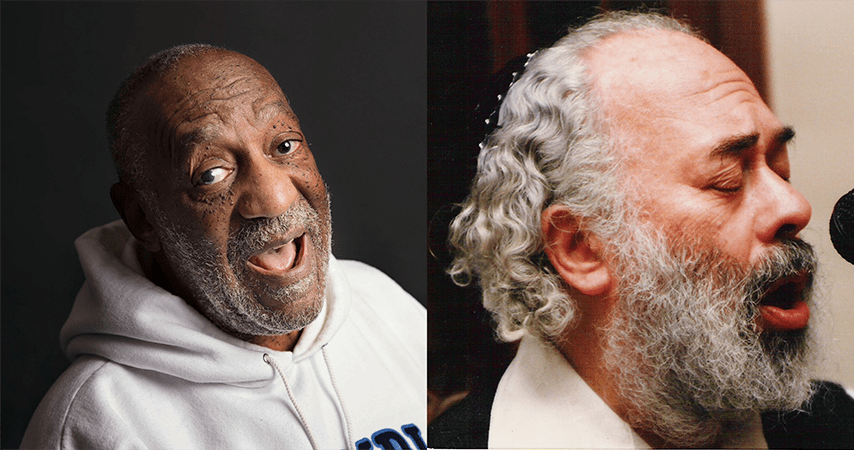
The next thing that bothered people about my article was the comparison to Bill Cosby, a man accused of drugging and raping over 50 women over the course of his life. How could I compare “Reb Shloime,” they asked, to a menuval like Bill Cosby? Carlebach doesn’t stand accused of drugging and raping anyone, just molesting them. And besides, he was a complicated man, everybody knew, nebach, he was probably lonely. It’s nothing like Cosby.

A few things. First, the article was written when the Cosby story was breaking. But more to the point, the comparison is not necessarily to the crimes committed (I’ll get to that in a bit, bear with me), but to the cultural significance of both accusations. Cosby wasn’t just some funny-man any more than Carlebach was just a singer. Both were leaders in their communities. Both had moral messages for their communities, and represented something so much bigger than just the art they each produced. Both were symbols of something greater. And both were accused of just about the most immoral thing a person can do: Violating, in such a heinous and personal fashion, the trust that people had in them and what they represented.

But more importantly, there’s a fundamental misunderstanding people about sexual assault. People assume that if the assault isn’t penetrative, that the trauma isn’t really anywhere near as severe as it would be if the assault were penetrative. Or that if the assault was penetrative, there’s a difference between penetration by a penis, a finger, or a foreign object. That somehow the violation, the trauma, is somehow lesser or more acceptable, or easier to forgive, or easier to do teshuva for simply because the law assigns penalties differently in each case. A sexual assault is a sexual assault, and it is the height of callousness to claim that just because the law needs to make gradated distinctions in penal code in order to actually have a functioning legal system, the trauma is any less severe. Whether penile or digital or with a foreign object, penetrative or non-penetrative, conscious or drugged, sexual assault is a massive violation of a person’s sovereignty over the only thing they really control: their body and their sexuality. Seeing it minimize it in the interest of making one group of people feel better that the guy they revere is not as bad as the guy another group reveres, is disgusting.

This past weekend, after sharing my article again this year in “honor” of Carlebach’s yahrtzeit, two women posted their stories as comments on the article. I’d like to share them below, because it leads me to my final point. The first is by a poster who used the name Shula.

“I was a 15 year old Bais Yaakov girl, enthralled with his music. I was in seventh heaven when he offered me a ride home from a concert. The driver and another person sat in the front, and he sat with me in the back. When he put his arm around my shoulder I was stunned but delighted; and then his hand started massaging my breast. I was 15 and completely naive, had no idea what was happening, but somehow felt embarrassed and ashamed. I just continued to sit silently without moving. This continued until I was dropped off at my house. He told me to come to his hotel room the next morning, and I did! He hugged me very tightly, and I stood frozen, not really understanding what was happening. Then the car came to pick him up, and again I went with him in the car and he dropped me off at school. And I never said a word to anyone, never! I’m a grandmother today, and can still recall that feeling in the pit of my stomach, the confusion and feeling ashamed. I never spoke about this, ever. But all of these comments of denial make me feel I have to confirm that these things happened. He was 40 years old, I was 15. He was an experienced 40 year old man and I was a very naive 15 year old Bais Yaakov girl. In those days we never talked about sex. I had never even spoken to a boy! I didn’t associate him with ‘a boy’ – he was like a parent figure, he was old. But I felt it was something to be ashamed of.

Your article is extremely important – these are conflicts that we have to deal with in life, but if no one ever brings them up, then each person, in each generation, has to over and over again re-invent the wheel of faith. The struggle for faith is hard enough; when these issues are so wrapped in secrecy (and I’m one of those that kept the secret for 53 years!).”

The second was written by a woman who went by the name Jerusalemmom:

“Dear Shula-I had an almost identical story to yours…I was a religious high school girl. 16 years old. I went to his house for a class-his wife opened the door and told me to go downstairs to wait for him. I was the first person there. As I was looking at his incredible library of Judaica he came down-hair and beard wet from the shower. Before I could blink he was on me. One hand down my blouse, another up my dress. I froze in fear. I was so lucky that other people came minutes later for the class and I was “saved.” It has taken me close to 40 years to talk about it. Why bother? People who were his followers give answers like “I can’t believe that” -or “we don’t want to know.” Or “he’s dead and can’t defend himself.”

May g-d grant you peace of mind and may you heal completely. Enjoy your grandchildren and teach them to NEVER EVER let anyone touch them without their permission.”

What’s interesting about Jerusalemmom is that this is the second time she’s shared her story on my blog. The first time she was attacked by Natan Ophir, author of the Carlebach biography, Rabbi Shlomo Carlebach: Life, Mission, and Legacy who claimed she was lying. According to him, over the course of his research for his “500 page academic biography” about Carlebach, published in 2014, he had interviewed the women in the Lillith article I quoted in my article, and none of them had stood up to rigorous examination that met his academic standards. I soon found out why.

He started out by asking me to put him in touch with Jerusalemmom. I emailed her and explained to her that Carlebach’s biographer was interested in interviewing her about the claim she’d just made in my comments section for his upcoming biography. I also explained that I got the feeling he’d be adversarial. She asked me for time to think about it, and I went to sleep, expecting to have a response in the morning. The next morning I found a bunch of comments awaiting moderation attacking the veracity of what some unidentified user on my blog had to say in an unverifiable “calumny.” Post after post awaited me in the moderation queue, all of the same kind, along with a slew of emails to my personal account to boot. When Jerusalemmom found out what he was doing, she asked me to remove her comments from my blog, and not contact her again regarding this. I apologized, and removed her comments from the article.

A few days later, the article was posted in a popular feminist Facebook group. Instantly, women started messaging me about their abuse at the hands of Carlebach, and posting comments on the page. Within the hour, Natan Ophir, who just happened to be lurking in that group despite never having participated before, popped up and started attacking anyone in the thread with anything negative to say about Carlebach. He was quickly booted out of the group, not for the comments, but for private messaging several of the women who had left comments on that thread.

In the interest of “fairness,” he sent me the chapter of the book he was writing in Hebrew about Carlebach for review. He said he had included some stories about Carlebach’s “darker side,” which, after reading that chapter, to him meant the claims that he was having contact with women other than his wife. Nothing about the allegations of abuse. When I asked him about it, he claimed he couldn’t find anyone with a sufficiently credible story, despite having spoken to dozens of women about it, one of whom actually confronted him in that Facebook thread about distortions he had made in quoting her in his book.

This all took place in December-January 2014, 20 years after his death. Which leads me to my final point. The third thing people say when these allegations come up is, “Why didn’t these women come forward when it happened? Why are they waiting until he’s dead for twenty years to come forward?” Or, “Oh, it was probably a bunch of women who slept with a celebrity, woke up the next day with buyer’s remorse, and cried sexual assault. You know how it is.” And I’d like to address those claims, because they are worryingly relevant.

The women I spoke to were terrified to come forward publicly. Despite the fact that there’s very little in their lives that they have to lose by doing so at this point. They have families, they’re grandmothers now, for the most part, and they don’t have jobs that hang in the balance if they come out and tell their stories about Carlebach. But they do have to worry about people like Natan Ophir following them around harassing them. They do have to worry about the hatred that Carlebach’s followers seem to have in endless supply for people who have a different, more troubling story about their beloved leader. At this point, many of them feel that it’s just not worth fighting that battle.

But as to why they didn’t come forward sooner? They did. Or rather, they tried. Many of them tried to confront Carlebach about what he did, but when his gabba’im found out about why they wanted to talk to him, they made sure to keep them away. When his followers found out that someone was harboring such an accusation, they made sure to shut them out, and make it plain that they were no longer welcome. The legend they’d built in their minds and their hearts was too big and too fragile to fail. And the truth is it’s not unexpected. Carlebach, to so many, represents the very essence of their Judaism. For many he’s the very reason they have any connection at all, whether spiritual, cultural, or religious, to Judaism. For many, his message of love and acceptance, of connection to God rather than strict observance of a set of laws, of following the spirit to transcend the letter. Without him that message is lost, and without that message they lose their connection.

I feel for such people. I do. And that’s how we return to the original question: Is it possible to separate the art from the artist; the message from the man. Two years ago, when I wrote the article, I didn’t know the answer. But now, to me, the answer is clear. I’ve decided to let it all go. I no longer listen to or sing his music. I don’t feel personally that it’s appropriate to listen to the music and stories of a man whose art gave him the power and status he needed to get away with abusing so many women. I can’t honestly stand at the Amud and sing L’cha Dodi to any of Carlebach’s tunes and feel anything but dirty. I can’t tell myself that God wants my prayers when they come packaged in such poisoned melodies.

I don’t know if that’s the appropriate decision for everyone to make, but that’s the decision I’ve made. But whether people decide to keep listening to and singing his music, or they decide to let it go and find other sources of inspiration, the man and the artist have to die. The legend has to die. Perhaps the message and the music can live on, but not through him. Not through someone who hurt so many people. He doesn’t deserve our praise.


Standard

How We Let Abuse Happen

The following was a response to someone who commented on my recent Hevria post about a Newsweek article detailing abuse and cover-up at Oholei Torah in Crown Heights. I’ve copied the comment here:

Abuse and its cover-ups should never be tolerated. Still, I take issue with your claim that the outrage will always be that the articles by secular outlets are anti-Semitic simply because this is such a searingly uncomfortable subject. It is pretty clear in the Newsweek article that they are pushing an agenda and trying to spread the idea that abuse like this happens BECAUSE of the nature of the religious/Chassidic community (this despite their “disclaimer” that abuse doesn’t necessarily occur more in Chassidic communities than secular). They misreport facts about the insularity of the culture and use their own misunderstandings as support for theories like “abuse is perpetuated because religious people are ignorant and close-minded”, beliefs that reek of bigotry. I think if issues were addressed with more respect, compassion, and empowerment, and less shaming and polarizing sensationalism, they’d be better received by the community and the focus would be less on the anti-Semitism of the article and more on solutions.

My response:

Three things facilitate this kind of abuse and cover-up. I’ll unpack them below. You’re welcome to call me an anti-Semite too, but these are things I’ve learned during my years of being a victim, and my years of activism on behalf of victims.

1) Willful ignorance

2) Denial

3) Conspiracy

Willful ignorance:

There is very little talk about sex and sexuality in general. It’s not considered tznius or appropriate. I’m not going to get into the merits or disadvantages of that, it’s just a fact. We shy away from anything related to it. We don’t use proper words for genitalia, like penis and vagina, we don’t have discussions about safe sex and consent, and we don’t explain children’s bodies to them, generally speaking. Many kids have no frame of reference to interpret what happened to them when they’re abused, because they don’t even know how to relate to their own bodies.

Again, I’m not trying to start an argument about whether we should or shouldn’t change that, but it is the reality. Sex is considered a private subject inappropriate for public discussion regardless of the context. And that *is* due to our religious culture. for better or worse.

That being the case, abusers know that there’s more they can get away with. They know that kids don’t really know what’s happening to them, they know the kids aren’t generally prepared to protest or tell anyone immediately after because they wouldn’t even know how to describe it, and they know that no one would believe the kid anyway, because what kind of nice Jewish person would do that. Which leads to the next two steps, denial and conspiracy.

Denial:

Being that the very topic of sex even in the context of consensual sex is so taboo and private, kal v’chomer non-consensual sex, or sexual abuse. The notion of someone having sex with someone else consensually outside the confines of marriage, let alone someone of the same sex, is so outside the realm of possibility for most sincere frum Jews that the notion of someone having sex with someone else *non* consensually is just impossible to fathom. The idea that someone who claims to have accepted torah and mitzvos, someone who goes to shul 3 times a day, puts on tefillin, keeps kosher, and learns in his spare time – certainly a rebbi – could do such a horrible crime is beyond the comprehension of many.

And it’s completely understandable, but it’s false. And it, again, is because of our religious culture. Once again, I’m not looking to debate the merits or disadvantages, it’s just a fact. That’s how the rank and file who don’t know any better react to abuse allegations. Especially since many abuse victims, by the time they finally pluck up the courage to report, have developed some serious problems, and/or gone off the derech, so to speak. They come off as angry, with an ax to grind, which they must have, because they’re no longer religious.

They must want to get back at the religious people who forced them to keep shabbos all those years, or whatever. No one ever considers that it’s because they were abused that they have psychological issues requiring therapy or meds, in many cases. No one considers that their eating disorders, drug habits, depression, personality changes might have happened as a result of abuse at the hands of the person they’re accusing, because again, the notion is inconceivable, and we tend to believe the nice religious guy with standing in the community rather than the OTD guy with problems. Which again, is the result of our religious culture. For better or worse. Which leads me to the last step, conspiracy.

Conspiracy:

Until now I was discussing people who are not familiar with the details of these cases, and who don’t have any personal connection to any abuse cases. The rank and file, as it were. They’re not involved in the conspiracy, they’re used by the people who are. The people at the top, the roshei yeshiva, principles, administrators – the ones to whom the allegations are often first made – actively silence victims who come forward with allegations of abuse. They’re the ones who threaten students with expulsion, call them liars, tell them it was their own fault, and do their best to keep the victim silence. In Chaim Levin’s case, for example, Rabbi Lustig told Chaim’s parents, after he came to Rabbi Lustig with an allegation against his cousin who abused him for 4 years, that the name of the abuser was irrelevant, and that he should just move on. He also failed to inform the police of the allegation, as he was required to by law.

But it doesn’t stop there. Many times it stops with the leaders. If they tell someone not to come forward, either by convincing them not to “ruin a man’s family,” parnassah, or otherwise appealing to their conscience, or by threatening or blackmailing them into silence, the victim will just give up and not pursue the case further. Sometimes the victim doesn’t care, and wants to pursue the case regardless of what they were told, and what threats were made. That’s when the leaders take advantage of the community’s naïveté.

When the allegations are made public, the community leaders, who themselves have dealt with many cases of abuse, generally behind closed doors, and often by intimidating victims, will issue a public statement standing behind the alleged abuser, and trashing the victim. The community, already ignorant of the fact that abuse takes place, and in denial that it could actually happen, of course sides with whomever their leaders tell them to, because why shouldn’t they? They have a tremendous amount of reverence for their leaders, and have no reason to assume that their leaders are misleading them or lying to them.

And all this is due to the fact that our religious culture, for better or worse, fosters this ignorance, and this denial, which enables the conspiracy.

Now, I just wrote that out in a very long explanation. The condensed version is what you’ll find in those sentences in the Newsweek article you objected to. Tell yourself it has nothing to do with the culture we’ve built around our religion, but it’s just not true. There are many beautiful things about our culture, and many ugly things we’d prefer not to acknowledge. This is an example of the latter.


Standard

Why I Never Discuss Tragedy in Its Immediate Aftermath

Short answer? Because it’s maddening. It’s so infuriatingly predictable and horrible. In fact, it’s gotten so bad that when tragedy strikes, my first thought, after registering the shock and horror of what happened, is to consider all the ways that the tragedy will be exploited, and guess how long it’ll take until that happens. I’m rarely wrong. Every time there’s a mass shooting, I count the seconds until Wayne LaPierre issues a pro-gun statement, and wonder whether it’ll be him who speaks first, or the anti-gun crowd, neither side able to wait until the bodies are actually cold and buried before they pick them apart for scraps of an argument.


Here’s the long answer. Every single time I’ve lost my cool, and in a moment of pure anguish and frustration written a diatribe against whatever social ill I felt was the “real” cause of whichever tragedy had just happened, it made me feel good for around 10 minutes, but then inevitably sucked me into an irrelevant argument that left me feeling terrible, and utterly disconnected from the empathy I knew I should be feeling. In the aftermath of the Yishai Schlissel stabbings at the Jerusalem Pride Parade, I was so angry I got on Facebook and said that I hoped this would cause the Nations to hate us, because maybe if they used this as an excuse to start persecuting us again, we’d get an idea of how wrong and hurtful our homophobia really is. But of course the world doesn’t work like that. Violence doesn’t beget understanding, it begets more violence, until the whole world is blinded by it.


This is especially relevant when we have a suicide in the religious, or formerly-religious world. Immediately, the vultures descend on the body, from both sides, each claiming the suicide victim as their martyr. He died because of mental illness, and we need to do our utmost to address this serious problem. No, counters the other side, she died because her frum family, shitty, callous people that they were, tortured her so relentlessly about her choice to leave religion, that she finally killed herself. No, you don’t know the whole story. No, you don’t know the whole story. And on it goes, the buzzards feast, and secondary to the entire discussion, is the reason the discussion is happening: A person died.


A few years ago, an IDF soldier was found dead with his weapon next to him. The circumstances around his death were a little murky, but since he had been an open survivor of abuse who had described his struggles on his blog, certain activists immediately jumped to the conclusion that it must be suicide, because it fit the narrative they wanted to promote. And as just a cause as I’m sure they felt their co-opting of tragedy was, as just as I’m sure everyone who exploits tragedy for their agenda feels it is, they did so without regard to the feelings of the family, the actual mourners who were now left bereft of a son, a brother, a cousin, and on top of all that had to read agenda-driven speculation online while their loved one awaited burial.


Personally, I decided not to discuss it at the time. I can’t tell you why—it wasn’t because of this policy that I have, which, at the time, I didn’t yet have—but something stayed my opinions. About two years later, I got a Facebook message from the sister of that soldier, thanking me for not jumping on the bandwagon that was using her brother’s supposed suicide as a soapbox for their opinions. She told me that they still weren’t sure what it was, and that she appreciated the fact that I hadn’t used his death to make a point. That was the moment that I realized what had stopped me from discussing it—the understanding that the very worst time to discuss tragedy, is immediately in its aftermath.


If we intend to teach, to educate, to change the world in a way that prevents tragedy from happening again, then the absolute worst time to discuss it is when emotions are running high, no one is particularly interested in discussing things rationally, everyone already has an opinion that you’re not going to change, and nothing new will be added to the conversation that one billion other people with a Facebook account won’t already be saying. And of course all these post-tragedy rants range from the mildly to wildly offensive, not just to people on your friends lists, but also to the victims and their families who have to hear the world fighting for the endorsement rights to their pain and suffering.


If you must speak following tragedy, if you absolutely must say something because it hurts too much to keep it all in, try to think about what the victims and their families want to hear. Make it about them, not yourselves. What we might call slacktivism might just be compassion. A world standing in solidarity, saying “We’re here for you, all of us, and we have a lot to say, but we understand that right now is not the time to say it.” And yes, changing your profile picture to include a different overlay might not actually change anything, but you don’t need to immediately start changing anything in the direct aftermath of tragedy. If there was something you could have done about it, presumably you would have.


But the tragedy happened. And there are people who suffer in its aftermath. And those people need love, and support, and a feeling of safety and security while their world crashes down around them. They don’t need your opinions, and they don’t need your agendas. There’s always time for that later, when the passion and anger has subsided, and we can begin to discuss how to prevent it from ever happening again. When you won’t say things you’ll later regret. When you won’t lose friends because you absolutely had to speak your mind. When your words are motivated not by an angry desire to watch the world that allowed such tragedy burn, but by a love and empathy that needs the world to heal.

Standard

May It Be My Worst Problem

I used to get very ordinary haircuts. I’d go to the closest barber about once every two or three months, and get a number 4 buzzcut right over the top. No frills. But then I started dating, and more than one of my girlfriends told me that they liked my hair and wished I would stop shearing it all off. And if a girl who liked spending time with me wanted more of my hair, who was I to say no. I told her I’d go to whichever salon she recommended. She picked a place, and I made a reservation for a week later. The price was a bit steep, but anything to make her happy, right?

I got there at 7 PM, and entered a room made for men. Animal skin throw rugs, rich, plush leather chairs, mounted trophy heads, a magazine rack holding everything from Car and Driver to Playboy, a beer tap, large selection of scotches, and, of course, four beautiful women doing the styling. It was a stunningly chuckleworthy caricature to masculinity. I suspect she chose it because she thought it would appeal to me. It did, but more to my sense of irony. As soon as I walked in, the receptionist greeted me, asked to take my jacket, and offered me a drink. I could get used to this.

I’m pretty introverted by nature. It may not seem like it to people who know me online, mainly because of how much I talk when they finally meet me in real life, but my close friends know that I don’t really do well with new people. It takes effort to get me to talk to you, because even if you do walk over to me and say hi, I’ll just smile and politely say hi back, and then go back to staring at a fixed point on the wall to your left, until you decide to say something else. I was still getting used to the amenities included in the $100 haircut experience, but what I wasn’t ready for, or comfortable with, was the conversation that seemed to be included.

The other men seemed to enjoy it just fine. Their stylists would play to their fancies, asking them about work, and vacations, and cars, and bars, and girls, and they’d go on and on, goaded forward by the stylists who were committed to making the haircut as enjoyable an experience as possible. And what more enjoyment can a man have, really, than having his vanities indulged by a beautiful woman. For me, it was a whole lot more uncomfortable, though. I had nothing in common with those men. I didn’t have apartments in other cities, or the pocket change necessary to fly off to wherever whenever I felt like it. More to the point, I really didn’t like talking. The conversations were like pulling teeth; she’d ask me some perfunctory questions about work, or travel, I’d give her short, clipped answers, and we’d fall into silence, until it was time to get rinsed.

After about six months of this, we finally developed some kind of rapport. The conversation was a little easier, and I felt more comfortable about it. When she asked about my life, I’d actually tell her about it. But something funny started happening. Somehow, right before my monthly haircuts, something unfortunate would happen to me, or several unfortunate somethings would happen to me, and I’d be compelled to tell her about it when she asked. One month my car was wrecked, another it was towed and I had to spend 6 hours getting it out of the tow pound, next month I’d broken up with someone I was dating, and on it would go, one long series of unfortunate events. And even though I told her these stories with a smile, laughing them off like they were insignificant, they bothered her, to the point where she (politely) asked me to stop talking about them, and changed the subject. I think the fact that I was laughing about things that to her were so plainly terrible made it even worse; how twisted does someone have to be, or how bad must things have been, to make someone laugh at things that make other people cry.

This month was going to be different, though. I was actually looking forward to my haircut so I could tell her about the wonderful time I’d had with my friends over the recent holidays. It really was fantastic. Atlanta for Rosh Hashana, Crown Heights for Yom Kippur, Boro Park, Canarsie, and Flatbush for Sukkos, including trips with friends for Chol hamoed. It was honestly the best time I’ve ever had on Yom tov. And I was so looking forward to finally having some good news for her, maybe make her smile instead of rolling her eyes. And then everything went pear shaped.

It started with the laundromat. I brought all of my clothing in on Erev Sukkos, but the computers were down. One of the workers handed me a slip of paper, told me to write down my name, phone number and address, and come back in a week for the clothing. When I came back, it was all gone. All of it. I even went behind the counter and sifted through all of the laundry myself. Hundreds of dollars’ worth of clothing, gone. Which was made even worse by the fact that because of Yom Tov, I haven’t worked a proper week this month, and barely had enough to pay my rent, let alone my credit cards. As if that weren’t enough, a student of mine crashed my car during a driving lesson last Friday, causing $1600 worth of damage to my car, and another $800 to the other guy. My car is going to be in the shop for a week, during which time I won’t be able to work.

I was able to borrow a coworker’s car for the weekend to drive myself back home, and on the way I decided to check in on the laundromat to see if they had, by some miracle, found my clothing. They hadn’t, and rather than just give me the claims form to fill out, had me stand there for a half hour while they turned the place upside-down looking for a bag that was clearly not there, all in the hope that they could avoid having another claim from their store logged with the main corporate offices. Eventually everyone gave up, and I filled out a claims form for the lost laundry. As I was walking back to the parking lot, I dropped my car keys over a drain.

As I saw them fall, I almost didn’t care anymore. Of course this would happen to me. Of course. And right then. A perfect end to a perfect week. But then they bounced. The key had hit a piece of the latticework over the drain, and bounced off onto the pavement. And as I bent to pick it up, I couldn’t control myself, and burst out laughing. Some guy across the lot thought I was crackers, but it was the most incredible thing. For five minutes I couldn’t stop, and all that was going through my head was “My God, imagine how much worse it could have been.”

It really got me thinking about everything in my life, all of the abuse, all of the pain, all of the unfortunate things I’ve been made to experience. I’ve spent the past 6 years blogging about everything that’s gone wrong, about the anger I’ve felt toward God, the constant adversity I’ve managed to overcome, but it hit me in that moment, how little time I spend being thankful and appreciative for everything that has gone right in my life, how much worse it could have been but for God’s intervention. And I couldn’t stop laughing because all of that complaining I do, whether or not it’s justified, in that moment seemed so ridiculous, because the good is right there in front of me, constantly, and all I need to do, really, is open my eyes and see it. It felt like my whole life, everything I’ve ever experienced, had to happen to set the stage for that moment when I’d see my keys fall toward that drain, and they would bounce away onto the pavement.

I’ve had a very difficult life. But I’ve also had a very blessed life. I’ve been blessed with the best friends on the planet, a community of people whom I consider my new family, incredibly charitable people who opened their hearts and pockets when I had nothing, the most amazing and supportive readers on the internet (seriously, my comments section is wonderful). I’ve been blessed with health, and a job that (usually) pays the bills. I have a landlady that most tenants would kill for, a boss who is nice to a fault, coworkers who somehow manage to put up with me, and clients who pay on time. So what if things go wrong every now and again. What’s a night at the tow pound in the larger scheme of things. Dented cars can be fixed, clothing replaced, debts deferred, and wounds healed. May they be my worst problems. I have everything I need. And hey, at least my keys didn’t fall down the drain.

Standard

Dancing in My Chair – The Rest of My Story

It was the same every Simchas Torah, which is why I kept going back to Young Israel Beth-El of Borough Park. I tried other places, but I could never get comfortable. The men and children would gather excitedly around the bimah, anticipation in their eyes, the long-awaited release of the singing and dancing as they circumambulated the bimah, Torah scrolls held reverently to their chests, or high in the air by some of the stronger folks, celebrating the yearly completion of the Torah. Ana Ad-nai hoshia na! And they’d be off.

Slowly at first. My favorite part was always the beginning, slowly chanting the first verse of the portion designated to each of the seven hakafos. All the places I went to skipped the rest. The verses are all from the latter part of Psalms 19 and recited in order at the beginning of each hakafah respectively, yet somehow nobody in the places I’d go seemed able to keep a handle on which verse was said when, and what the words actually were. I always prided myself on knowing the correct verse, and often my voice would be the only one chanting the words while the rest of the congregation took a momentary break to consult a prayer book. We’d start low, slowly chanting, building the melody, our voices rising, higher, until the climax where we’d profess loudly, and joyously, children and Torah scrolls held aloft, our belief in the absolute truth of the Torah, and in Moshe, the greatest prophet who ever lived. And then the dancing would start.

Well, I say dancing. It’s more like running in circles. It’s kind of nice, though. Everyone joins hands, or holds the shoulder of the person in front of him, forming what amounts to a large, circular conga line, typically focused, and dancing, around something important in the middle. At weddings, it’s the bride, or groom. On Simchas Torah, it’s the bimah, where the Torah is read. It gets much livelier than it sounds a few rounds in. Some people grab the person next to them and go off to the side to form their own, faster paced circles. Some people grab the person in front or to the side of them, and encourage them to sing a little louder, smile a little broader, and dance just a little harder.

That’s why I loved going to Young Israel. None of that ever happened there. No one ever grabbed me, or bumped into me. No children ever wrapped their arms around my leg, bumming a ride around the bimah. There were a grand total of three young children in a congregation of older and middle-aged men. I could dance around without holding anyone’s hand, or having anyone touch my shoulder. I don’t like when people do that, but it’s hard to tell people you don’t like being touched. They start looking at you funny, like you’re some kind of damaged leper. Sometimes they ask what happened to you, and actually expect an explanation. Most of the time I put up with it without complaining too much, because that’s what’s expected of me, and honestly I just don’t have the patience to explain to everyone in shul that I really want to be a part of the group, but only if no one touches me.

Sometimes I can handle it. Sometimes I can’t. I wasn’t in Young Israel this year, and I really couldn’t handle it. The night of Simchas Torah I managed to last for two hakafos, and then had to leave shul or risk punching the next person whose hand reached for mine. The next day, I deliberately came late. I told the friends I was staying by that I was hung over from the previous night and overslept, but the truth is, I just didn’t want to deal with hakafos. I wandered into shul around 11 o’clock and sat in a pew watching the merriment. Some people tried to get me to dance, taking pity on that guy in the corner sitting alone, but honestly I’ve become very happy watching from afar. I’m not sad, and I don’t feel alone. I’m with them in spirit. Dancing in my chair.

I’ve disliked being touched for as long as I can remember. Until just a few years ago, I couldn’t remember ever liking hugs, or feeling loved by kisses. I never felt camaraderie from an arm around my shoulder, or a pat on the back. Touch always made me feel intensely uncomfortable, as though anywhere in the world would be better than where I was in that moment. I never really knew why, or gave it much thought, I just knew I didn’t like it. And then one night a few years ago, while working on the manuscript for a memoir I’ve since scrapped, I made a terrifying connection. I was writing a paragraph about how I’ve always hated being touched, and how I’ve never had a hug I liked, and this connection I had never made before hit me like a ton of bricks. I ran over to my blackboard and wrote it all down before the realization went away. As I wrote, it jarred me, left me shaking, but I set it aside and went on with my life.

Two weeks later, I was in a chatroom for an online support group in which I was a member, and we were talking about my aversion to touch. One of my friends in the room asked me if I remember ever liking being touched by anyone, and that same connection hit me again, and this time it was there to stay. I told them everything.

I told them how I could remember hating being touched by my mother. How she used to hover over me all the time, and touch me more than I was comfortable with; how I did ask her to stop every now and again, but she never listened. I was her son and she was entitled to certain things. She hugged me whenever she wanted to, kissed me whenever she wanted to, but sometimes those kisses made me feel funny. I had no idea why, but I knew it was not ok. I told her to stop, but she always told me that a mother is entitled to kiss her child. She would kiss me in places that made me feel aroused. Never on my mouth, or anywhere that would be considered overtly inappropriate. On my ears, my earlobes, my neck, my shoulders, and different parts of my face. I knew how it made me feel, and while I didn’t understand what that feeling was at the age of 5, I knew it was wrong.

She would do this until I couldn’t handle it anymore, and that feeling I was feeling became all-consuming, and 5 year old me knew it had to be relieved. So 5 year old me would masturbate. Sometimes I would do it in private, sometimes I couldn’t go somewhere private, so I would stick my hand in my pants off to the side and do what I had to. Sometimes she would be in the same room and I would try to hide it under the covers. Apparently she saw me doing it, because she would tease me about it when I finished. One name she’d call me when she saw me was “masturbating genius.”

The incident I recall most vividly is when I was 12 and she was kissing me like that at the Shabbos table. She would not stop, no matter how much I protested, squirmed, or tried to inch away from her. My whole family was sitting at that table and she was kissing me that way, and I felt myself getting aroused, and I didn’t know what to do. She would not stop. After about a half hour, I couldn’t contain it any longer, but I also couldn’t leave in middle of the Shabbos meal, so I went to the couch behind my grandfather, masturbated in my pants, and came back to the Shabbos table. She knew. I could see she knew. She started kissing me again. She teased me about it later. This happened for ten years of my life.

When I finished telling my friends in the chat, I was shaking, crying, having a panic attack, and all I wanted to do was die. The shame was unbearable. I felt so dirty, so disgusting. What kind of sick freak masturbates when his mother kisses him. And which mother doesn’t kiss her children? Those other kids never masturbated when their mothers kissed them, what excuse did I have? Was what she did really different? Was it really wrong? I didn’t know. My friends were telling me it wasn’t my fault, but I couldn’t understand how it wasn’t. I had put my own hand, down my own pants, stimulated my own penis, until I reached orgasm. She hadn’t done that, I had done that. And no matter how many times my friends told me that it was her fault because I was a child and she knew what she was doing, it would not sink in.

My friend, who ran the online group, drove in from where she lived, picked me up, brought me to her house for the weekend, and arranged for me to see a therapist the next week. I told my therapist this story, and she also told me it wasn’t my fault, and again, I refused to believe her. “If you had a video,” she asked me, “of what she did to you, what would you think was happening? Would it look like a mother kissing a son?” I thought about it for a second or two, and told her “No. It looks like foreplay.” I had to know, though. “Did she know what she was doing? Did she know that what she was doing was making me aroused?” My therapist asked me if she had ever had sex before. I’m living proof she has. “If she’s ever had sex, which she obviously has, she knows what arousal looks like in someone else. She knew what she did, and what she did was wrong, and it was not your fault. You have nothing to be ashamed of.” No one had ever told me that before.

Even after discussing, and dissecting it with my therapist, I never spoke about it with anyone. It sort of became this festering secret that I stored in my mind’s attic, encrusted in mothballs and collecting dust, until the day I’d be forced to drag it back out and stare it in the face. I don’t know why I’m doing this now. I guess because I’m sick of being that lonely-looking guy in the corner of the shul. I’m sick of having to either go along or leave instead of asking people to respect my boundaries. I’m sick of being the freak.

This doesn’t mean I’m magically going to start liking touch. I’ve known this stuff for years, already, and it hasn’t made me any more comfortable being touched than I was when I didn’t know why. It’s a work in progress. It’s weird, though, I love being touched by the right people. I love a good hug from a close friend. I crave it, and need it, and hate going without it. But there are only a few people whom I trust enough to let touch me. I wish I could carry cards around and hand them out to people explaining my situation and asking them to respect it. Perhaps that’s too much to ask.

I don’t know if I’ll ever be ‘cured’ of my aversion to touch, and I don’t know that life would magically go back to normal if I were. But until that happens, please try to bear with me. If you see me sitting off to the side, smiling slightly, tapping my feet in time with the singing, please don’t come over and ask me to dance. I’m not lonely, and I’m not sad. I’m with you. In spirit. I’m dancing in my chair.


Standard

How Rosh Hashana Returned Me to My Culture

Author’s note: This started as a post I started writing in the Project Makom Facebook group, but I felt it deserved to be shared with a wider audience. I am deeply grateful to all of the organizers of this shabbaton, and to all of the people who make Project Makom possible. 

So a bit of thanks and a bit of confession. Firstly, thank you so much to Mindy, Yoel, and Shlomo. Rosh Hashana was incredible, and by far the most meaningful I’ve ever experienced. Thank you so much to everyone who came; it was great meeting all of you. Thank you for putting up with me, even if (and especially when) I was shouting my opinions at everyone.

Now for confession. I’ve always had a big problem with the cultural aspects of Jewish life. I love the ideology, and I’ve come to love God, and through loving God I’ve come to relate to the Torah and halacha, but the cultural aspects of Jewish observance have always made me feel somewhere between uncomfortable and repulsed. For example, zemiros on shabbos or yom tov make me want to be anywhere else but the table at which I’m sitting. Singing in shul makes me wish I hadn’t gone. Making a yehi ratzon on the symbolic Rosh Hashana foods make me feel stupid. It’s not because I’m some hyper-rationalist who thinks that religious practices based more on emotion and spirituality are less valid than logical legalism.

From age 11 onward, cultural religious expression in my family meant that life was about to get very dangerous, or at the very least very bizarre. Before age 11, when my grandfather was still alive, cultural religious expression was beautiful. Kiddush was soulful, zemiros were emotional, prayer in the home was inspirational. After he died, everything changed. He was no longer the family’s cultural spiritual leader, so to speak. That fell to my grandmother. She tried for a year or so, but we missed my grandfather, and as hard as she tried, she could never step into his shoes. Eventually she gave up. The zemiros stopped. The prayer stopped. Kiddush was mumbled. Shabbos meals were a family obligation rather than a blessed opportunity to bond. Religion became entirely ideological in practice; we lost the cultural, spiritual, hard to quantify but oh so real aspects of our family religious observance.

Which was fine. I had nothing against cultural religious expression, it just wasn’t something we did anymore at home.

But it wasn’t so simple. My mother had bipolar disorder, and mental illness has a funny way of manifesting in religious observance. When my mother was irreligious, it meant she was stable. Hearing the TV on shabbos, while heartbreaking and disgusting to a child raised to believe that religious Judaism is the only valid way to live life, meant that she was on her meds. It was when she was being frum that things got scary.

See, when she was stable, she knew that God didn’t care about her. She knew that God didn’t matter, and that being religious is for superstitious idiots or people graced with such privilege they’ve never had to wonder why God can be such a bastard while claiming to be benevolent. But when she was off her meds, she was just crazy enough to think God actually cared, to think that if she put on enough of a show, God might actually give her what she wanted. But things had to be just so, because God doesn’t stop being a tyrant just because you start listening. Everything had to be perfect for God to be impressed enough to give her what she wanted.

So if she was lighting candles, I had to stand there in silent contemplation. If she was singing zemiros, I had to either join or sit silently. If she was praying, I had to listen intently. If she was covering her hair, I had to dress as though I was standing before the King of Kings. Because the show had to be perfect if God was to be entertained enough to bestow God’s beneficence. And God help me if the show wasn’t perfect.

I came to hate all of it. Even after I stopped hating God. I still hated all of those little acts I’d been forced to put on. Even after I started loving God again, I was never able to bring myself to express that love the way everyone else finds so natural, but to me feels dangerous. I stopped singing in shul. I sat silently at the shabbos tables of my friends. I made excuses why I wasn’t singing when people pressed me to participate. I’d hurry through public expressions of religion as though I was ashamed of it, when really I was never ashamed of it, but terrified of it.

Somehow, though, that was different this Rosh Hashana. I don’t know what it was, but I felt safe, comfortable, and accepted enough, to dip my toe in the water again, and join in not only the legal, halachic observances of Judaism, but the cultural and spiritual observances and expressions of Judaism as well. And it was ok. It was scary as all hell, but it was ok. Nothing happened. It felt ok. Like I was finding something I’d lost and come to fear. And I know it’s weird, and a little off putting to attach this kind of serious significance to something as casual and lighthearted as a friendly roadtrip to Atlanta for Rosh Hashana, but in a sense this marks a milestone in my life, where I can say that a part of my religion has finally been unlocked for me – a part I’ve really missed.

And now we’re back to thanks. Thank you all for being a part of that, even if you didn’t know it was happening. Thank you all for being the ones who were there to share this experience with me, even if I was the only one to experience it. You’re all very special people and, I don’t think it would be an exaggeration to thank you for being a part of changing my life.

Standard

Why I Eat So Much

I never realized how complicated my relationship with food was until I moved. I’ve learned a lot since I moved, particularly how messed up my relationship with food is. It started with being able to cook. I was able to cook when I used to live at home, but it wasn’t so simple. Nothing really was. Cooking was a kind of trade-off requiring serious consideration of cost vs benefit. On the one hand I would have yummy food when I finished cooking, but on the other hand, I wouldn’t be safe while cooking. Not emotionally, anyway.

Abuse is insidious in the way it affects your life so completely, ruining even the little things that should be ordinary and routine, performed without thought or consideration of consequences.  Like cooking dinner. Like going to the fridge to see what’s in it. Like going to the kitchen to get a fucking banana. It shouldn’t be difficult. It should be something you don’t even have to think about, something you just absently get up and do while engrossed in a show you’re bingewatching on Netflix, or a conversation with your best friend about “oh my god did you see what she was wearing?!?” It shouldn’t require cost-benefit analysis.

I’m pretty fat. There’s no sugarcoating that. I can already hear people tapping away at their keyboards, typing messages to me telling me I’m handsome, and not to hate my body, and to love myself, and blah blah blah. Save it. I’m not ashamed of it. I don’t hate my body. I do wish it were different, but I’m ok with what it looks like. I don’t think I’m ugly. I’m just fat. Get over it. It’s not because I have a glandular problem, or slow metabolism, or one of a dozen other excuses I could come up with (not to delegitimize people who actually have these problems)—it’s because I eat a lot. But what’s interesting, and what I’m beginning to understand, is why I eat so much.

I’ve been fat for most of my life. It started in third grade for reasons that aren’t really relevant right now. I started significantly gaining weight, however, after my abuse was kicked up a notch. My room was the only safe place for me in the house. My room had a door I could lock, or at the very least barricade if my mother tried hurting me. I spent a lot of time in my room, especially if I was cutting school, which happened more and more as the abuse went on. But locks weren’t a perfect solution. I can’t count the number of times she broke the locks, or broke down my door. Sometimes I would just forget to lock it, and she would get in. Or I left it open to let the cleaning lady in, and my mother would rummage through my stuff while my room was being cleaned. Most of my stuff she wasn’t interested in, but what did interest here were my books and my food.

I’ve paid hundreds of dollars in fines to the library because she stole my books and wouldn’t give them back when they were due and couldn’t be renewed because other people had placed holds on them, or because the books were irreparably damaged. My food interested her, not because it was food she couldn’t have gotten from the same grocery I’d gotten mine from, but because the food was mine. Her rationale for stealing my books and my food was that she had given nine months to my gestation, her pain to my birth, and fourteen-odd years to raising me and “giving me everything.” This, in her mind, entitled her to everything that was mine. It entitled her to my food, my books, and my body. It entitled her to abuse me. She took my stuff because it was mine and she believed she was therefore entitled to it as some twisted reparations I owed her as her son.

What this meant, was that the notion of leftovers didn’t exist in my mind, neither did security in the knowledge that I would have food to eat the next time I wanted some. What that meant was that every time I got food, whether it was takeout Chinese, a bag of popcorn, some bagels, a pack of lox, and some cream cheese, or a bag of oranges, I had to eat it all, right then, in one sitting, or at the very least in one day, or it would be gone the next time I wanted it. Of course I could have just ignored the fact that she was stealing from me and just have kept buying more food as I needed it. But it wasn’t the fact that she was stealing from me but the reason why she was stealing from me that made me want to thwart it.

Every time she stole it triggered me. It made me feel unsafe, like I didn’t even have a room, a fridge, a tiny little space that was mine and mine alone, a space in which I had control over my life and my decisions, in which I had some privacy to just be the person I was becoming. It reminded me that I had no control over my life, over my body, that whatever she wanted she could have, and whatever she wanted to do to me she could, because I had no say in my life. It was a complete breach of whatever illusion of security or privacy I had made for myself, and it scared me. So I had to eat everything I bought, regardless of how much it was, or how sick it made me. I had to eat it because eating all of it, even to the point of nausea, still felt better than that feeling of insecurity I felt when she stole from me.

Cooking was a whole other problem. Every time I cooked, she would stand over me, trying to see what I was making, commenting on how it smelled, asking if she could have some. I never responded to her as I had stopped talking to her completely when the abuse got really bad, but what she did was unbelievably triggering to me. I would keep the lid of the pot on, even if I smelled the contents burning, just because I didn’t want her to see what I was making. I wanted something for myself. I wanted some privacy. I wanted there to be something in my life that she wasn’t forcing her way into, and even though this stubbornness was harming me, I needed it. I needed it just for the sake of my sanity. I needed it to feel like a human being.

If I walked away for even a minute—just to pee or get another ingredient—she would run over to the pot, lift the lid, smell it, sample it, and make sure I knew she had. If I didn’t take the pot with me to my room when I ate whatever I had made, she would scrape the dregs out of the bottom of the pot, and then stand outside of my room loudly commenting about it. She would even dig through the garbage if I had thrown something out, either to taste it or to see what I had made. As pathetic as it was to see, it infuriated me and triggered me that she would go to such ridiculous lengths just to impinge on my privacy. Just because she could. Just because she felt entitled to it. To me.

This may seem like a weird power struggle to someone reading this who had the good fortune of being raised by loving parents in a safe environment, but when you’re abused, normal flies out the window. It loses its definition. There’s no such thing as normal. Everything has subtext. Everything has a deeper, manipulative meaning that may not be readily apparent to uninformed observers. Everything means something else. Everything is a power struggle. Everything. Is. So. Fucking. Triggering.

Eating too much was the only way for me to keep my sanity. I couldn’t leave leftovers. If I put something in the fridge, I’d constantly be worrying about it. Cooking food wasn’t a good option either, because it would involve subjecting myself to an hour or more of my mother talking to me, leaning over me, commenting about me, being around me, triggering me. Even going to the fridge to get what was there wasn’t ok for me because it meant she would see me, start talking, and trigger me. I wanted to minimize the time I had to deal with her.

Takeout was the best option. But the thing about never feeling secure in your next meal is that even when you know you can have food whenever you want or need it, it still makes every meal feel like your last. Which meant that even when I ordered takeout, even when I knew I was going to be buying all three meals as I needed them, I’d still buy too much, and would therefore, invariably, eat too much, just to make sure I had eaten enough and wouldn’t be in such desperate need of food if my next mealtime came and for whatever reason I couldn’t get any food.

If I bought takeout, I’d buy two entrees, two sides, a soup, and two sodas, eat it all, and feel like my stomach was coming apart at the seams. Another byproduct of never feeling safe with my food was the speed with which I ate. I’d wolf my food down, which, as anyone can tell you, especially when dealing with large quantities of food, is not healthy. If I bought stuff at the local grocery, I made sure I had more than I needed just to be sure, and then ate all of it. I ate until it hurt. I ate until I felt safe.

I haven’t lived there for 5 months and counting, and I’ve come to realize some things. It started when I got my regular-sized fridge. When I moved into my apartment, my landlady provided me with a wine cooler in lieu of a fridge. It was fine really, because I had brought a minifridge with me. But for the first four months of living there, I didn’t have a freezer, which was not only annoying, but also a painful reminder of the place I’d left. When I lived over there (I’m loathe to call it home), I had eventually bought myself a minifridge—the same minifridge I brought with me when I moved—but it didn’t have a freezer. We had freezers in the kitchen, but I had no way of ensuring that what I put in there would stay there, and I tried my best to keep the time I spent out of my room to an absolutely minimum, so I never bought anything that needed to be stored frozen.

When I finally got my regular-sized fridge, complete with beautiful freezer compartment, it finally felt like I had a normal home—a home that was mine, that I controlled, in which I was safe. I couldn’t place the feeling, but I knew it felt right. This past Thursday night it finally hit me: For the first time in my life I have a fully stocked kitchen, fully stocked refrigerator, fully stocked freezer, and I have control over all of it. It’s completely safe. No one can use it to control me. It’s mine. I finally have control over what I eat, when I eat it, how much of it I eat, and whether or not I want to save some for later.

If I want to make myself dinner, now all it involves is googling a recipe, going over to my cabinet, getting the ingredients, getting stuff from my fridge, cutting it all up, mixing it all together, cooking or baking it at my leisure, all safe from any worry of being triggered, manipulated, controlled, or otherwise made to feel unsafe. It’s no longer a calculation but a reflex. I’m hungry—I make food. I’m full—I stop eating. If there are leftovers, I put it in the fridge. When I want it again, it’s still there. I no longer have to eat the way I used to. I no longer need to feel like my stomach is exploding to feel safe. I no longer have to spend time deciding whether or not it’s worth leaving my room. I’m safe. I’m home. I can eat like a normal human being for the first time in my life and it feels amazing.

Spices feel amazing. Ice cream feels amazing. Putting the container away feels amazing. Leftovers are a miracle. I’ve lost ten pounds in the month since I’ve gotten my fridge and I could not be happier.

It’s still not perfect. I didn’t just magically stop eating too much just because I realized I don’t have to. It’s an ongoing process. Sometimes I have to actually tell myself that I’m safe, that I don’t have to eat anymore, that just feeling satisfied is ok and that I don’t have to eat until it hurts. Sometimes that isn’t enough and I really feel like I need that feeling. I’ve started keeping a gallon of water handy and chugging that until I feel that same fullness. That helps sometimes. Sometimes even that isn’t enough and I still eat like I used to. It’s going to take some time until I get used to this new life, but in the meantime I’m happy that I’ve even come this far.

On the first night of Pesach past, I asked my rabbi if I could say Birkas HaGomel after surviving for so many years where I used to live, including two suicide attempts. He told me that I didn’t meet the halachic requirements, but the blessing encompasses everything I feel, and everything I want to say to God about my life, so here goes: בָּרוּךְ אַתָּה ה’ אֱלֹהֵינוּ מֶלֶךְ הָעוֹלָם הַגּוֹמֵל לְחַיָּבִים טוֹבוֹת, שֶׁגְּמָלַנִי כָּל טוּב.

Standard

Looking Past Politics and Seeing Humanity

On April 17, I attended a protest outside the UN, the purpose of which was to to demonstrate our belief to the UN Security Council that withdrawing their (embarrassingly paltry) peacekeeping force from Darfur would leave Darfurian refugees with nothing to protect them from the Sudanese military. The sign I carried, which read “To NCP: Rape is not a weapon of war,” was in reference to the Darfurian village of Tabit, where the Sudanese army following government orders systematically raped over 200 women. The genocide, to date, has killed 500,000 people, and within Darfur alone, displaced an estimated 2,500,000 people. As causes go, you’d think that’s a pretty good one, right?

As we were standing there, holding our banner and listening to a speech from one of the leaders of the protests, three counter-protesters showed up and tried to shout us down. They were shouting something about western imperialism and intervention in internal African affairs, when one of them, the whitest white man I have ever seen, completely lost it. Literally shaking with anger and spitting with rage, he got in the face of the man giving the speech (a Nigerian man), and raged about how we were western imperialists who were promoting the destruction and murder of Africa and its people. So deep was his hatred of anything Western, that he wouldn’t even begrudge a protest asking for a UN peacekeeping force comprised entirely of African soldiers, because he truly believed that the UN was an American puppet organization.

But what was really incredible, was when the counter-protestor got into an argument with a Sudanese man who now lives in New York, a man who lost family to the genocide, a man who would still have that family if someone—anyone—had intervened to stop Omar Al Bashir, the political Islamic genocidal president of Sudan, and told that man that the intervention he was begging for, the intervention that would have saved his family, 500,000 people, and millions of people from being displaced, raped, maimed, and herded into displaced persons camps, was wrong because no one has any business telling an African nation what to do. Not only that, but he equated the desire and request for intervention with Hitler herding Jews into cattle cars for transport to death camps (Don’t ask me how he arrived at that conclusion; I have no idea). Godwin rolled over in his grave.

I wonder if once—just once—that idiot ever sat back, shut his stupid mouth, and really put himself in the place of a Darfurian rape victim, or the lone survivor of a family butchered by genocidal murderers. I wonder if he ever let his ideology, his political preconceptions, take a backseat for a second, and just thought about what it would mean to be in such a position. To be in the position of that Sudanese man he equated with Hitler. It may not have led him to the same conclusion, but I doubt he would have ever let himself rage like that in public against a man begging for the lives of his people.

This callous disregard for the humanity of a problem in favor of its politics is unfortunately common among discussions of social and human rights issues. I was talking to a woman who had been abused by her ex-husband. She told me that when she asked her rabbi for advice, he told her to, “Go home, wine and dine him, look good, and get pregnant.” The idea being that their marriage and relationship could be saved through the mutual bond of a child to care for. What would that rabbi have said if he had paused for a moment before responding, and put himself in that woman’s position. What would he have felt had he considered, just for a moment, what it must feel like to be beaten by the man who is supposed to love you most. Would he have told her to go back, prepare food for him, and have sex with him, if he had instead pictured himself ostensibly being told to reward his abuser for his abuse?

Would anyone tell a survivor of sexual abuse to just “get over it,” or stop “using it as an excuse to justify their sins,” or call them “attention seeking” or “drama queens” or ostracize, shun, or publicly humiliate them if they just stopped for a second and put themselves in the shoes of a boy or girl, man or woman who survived sexual abuse and is now suffering with depression, PTSD, or eating disorders, who, by necessity, became addicted to drugs and alcohol just to escape the horrifying reality of what happened to them, who daily has to fight just to give themselves a reason not to kill themselves and end the endless pain—would anyone who really empathized with a survivor ever let those words pass their lips if they really understood? Would anyone every tell an LGBT person that they were a damaged, disgusting, loathsome, unnatural abomination if they, even for just a second, truly felt the pain that LBGT people experience every day that they’re forced to deny who they are for fear of what their family and community would do if they found out?

None of this is to say that everyone must agree on exactly how to solve these problems. There will obviously always be differences of opinion on how to fix any problem, from how to solve inner city poverty to raising awareness about child sexual abuse. What does need to change is the focus on the politics of the problems rather than the problem itself. Politics need to come secondary to the needs of the people in pain. Extending or eliminating the statute of limitations for child sexual abuse might open yeshivos to more litigation? Ok, there may be a solution to that problem for yeshivos, but shouldn’t an organization claiming to have the best interests of klal yisrael in mind have as its primary focus the physical and mental wellbeing of its children rather that sacrificing them on the altars of their constituent organizations’ reputations? Shouldn’t ensuring that child sexual abuse ends and that survivors can get the help they need and bring their abusers to justice without fear of retribution take precedence over anything else?

The resulting problem is not only stagnation on finding real solutions to these problems, but a widespread refusal to even discuss problems for which solutions don’t seem readily available. Homosexuality is considered an abomination by the Torah, so why even discuss it? Never mind that our children are suffering, harming themselves, being sent to traumatic reparative therapy programs, and killing themselves when the pain becomes too much to handle. Let’s not discuss it because the Torah says that gay sex is an abomination and therefore a solution isn’t readily apparent. Let’s not discuss the plight of agunot because Halacha is Halacha, this is how it works, and there don’t appear to be any solutions that will satisfy everyone, so why even bother? I’ve encountered this attitude far too often, and it is what is holding us back as a community from coming up with real solutions to help those among us who have been ignored for years and most need our attention and support.

I’ve always been of the firm belief that even if we don’t see a solution, it is still our obligation to discuss these problems as a community, and it is still our obligation to feel the pain of those experiencing these hardships. Necessity is the mother of invention. If we truly felt their pain, we would move heaven and earth to help them. We would move mountains to ensure that not even one woman is chained to a marriage she doesn’t want. We would bend over backwards to ensure that not a single LGBT member of our community contemplates suicide. We would do everything in our power and then even more, to prevent another child from ever being raped or molested, and that if by some unfortunate circumstance they were, they would be believed, accepted, supported, and given the help they needed, and see their abuser, whether he or she be yeshivish, chassidish, modern orthodox, secular, or non-Jewish, prosecuted to the fullest extent of the law.

The next time you hear someone telling you that they’re in pain, instead of dismissing them—listen. Take a second to feel their pain with them; let them know that you’ll be there to help carry their burden and that you won’t rest until they have justice—until they have peace.

Standard

Standing on Principle Even When it Hurts – How to Deal with Avi Yemini

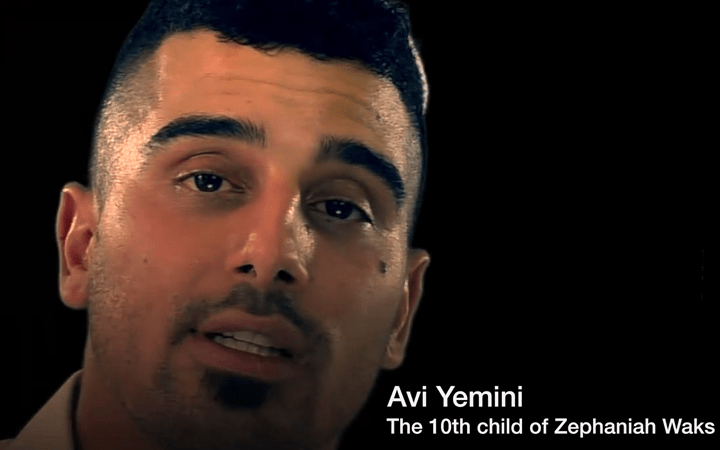
During the Australian Royal Commission into Institutional Responses to Child Sexual Abuse, Avi Yemini, a son of Zephaniah Waks and one of the brothers of Manny Waks, released a video levelling accusations against his father. He alleged that his father beat his children with belts and was generally emotionally abusive toward them. He then went on to challenge the legitimacy of the Royal Commission, and the testimony given by his brother, Manny Waks, and his father, Zephaniah Waks. According to Avi, Zephaniah’s claims about being ostracized by Chabad were fabricated. Avi has since gone on to defend Rabbi Glick, and Chabad in general, who have been accused of being complicit in the covering up sexual abuse, minimizing the experience of survivors, and ostracizing Zephaniah Waks after he and Manny went public regarding the sexual abuse suffered by Manny.

These allegations put the survivor community in a very difficult position, especially those of us who are active in the fight against sexual abuse and coverups in the religious Jewish community. On the one hand, we have Zephaniah Waks, who was undoubtedly ostracized by the Chabad community. This has been proven by the Royal Commission. Zephaniah has spent the past two years fighting along with his son, Manny—both of whom who have suffered for this cause—to put an end to the culture of silence and stigma around sexual abuse, not only in Australia but around the world. On the other hand, we have Avi Yemini, Zephaniah’s son, who is claiming that one of the men we’ve been holding up as a martyr for our cause, abused him physically and emotionally as a child.

There are a few points that need to be addressed there.


  • What Avi Yemini wanted to say to the royal commission regarding Zephaniah was in no way relevant to what they were investigating. They were not investigating the personal lives of Manny and Zephaniah Waks—they were investigating institutional responses to child sexual abuse. Whether or not Zephaniah abused Avi is irrelevant to that investigation. More to the point, whether or not Zephaniah deserved shunning for allegedly physically abusing Avi, that is not why Chabad shunned him. They shunned him for aiding Manny in his fight against Chabad for covering up sexual abuse.


  • Avi Yemini can defend Chabad and call the claims a farce until he is blue in the face, but The Royal Commission has already proven that there was a coverup; they’ve already proven that the community shunned Zephaniah because he dared challenge them on that coverup; they’ve already proven that Chabad of Australia cultivated a culture of silence, coverup, stigma, and denial surrounding sexual abuse, and that Chabad cared more about its reputation than the children in their care.


  • Manny Waks has nothing to do with the allegations Avi Yemini is levelling against Zephaniah Waks, and is in no way tarnished by the claims against Zephaniah. I have the greatest respect for Manny and his accomplishments.


  • At the core of the statements Avi Yemini has made, underneath the defenses of Chabad, the claims that his father and brother exaggerated or fabricated their experiences, is his claim that he was abused by his father.


To me this presents the biggest challenge we face as a community of activists. Bigger than Agudah, Satmar, Chabad, Skverr, Torah Temima, Lakewood, or any others. With all of those institutions we stand firm on the moral high ground taking aim at people we know are wrong, people whose coverups accomplish nothing but hurting children, and perpetuating an environment in which children are placed in constant jeopardy. There is no righteousness in their denials and refusals to change. There is only opportunism, cruelty, vanity, and perhaps, if we’re charitable, willful ignorance.

I’ve been discussing this with some people, and their general sentiment has been that the potential damage that will be done by acknowledging the allegations Avi is making against Zephaniah may outweigh our moral obligation to give every abuse claim equal time and consideration. Hence, the silence thus far from the activist community regarding the claims against Zephaniah Waks was, perhaps, in the interest of protecting children, an ostensibly righteous excuse, but an excuse with which I disagree. Some people have said that this is an unfair conflation of two issues which have nothing to do with each other, or whose severities are not equal—physical abuse vs sexual abuse. Others have said that their reluctance in addressing these issues publicly is that it will give ammunition to Chabad who will use it to dismiss the findings of the Royal Commission, and by extension the claims of our entire cause. Being that Avi so densely interspersed his allegations against Zephaniah with claims that the Royal Commission was a farce, they argue that it may be impossible to separate the wheat from the chaff.

This subject has been weighing heavily on my mind since I was made aware of it, and I’ve decided, regardless of any objections by my friends or colleagues, to make a public statement about this in the form of this blog post. My reasoning is as follows.

We hold the people and institutions we’re trying to change to a very high standard. We demand absolute transparency, we demand that they be free of any taint of abuse, and we challenge them every time they give us an excuse for not acknowledging the claims of a survivor. Moreover, we object every time they disregard the claims of a survivor who may no longer be religious, or is addicted to drugs, on psychiatric medicine, or in psychological treatment, since the survivor is clearly mentally disturbed, or clearly has an axe to grind being that he or she is no longer religious; we point out that the very reasons they are claiming they’re entitled to deny the allegations are in fact effects of the abuse and coverups, not the cause of the complaint. That’s the way I see Avi’s claims. A kernel of truth surrounded by untruths, brought on by the pain of his claims being ignored.

How can we not hold ourselves to the same standard just because we find it inconvenient and potentially harmful to our cause. How can we demand, for example, that Agudah support the Markey bill, which would open yeshivos to potentially crippling litigation, and criticize them when they actively fight against such legislation, when we ourselves aren’t willing to bleed a little for our cause.

Yes, Chabad may use this article may be used as ammunition, even though it clearly states that they are guilty of everything they have been accused of. Yes, this may be touted by our opponents, or by people on the fence who are desperately seeking any means by which they can maintain their cognitive dissonance, as an excuse to dismiss our cause. But if we wish to see our cause succeed, if we wish to see the change we’re asking of these institutions implemented, then we need to be pristine in our record of handling similar situations. We can have no blemishes against us which they could later use to call us hypocritical. We need to be a light unto the communities, and stand as a perfect, shining example of what we would like to see—a world in which abuse is universally acknowledged, and dealt with in a lawful manner that encourages prosecution of abusers and support of survivors.

If we claim to care about children, then we have no business equivocating with different kinds of abuse. Abuse is abuse and no form of it is tolerable. No coverup of abuse is tolerable. No tacit denial of abuse allegations is tolerable, regardless of against whom they are levelled and what the consequences may be. In being the perfect example of the change we wish to see in this world, we will get closer to fulfilling our dreams.

The claims that Avi Yemini has made against the Royal Commission, and the claims he makes against Manny and Zephaniah regarding their ostracism and the coverup of their allegations—which have already been proven by the royal commission—are not to be taken seriously. He’s already been proven wrong. The issue we must discuss is the allegation of physical and emotional abuse he has levelled against Zephania Waks. Avi’s claims deserve the same attention we would give to any other survivor who came forward with an allegation, even if his allegation puts us in an uncomfortable position.

Standard

How the Internet Saved My Life

When I started this blog, I intended it to be a place where I could share my thoughts with people who would hopefully like them, share them, discuss them. I’m not quite sure what I was hoping for beyond what every blogger hopes for—high hit counts, lots of shares, fawning adoration, if we’re being honest, some validation of my wacky ideas. It started a year and change ago on Tisha B’av at Aish Center in New York City. I had come early to their Tisha B’av program, and I was just chilling on a couch in their library with my smartphone.

I’d written a piece the previous night about how I relate to Tisha B’av, and what the day means to me. I thought it was a good piece, good enough that the world should see it. At the time I didn’t really have my own blog. I ran a blog for Our Place, I sometimes contributed to FrumFollies, but I didn’t have a place of my own to share my ideas. I copied the piece to Pastebin and shared it around, but there’s a reason, apparently, why people use WordPress, not Pastebin, for their blogging. A friend suggested I start a blog. I hadn’t wanted one at that point because having a blog means you have a commitment to your readers to write content that will keep them interested in you, and I wasn’t sure I had enough to say to fulfill that commitment. Sitting there on that couch, I wasn’t sure I could keep the commitment, but I knew that people had to read what I was writing. I felt I had something to add to the conversation. On Tonight I Mourn and The Gift of Tears I built my blog.

I didn’t just want my blog to be a place where I dumped my ideas waiting for unsuspecting people to stumble upon them and read them. I wanted it to be a new beginning, a more mature representation of my thoughts and beliefs, a departure from the biased, childish naiveté of my Our Place blog where I was forcing myself to seem more religious than I was to appeal to a more right wing demographic of potential donors, and the caustic, scorched-earth  indictments of my contributions to FrumFollies. I wrote things in both places which, while they made sense to me as a time, now make me cringe. They were preaching to a choir that already knew the lines. I wasn’t provoking thought, internal debate—I wasn’t starting a conversation—I was just shouting my way into the middle. I was determined to change that with my new blog, and I believe I have.

Along the way, though, what being a blogger means to me has changed. Honestly, the experience has been nothing short of humbling. Over the past year, I’ve received emails from people I greatly respect who have experienced tragedy, telling me how much my writing has meant to them. My readership has grown to a number I never would have imagined. My posts have been picked up by other publications and have started conversations so big that I’ve lost track of them. But they’ve also connected me with beautiful people, people with incredible hearts whose support and care has helped me through some very difficult times.

Over 50,000 people read my post about my mother’s abuse. For the next three days, I received so many messages sending me love, support, advice, offers for help and empathy, that I had to spend a few hours each night responding to all of them. I’ve made some good friends because of that post. The Carlebach post that followed was the first time I had truly connected with my readers as equals. I left the post open ended, hoping for a discussion, which I got. I spoke to people on all sides of the issue. People who were victims of Carlebach’s, people who had grown up with Carlebach, whose lives had been changed immeasurably by him and his music. I spoke to people who called me a liar, people who praised me for my courage in writing about a subject so delicate, people who themselves were conflicted about the issue and were grateful for the opportunity to discuss it. For the first time, I wasn’t just giving an idea to my readers hoping they would agree with it—my readers were giving me the ideas.

And then you people changed my life, and made me understand the true power of blogging. On January 8, my mother came back home. Those of you who follow my blog know that I was under the impression that she was going to Ohel permanently, and that my grandmother and I would finally be able to rebuild the lives that my mother had broken. But she came back home. I had woken up late that day. Business had been very busy, and mornings that I got to sleep in were rare. I woke at 10:30, and spent the next 45 minutes in bed watching Netflix. At 11:15, I heard her voice in the hallway. I heard her voice for the first time since the family meeting at the hospital, and the fact that I was hearing her voice just did not compute. She couldn’t be there. She couldn’t. How could someone who lived in Ohel be there in my hallway.

I listened for a minute to make sure it wasn’t just my aunt who has a very similar voice. It wasn’t my aunt. It was my mother. Frantically I called my aunt. “She’s here. She’s here and I don’t know what to do. She’s not supposed to be here. Why is she here?”

“Well, where else should she be?”

“She’s not supposed to be here! Is this something that’s been happening when I’ve been at work? Has she been visiting?” Her visiting my grandmother from Ohel is something we had discussed with the social workers at the family meetings.

“Well she’s human, she has to go somewhere.”

“She has Ohel! What is she doing here?!

“She’s not in Ohel; Ohel didn’t take her.”

At this point I started having a full blown panic attack.

“What do you mean they didn’t take her…”

“They didn’t accept her.”

“And no one thought it might be a good idea to tell me?”

“I don’t know, we didn’t know much ourselves.”

“You knew enough to know she was coming home, and you didn’t tell me anything!”

She started stammering, trying to find an excuse, but she was never the one who made the decisions anyway, so yelling at her was pointless. Next I tried calling my uncle. He didn’t answer, so I texted. I had texted him on December 2 asking him if the Ohel interview happened, but he had never answered. On January 8th, this conversation happened:

Screenshot_2015-02-15-08-50-29~2Screenshot_2015-02-15-08-50-18~2Screenshot_2015-02-15-08-50-40~2

I got dressed in my room. At 11:35, I posted this message to an online support group I help run:

“She’s back and oh my god I don’t know what to do and my family isn’t saying anything and Oh my god help I can’t live like this I can’t I fucking can’t she didn’t get into Ohel and no one told me and she’s back and I want to die and help I need to go to work but I can’t deal with life right now I can’t I can’t I can’t do this I thought I was free Oh my god someone help[.]”

At 11:45, I packed my briefcase with what I’d need for work, my medicine, and my laptops, and I left, not knowing if I’d ever be back, or how I’d live. I was, effectively, homeless.

It couldn’t have happened at a worse time. I had just come back from a trip to Chicago a week prior. During my trip, I’d expressed interest to some of my friends in moving there permanently if I could find a job. Through some connections, a tentative job offer was made, which would probably start by the end of summer. That left me a few months to get my affairs in order in New York, including paying off my unfortunate credit card debt. Thinking that my mother was safely in Ohel, thus giving me as much time as I needed living with my grandmother all expenses paid, I spent all my money paying off the trip, and began paying off the credit cards. I had no money in my bank account.

My day started in Crown Heights, where I had four driving lessons to give. I had no idea what I would do after work, but I knew I couldn’t afford to take off, because whatever I did do after work would probably cost money. It’s a miracle I was able to focus.

Thankfully, by 12:12 PM I had already been offered a place to crash temporarily. My friend, Chaim Levin, offered to let me stay on his couch. While that was a generous offer, what Chaim actually did, was sleep by his parents for Friday night and Saturday night, allowing me to get a decent night’s sleep on his bed, for which I am deeply grateful.

At around 1:00 PM, I got a message from Elad Nehorai offering to help me raise money by crowdfunding to move into an apartment. He asked me how much I needed; I told him $5000. I wanted a number that would get me as much as I needed to move, but not more. He got to work on starting a GoFundMe. Being that I run what I like to think of as a sort-of-successful blog, he told me to write a post about my situation, and appeal to my readers for help. I pulled over to the side of the road, wrote it, and sent it off. Elad continued to work on the finishing touches for the campaign. By 2:40 PM, it was up and running.

At 2:24 PM, I called my best friend, and for about a half hour, had a complete meltdown. I was crying, gibbering, talking to myself, shaking, incoherent. She just listened and offered her empathy, which is exactly what I needed. I told her that Elad was helping me with crowdfunding, and she set to work finding me an apartment. By around 6:45, she had found something and emailed the landlady. At 9:00 PM, I went to see the apartment.

At 2:46 PM, I called my uncle. I wanted to know what was going on. I don’t remember the exact conversation, but I remember yelling at him for two minutes about how unacceptable it was that she didn’t get into Ohel, blaming him for it falling through, and demanding to know why no one told me. He said something along the lines of “You’re coming on very strongly, but you have to understand there’s only so much one person can do.” I asked him, “You couldn’t at least tell me? You couldn’t warn me?” He claimed that they didn’t know what was happening. I called bullshit because he had to have known at the very least that she wasn’t accepted into Ohel. He had never answered my texts. He hadn’t even tried to keep me, the one person who was most affected by what was happening, apprised on what was happening. I yelled at him for not telling me, for making me think I was safe when I really wasn’t, for turning me into what amounted to a homeless beggar, for making me uproot my life at a moment’s notice. Then I paused to catch my breath, and waited for him to say something. When he didn’t, I told him “I’m going to hang up now. You go try to find a way to live with yourself; I’ll go try to find a way to live.”

Those were and will be the last words I speak to my family. They’ve hurt me enough.

By 3:00 PM, $500 had been raised. By 6:30 PM, $4900 had been raised. By the following day at 2:07 PM, $7,000 had been raised. By the time the campaign ended a few days later, close to $8000—$3000 above the goal—had been raised.

Around 7:30 PM, I went home to pack my things. I walked in without anyone noticing, put everything I thought I would need into two large suitcases, and moved onto Chaim Levin’s couch. The next day, Elad arranged for me to spend the Shabbos meals by two lovely families who made my first Shabbos as a displaced person feel much less scary. By Sunday afternoon, the landlady had called my references, vetted me, and told me I could move in at 6:00 that night. I didn’t have the money that had been raised through GoFundMe yet, but she confirmed through Elad that it was there, and agreed to let me move in before signing the lease and paying the rent and deposit. Since I’ve moved in, she has been nothing short of a saint.

Around 5:00 PM on Sunday January 10, I went home one last time to get my stuff. On my own, I dragged my fridge, TV, toaster ovens, books, computers, and other stuff to my car as my grandmother and mother watched, not quite sure what I was doing, but pretty certain that I was moving. I didn’t say a word to either of them. By 10:00 PM I was moved in.

The one thing I regret about the move is cutting my grandmother off. I don’t blame her at all for what happened; she was just as much a victim as I was. She still is. I can’t talk to her anymore because anything I tell her will get back to the rest of my family, and I can’t have them knowing about me anymore. I’ve ignored their texts and calls, not that there have been very many. I hope one day to have a relationship with her again, but as long as my mother is alive and a part of her life, I don’t see how that’s possible. I pray that she understands and forgives me, but more importantly, I pray that she finds a way to let go of the guilt that she’s been carrying all these years about my mother. She doesn’t deserve it.

What’s amazing about this whole story, and what makes me truly appreciate the power of blogging and social media, is that all the people who helped me, all the people who have shown that they truly love and care for me, the people that I now consider my family, the people who support me unconditionally, are all people I have met online. Shay, Chaim, Elad, and all the other people who have been there for me, and continue to support me, are all people I’ve connected with online. The money that was raised, was donated by people who, for the most part, have never met me, and will, most likely, never meet me. The only connection they had with me was my blog, and yet they’re the ones who helped me when I most needed it. That is the power of the internet.

The internet has really shaken things up since its inception. The advent of high-speed internet and its ubiquity has thrown a wrench into the social order. Whereas people who formerly felt isolated, whether because of their ideas, their questions, their family situations—people who felt powerless and helpless, like they had no one and no options—were alone, without a community to help or support them, without the basic comfort of another human being to say “I’m here for you,” now have that through the internet. I am no longer a victim because of the internet and the friends it has given me. I am religious because of the internet and the people I found online who were going through the same struggles I was, who listened and advised instead of judging and dismissing. To me, the internet, and how you all helped me escape, is nothing short of miraculous. I thank God every day for the internet. I’d be dead without it, either by suicide or by circumstance.  I have a voice because of the internet. I have a family because of the internet. I have all of you because of the internet.

I have a life because of the internet.

Standard