Please Help Me Get Out

Author’s note:Here is the link to the GoFundMe campaign. Thank you all so much for your help and support. http://www.gofundme.com/asherlovy

About two months ago, I wrote an article detailing the abuse I’ve been suffering for the past 20 years. In that article, I detailed how, among other things, she threatened to kill me and my grandmother, and poured oil, bleach, and ammonia under my door in an effort to kill me. Happily, she doesn’t know how to kill people so it didn’t work, but the intent was clear. I still have a chemical burn scar on my arm from falling in that.

About a month and a half later, I wrote a post about how I was finally free. We had had a family meeting at the hospital, my grandmother had found the courage to tell my mother she couldn’t return home, and my mother was to be admitted to an Ohel supervised apartment. I thought my grandmother and I were finally free. For the first time in my life I was able to approach my front door without getting a panic attack. I was able to sleep at night without listening to my grandmother being threatened. I was able to live without the constant threat of abuse.

I thought I’d finally be able to put my abuse behind me and move on with my life.

This morning she came back.

I couldn’t believe it. I was hearing her voice. In the house. The voice of the woman who had abused me for 20 years. She was back. I called my uncle,  but he didn’t answer. I called my aunt, and all she could say was that Ohel didn’t take her, the hospital discharged her, and “What can we do? She’s a human being.” No one told me. No one warned me. And now she’s back and since I’ve heard her voice, I’ve been in a panic.

I need to move now. I need to. I cannot live there. I won’t survive there. It hurts me to be so needy that I need to ask others for help, but I honestly feel I have no other option. I need to move tonight. Thank God I have such amazing friends, one of whom is letting me crash at his place until I can move, but that won’t last long. I need to move now because I can’t go home and I don’t have where to go. Unfortunately, I don’t have the money to move now.

My dear friends and readers, anybody who knows me knows that I don’t like asking for help, and I don’t like accepting charity. But I am desperate. A friend of mine has set up a crowdfunding campaign to help me move immediately. I need $5000 total to move right now. Please share this with your friends, and anyone you know who can help me. You are literally saving my life. Any amount we help me.

Standard

After 20 Years I’m Finally Free

A few weeks ago, I wrote a post about life in my house. I detailed the abuse I was experiencing. Over 50,000 people read that post, and it was shared over 1,500 times. I received an enormous outpouring of support, both in the form of sympathy, and actual offers of help from lawyers willing to take my case pro bono, invitations for Shabbos, and advice based on personal experience. More people than I can count shared their own stories and experiences in dealing with an abusive family member with a mental illness. Honestly, readers, you humbled me; you showed me the power of social media, and the significance of the words “me too.” Thank you so much for being there for me.

It’s been a couple of weeks, and there have been a couple of developments I’d like you all to know about. But let me back up 20 years, and explain exactly how significant these developments are.

My mother has been in and out of the psych ward at Maimonides hospital since I can remember. The first time I can remember, I was four, and it was after she had a “manic episode” and took me, on Shabbos, to a man’s house where I witnessed them having sex. I wasn’t quite old enough at the time to understand the significance of what they were doing, but I do now. The weekend ended with my mother and that man getting into a physical altercation; my grandmother had to come over to break up the fight and make sure I got home safely. The police were called and she was committed. That’s the first time I remember.

The rest were a blur, happening every three years like clockwork, as she cycled between long periods of depression, followed by long periods of stability, followed by her deciding that stability meant she was cured, ceasing to take her medicine, rapidly decompensating, culminating in her involuntary commitment. I was too young at the time to really understand what was going on, but I knew it was bad, and I knew it was stressful. I didn’t have to handle it back then, though; that’s what my grandfather was for. Unfortunately, he died when I was 11, and my grandmother was left to be the disciplinarian in the house, and she became the one to call the police when it was time for my mother to be committed.

The two months my mother would take to decompensate would be different for me every time. Sometimes it wasn’t half bad. She would take me to interesting places, spend all her money on me, and make me feel like the most important person in the world. Sometimes it was all about her, and I had to watch every word I said to her, lest I send her into a rage. Sometimes she just left and shacked up with some guy for a while until I’d find out who he was, call his house incessantly, cursing him for taking my mother from me, until the guy would decide that the annoyance I posed was not worth the sex he was getting, and send her home. Sometimes it involved a diet that my mother decided she had to try. But it’s no fun doing a diet alone, so she would force me to go on that diet along with her. These diets usually ran along the lines of the starvation diets to which models, actresses, and people with eating disorders subject themselves—totally unsuitable for an adult, let alone a child.

But there was always a running theme, a way for me to know what was coming. It was always religion, and a focus on my biological father. I am the result of an affair my mother had with her hairdresser while married to her then husband. I don’t judge her for having that affair; her husband was an abusive man who I don’t doubt did many horrible things to her. When I was born, I posed a problem to the family; a mamzer is not something you want to have around when there are shidduchim (matchmaking prospects) to consider. My family asked a rav (rabbi) and a psak (ruling) was give: I was to be considered not a mamzer, since my mother was still married to then husband and possibly still having sex with him, and I was given her husband’s surname. For all halachic intents and purposes, I was her husband’s son. Understandably, she did not like this.

But she never really made a point of mentioning it unless she was on her way to the hospital, so to speak. Then she would bring it up at any opportunity. She would call me by my full name, and use her hairdresser’s surname rather than my given surname. She would make a point of the fact that to her I was a mamzer (illegitimate child), and be quite cruel about it. I know better now than to care, but back then it was not pleasant hearing that I could never marry anyone who wasn’t also a mamzeres (fem. illegitimate child). It was very important to her that I know the truth.

Another recurring theme was religion. My mother has never been particularly religious, but she would become incredibly devout right before having a complete breakdown. She would cover her hair, pray all day, often uttering God’s name as it is spelled out, rather than the accepted name for God in prayer (Ye-ho-vah rather than Ado-nai), which to me at the time was akin to desecrating God’s name. She would continue with this extremism until she realized she wasn’t going to get what she wanted from God, by which time she would be hospitalized. She would always come back barely religious again. In some way seeing her irreligious was a comfort; it meant that she was stable.

The final harbinger of her breakdowns was always the list of grievances she had against anyone and everyone she felt had ever wronged her, no matter how slightly. She is a master at bearing grudges and laying guilt trips. From $35,000 my grandparents supposedly stole, to her failed marriage, which she claims my grandparents pushed her into (which may very well me true), to all the times she “sacrificed” for me and I hadn’t reciprocated. As a ten year old. How selfish.

So life was not easy growing up for me. Aside from all that, there was always an undercurrent of conflict between her and my grandparents over who was truly responsible for parenting me. When my mother was first hospitalized, shortly following her divorce, my grandmother sued for custody and won. Her argument was that if my mother was too unstable to care for me, someone else had to have custody and be responsible for me. To be honest, I was always quite pleased that my mother didn’t have custody of me. I never really trusted her like that.

My mother was not pleased at all, however. When I was around 11 years old, she sued for custody from my grandmother, and being that she was stable at the time, the judge granted her full custody rights. Mind you, the entire time we were all living in the same house—my grandparents, my uncle, my mother, and I. Despite winning custody, there were constant arguments over who had the right to a say in what was best for me, from the books I read, to the shows I watched, to the food I ate. Everything was a conflict between my mother and my grandparents. And I was always caught in middle, often prompted to choose a side. The problem was, I generally preferred my grandmother, but was too afraid to say so. To be honest, there were times when the conflict confused me. I remember one time, after spending a weekend hearing my mother tell me all the horrible things my grandparents had supposedly done to her, picking up a knife and running at my grandfather with the intention of stabbing him.

This continued for the first 16 years of my life. It was difficult, but I always had my grandparents to lean on (after age 11 it was only my grandmother). At age 16, my grandmother fell into a deep depressing following a hospitalization which was a result of a side effect of an anti-depressant she’d started taking when the situation became too much for her to handle. That’s when things really got bad. My grandmother could no longer act as a buffer between me and my mother, and my mother was free to do whatever she wanted to me. That’s when the beatings started. The verbal and emotional abuse was worse than ever. I still have the marks on my doorframe where the posts were splintered by my mother’s attempts to break down my door. I never got around to fixing that.

It was harder dealing with my mother on my own, especially after I stopped talking to her. That really sent her over the edge. My mother has a son from her ex-husband, a son who was taken from her at the end of the marriage and placed with an adoptive family which has raised him like their own. My mother tried for years to get custody, but every time she got close, she had a breakdown and the judge ruled against her. Losing my brother hurt her deeply, which made what I was doing to her by not talking to her that much worse: she had lost both her sons. Unfortunately, rather than self-examining and coming to understand why she had lost me, she turned that hurt into rage directed at me.

For the first time, I was left to fend her off myself, and it was much harder then than it had been when I was younger. I was older so I could take more, and boy did she dish it. In lieu of my grandmother, I was the one who had to have her hospitalized, which made me the consummate bad guy. She would come back fro the hospital angry that I had sent her away, and the cycle of abuse would start all over again.

These past few months have been the hardest months of my life. The abuse was the worst I’ve ever experienced. It wasn’t physical, because she knows full well I would fight back, but there are other ways of hurting people. She deprived me of sleep, abused my grandmother knowing full well there was nothing I could do about it—my grandmother refused to let me take any action—she threatened my life and safety, damaged my property, and let no opportunity to let me know exactly how worthless I was go to waste. But none of that compared to the anxiety her instability caused me. I was constantly on alert, my fight or flight reflex screaming at me 24 hours a day, 7 days a week, always ready to spring into action should she do something really harmful to my grandmother or me. Months of constant anxiety. That was the worst.

She was in and out of the hospital 4 times in the past 5 months, each time they would keep her until she was stable enough that they could no longer justify keeping her against her will, and each time she would come back and immediately become unstable. The problem was, there was a little bit of a catch-22. I had a life to move on with, but I couldn’t move on until I knew my grandmother was safe, but it seemed that I was always the catalyst that set her off. So I was at once the solution and the problem. The only person who could solve that problem was my grandmother, but she refused to kick my mother out of the house. Every time my mother was hospitalized, my grandmother would take her back in, no matter how vehemently the rest of my family and I protested.

The problem was, that as bad as my mother was, and as much as she made my grandmother suffer (I believe my grandmother suffered much worse than I did these last few years), my grandmother refused to throw her out unless she knew for a fact that my mother would not wind up in a state mental hospital. My mother had been sent to one before for 6 months, and it had been a very unpleasant experience. Nothing anyone said to my grandmother could convince her that my mother would not wind up in a state hospital if thrown out of the house, so my grandmother kept allowing her back, regardless of the suffering she knew she was accepting.

But what was different this time than all the other times, was the fact that my grandmother finally spoke up to us and said that she hated how she was suffering. She actually told us that had she her way, she would be rid of my mother, as long as she could know for sure that my mother would not be sent to a state home. The last time my mother was released from the hospital, a social worker was assigned to her case to stay on top of her treatment compliance and work with her toward a supervised living arrangement away from our house through Ohel. My grandmother was skeptical because Ohel had never wanted to accept my mother before due to how unstable she could be, and the supervised living arrangement never went anywhere.

After the incidents I wrote about in my last piece about it, my grandmother realized that this couldn’t continue. I made sure my family was putting as much pressure as they could on her without outright forcing her to make a decision. About three weeks ago the hospital held a family meeting. They had tried to hold one a month prior, but I refused to show up. I was told later, that it’s very possible that my mother was allowed home because I didn’t show up at the meeting and make my case. As reluctant as I was to be in the same room as my mother, I forced myself to go to this family meeting.

We got to the hospital and rode the elevator up to the fourth floor. My mother was waiting to greet us, and she seemed happy that we had all come. She proudly pointed me out to all of her ward-mates. “That’s my son!” I just kept my eyes on my phone. I wasn’t there to see her or be shown off; I was there to make sure she never came home again. Her social worker and psychiatrist then met us, and the meeting began. The psychiatrist laid out the situation, with comments from the social worker. They told us that she was ready to be discharged, and that we had to make a decision what to do with her, whether to let her come home, or push her into an Ohel supervised apartment.

When we had walked in, my mother had made a point of asking my grandmother in front of all of us whether or not she would be allowed home. My grandmother said yes for lack of a better option, and my mother genuinely believed that my grandmother meant it. As the meeting progressed, it became my turn to speak. I had a lot of things I wanted to say to her doctors. I detailed the abuse she had put me through, and asked them how they didn’t feel responsible for any of the damage my mother had caused as a result of being released when she was clearly a danger. The psychiatrist took slight offense at my tone, and told all of us that it was not his responsibility, but ours to decide whether or not to allow her back home despite their warnings to the contrary. The point was well made, and it was time to decide what to do with my mother.

My mother started about me to the doctor. “It’s not my fault, it’s that bastard! He doesn’t talk to me! He provokes me! He does things to me! If he weren’t home, everything would be fine; he should be the one to move!” The doctors tried to calm her down, but she would not stop. She was escorted out of the room, and stood by the glass looking in. The meeting continued, and the doctors explained to us that his recommendation was to tell her that she was no longer welcome home and that she was either going to Ohel, or a homeless shelter. We asked some questions, made sure my grandmother was satisfied that Ohel would be a safe place for her, and then it came time for the decision: My grandmother was finally put on the spot and asked whether or not she would tell my mother that she couldn’t come home.

My mother was called back in. Immediately, she asked my grandmother whether or not she would be allowed back home. “I’m sorry, it won’t work out. You can’t come home.”

“But you said I could! You told me I could when you walked in!”

“I’m sorry, but you can’t. It won’t work out.”

“I took care of you for years! I too care of you after tatty died! You let Moishe (one of my uncles who married late and lived with us until that time) live there until he was 39 years old; why can’t I live with you?”

“I’m going to be moving into a smaller apartment, and I won’t have room for you.”

“That’s ridiculous! I want to live with you! Anywhere you go I want to go!”
“I’m sorry, it won’t work out.”

At that point the doctor took over, and explained to my mother, forcefully, that it was over. That she was never coming back home. My aunt chose that moment to tell my mother that it was because she was so unstable that this was happening. My mother didn’t like that, and grabbed my aunt’s wig off her head and flung it across the room. The psychiatrist yelled at her to calm down.

“I DON’T WANT TO GO TO OHEL!”

“Well,” said the psychiatrist levelly, “It’s either Ohel, or remember what we discussed?”

“Yeah. The shelter.”

“You don’t want to go to the shelter, do you?”

“No!”

“So then you have to go to Ohel. I’m sorry, but that’s the way it is. Your mother can’t take care of you, and this is the best solution.”

“FINE, BUT I NEVER WANT TO TALK TO ANY OF YOU AGAIN, ESPECIALLY YOU, BASTARD!” she yelled, pointing at me, and stormed out of the room.

I have never been prouder of my grandmother.

The house has been quiet and safe for the first time in years. I cook dinner for my grandmother when I can, take care of the grocery orders, and make sure she eats. For the first time I can remember, my grandmother sat with me in the kitchen with me while I cooked dinner, and watched Netflix with me. We talked about the show, and what I was making, and for the first time in years, I felt connected to her again, like I finally had a family. She’s still severely depressed and it’s very hard to get her to open up and talk, but there’s the start of a relationship, and it feels so good, honestly. I feel happy to have a family for the first time in my life. They all stood up for me, they all finally listened and took my side, and they finally made it safe for me and my grandmother. I actually think I love them.

I’m writing this as I fly to Chicago to see my friends, and I’m trying to hold back the tears, but it’s not really working. On the way out this morning, my grandmother smiled at me and wished me a safe trip. I think it was the most beautiful thing I have ever seen in my life. I look forward to seeing it many more times.

Hi, my name is Asher, and I have survived.


Standard

Carlebach, Cosby, and Separating Art from Its Artist

UPDATE 12/8/2014 6:30 PM: Since posting this article last night, I’ve been contacted by quite a few people with firsthand accounts of Carlebach’s abuse, specifically, inappropriate phone calls, inappropriate flirtations, and most seriously, molestation of minors. 

A few weeks ago, my shul (synagogue) held its annual Carlebach Shabbos. Benzion Miller, the Aron Miller Memorial Choir, and roughly 1,500 people showed up to sing, and dance, and celebrate the life, music, and legacy of Rabbi Shlomo Carlebach. There’s no question that Shlomo Carlebach touched the lives of tens of thousands with his music, his passion, and his apparent utter devotion to God and the Jewish people, and returned souls to Judaism at a time when religion seemed on the decline. But there was a darker side to the legend, a side that forces the uncomfortable question: Can we separate the man from the legacy—the art from the artist?

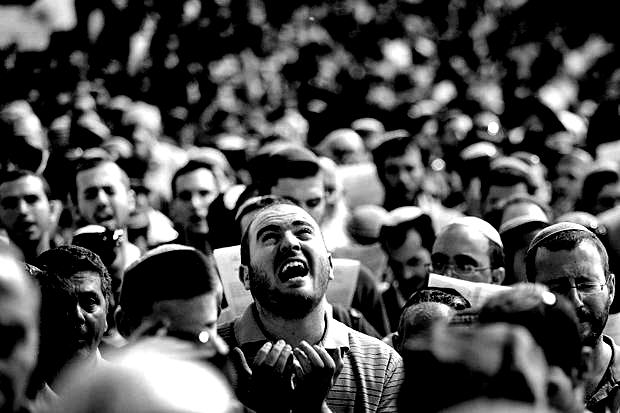
So there I was, sitting in my pew, 1,500 people around me, all singing Carlebach. I couldn’t help myself. It’s impossible not to sing along. The melodies are beautiful in their simplicity, saturated with soul, and electrifying in crowds. It’s impossible not to be swept up in the frenzy. My fingers drumming along to the melody, my feet tapping, a smile tugging at the corners of my mouth despite my best efforts to the contrary, I sang along with everyone else. How could I deny it? In a room filled with people from the far-right to the far-left to the non-observant, all singing the same music, all united in a way they have never been before, and will likely never be again, how could I not be swept up by the crowd? Men in shtreimels (circular fur hats worn by Hasidic men) with long, untrimmed beards, dancing with their fellow Jews, some wearing knit kippot (skull caps), some with ponytails, some in suits, some in jeans and a t-shirt; has anything, in the history of the Jewish people, ever united people so different, than the music of Shlomo Carlebach?

Following the service was a Carlebach dinner held at a local catering hall, with our scholar-in-residence, Rabbi Sammy Intrator, Carlebach’s long time right hand man. He started the night off with a song, and once the crowd was warmed up, he began to talk about Reb Shlomo. He told us story after story about Reb Shlomo’s compassion, his love for his fellow Jew, how deeply his desire to foster peace and love in this world ran, and how in-tune his soul was with God and the world. In true Carlebach style, he told us some of the stories that Carlebach used to tell, singing them exactly as Carlebach used to, bringing them to life with as much of the emotion and heart as he could. Carlebach’s stories always make me cry. As hard as I try not to, they always manage to get me.

Carlebach had an amazing gift for touching the souls of people with his stories of Chassidus (a more spiritual and mystical approach to Orthodox Judaism), and how the simplest Jew could have the greatest impact; his stories keep alive the memories of fallen communities and dynasties that perished with time and in the Holocaust, and the memories of the great men and women that would otherwise be forgotten. You would have to be lacking a soul not to tear up at the story of Chatzkele Lekavod Shabbos. And as I sat there listening to Sammy Intrator reincarnate Carlebach so beautifully for his very captive audience, I felt a little dirty. My holy brothers and sisters, I remember—I REMEMBEEEEEEEEEER—the Shlomo Carlebach that I grew up hearing so much about, the great man who reunited Judaism in the Diaspora, but I also remember the Shlomo Carlebach who fondled women who came to him for guidance, who masturbated on women who worshipped him, and who covered it all up by telling them that they were holy, and special. I remember the stories I’ve heard firsthand from people who experienced the darker side of Carlebach. And as I sat there laughing and crying as Sammy Intrator spoke, I felt myself tearing apart.

A battle was raging in my head: How can you sit there and listen to this when you know what he really was, and what he did to those women? But, but, look at the holiness he brought to this world, the people he united, the masses he returned to Judaism, the power of his music, and the strength of his enduring legacy! Yeah, but his legacy was built on the backs of an endless string of victims! But, but look! Look at all these people, singing, and crying, and laughing, and loving, and opening their hearts to one another! Surely that must count for something! Maybe, but who will remember the victims, and how is it right to sit there and tacitly support a man who caused so much damage?

I don’t know.

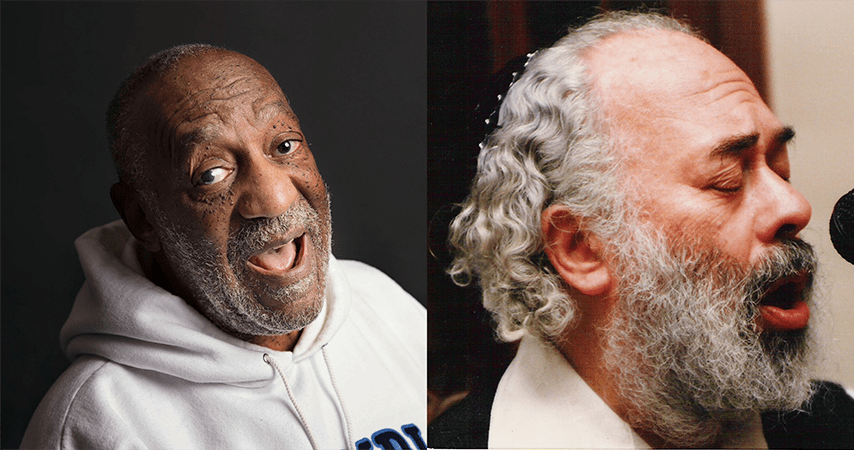
Honestly, Carlebach is a difficult subject for me. My inner conflict was punctuated by the recent resurgence of rape allegations against Bill Cosby. I loved Cosby. I loved his show, I loved his comedy, I loved his smile, I loved what he represented. Just like I loved Carlebach. It’s always this way. It’s always the people you love the most who hurt you the worst. Of all the people who had to be sexual abusers, of course, it had to be Shlomo Carlebach, and Bill Cosby. Right in the childhood. Right in the heart. Cosby is easier for me to throw under the bus, because while I’ve enjoyed his work, it’s never touched my soul. Carlebach is special to me. Carlebach represents a Judaism I’d love to see in this world. I mean, I suppose he would, if not for the small matter that he was a sexual abuser. Why does it have to be so difficult.

Both Cosby and Carlebach got away with what they did for so long because of how loved and cherished both they and their work were. But can their work stand alone? Is it possible to separate the art from the artist? It’s an ongoing question for me. On the one hand, I see the beauty that Carlebach brought into the world, and I don’t want the world to suffer the loss of what Carlebach gave it because of his sins. Perhaps the beauty, and holiness he facilitated was there already, waiting only to be discovered and brought to light, and he was only a conduit. Perhaps we would have had it through someone else, someone less flawed. Perhaps we should therefore allow what he revealed to stand while we leave him to rot.

On the other hand, as blogger Elan Morgan pointed out on a friend’s Facebook page:

IMPORTANT: We cannot separate the men from their art when they used their status from that art both to commit and conceal their violent behaviour. To continue to share their art is to continue to share one of the weapons they used to commit their crimes.

Perhaps we do more harm than good by perpetuating the tools of these people’s abuse. Perhaps we are contributing to the pain felt by Carlebach and Cosby’s victims, who for so long were denied justice, by touting the instruments of their abuse as something worthy of praise and enjoyment. Perhaps we make those men that much more acceptable by refusing to give up what they created simply because our lives are enriched by the fruits of those poisonous trees.

Or maybe there’s a baby to be saved somewhere in the putrid bathwater. Maybe there’s a message, some truth, a little good that can be salvaged from these men’s abominable lives. Might the message not be valid regardless of its source? Can we not keep the moral values Cosby preached while damning the damaged he caused to 17 (and counting) women, or the love and acceptance exhorted by Carlebach while distancing ourselves from the man himself and his actions.

There are a million answers to these questions, and frankly I haven’t found mine yet. It’s something I struggle with every time I hear one of Carlebach’s songs, or see the popularity people like Eitan Katz, or Yehuda Green have because of their similarities in musical style to Carlebach. I still feel dirty and conflicted when I sit in shul and hear one of Carlebach’s tunes used for lecha dodi (Song to greet the Sabbath sung by Friday night prayers), finding myself at once moved and repulsed. To be honest, I still use those tunes myself when I lead the prayers, because I know the congregation likes them and will sing along. I don’t know what the balance should be, or if there even is one to be had. Maybe you people can help me out; what do you all think?

Standard

Who Am I: I Am Unbreakable

Hi, my name is Asher, and I’m a…

I don’t know. I’m twenty-two. I work two jobs, one as a driving instructor, the other as a computer technician. I make good money. I dress well. I write well. I look fine. I’m a jokester. Sometimes I’m very quiet. Sometimes I’m the life of the party. But that’s when I’m not home. That’s when I’m wearing my mask. My life isn’t easy. At home I’m…

I thought things had gotten better since last time. I mean, things were never great, but they were livable. But then they weren’t. My mother started abusing my grandmother again, turning her into her slave, making her do things you wouldn’t make the most menial laborer do. My mother forced my grandmother to wipe her ass, and bathe her, bring her whatever she wanted at any time of the day or night. My mother made sure my grandmother didn’t sleep, made sure she couldn’t rest, and all the while degrading her, calling her names, accusing her of every wrong in the universe, laying a mighty fine guilt trip.

And I sat safely in my room, listening, waiting, attentive, making sure my grandmother’s life was never in danger. I couldn’t sleep either. What if she snapped. What if she hurt my grandmother. I was on constant alert. I needed to make sure my mother didn’t escalate to violence against my grandmother, make sure she didn’t act on the countless threats. And there was nothing I could do, you know? My grandmother refused to throw my mother out of the house even though she hated living the way she was. My grandmother was too merciful to see my mother on the street, or in a state mental facility.

My mother stopped taking her meds about a year ago, it turns out, and for the past year, she’s been steadily getting more unstable. The more unstable she gets, the more she starts lashing out at everyone she believes wronged her, and made her life the meaningless pile of shit it is today. The way the mental health system is set up in this country, the only way to get someone committed involuntarily is if they pose a danger to themselves or others. That law is very broad and ill-defined. I could see the danger my mother posed. I could see the damage she was causing my grandmother, but there was not a single thing I could do to prevent the inevitable violence. The law only recognizes physical violence as danger, and threat of violence is not always enough. I could only pray that I could contain it when it occurred, and call the police in time to stop it from escalating.

I got my chance about four months ago, when she got into a fight with her boyfriend. She had taken to walking around the house naked in the weeks leading up to this, and she was naked four months ago when they got into their fight. I heard him hit the ground and scream, so I ran out of my room to see if anyone was hurt. He was running down the hallway toward the door. I stood in the hallway, back to my naked mother, preventing her from chasing her boyfriend. “Get out!” I yelled at him. He didn’t need telling twice. I went back in my room, grabbed the phone, and called the police. They came within two minutes, barely enough time for me to pull on my pants and run to the door to open it for them. My mother was sitting in the kitchen with my grandmother, next to the door. Both were telling me not to open it. Open it I did.

She was taken away, and I thought we’d finally get some peace. I thought the hospital would treat her, make her take her meds. I thought they’d be responsible enough to send her home stable. Heh. She came home and went right back to abusing my grandmother. She never touched her, but I could see my grandmother suffering. I begged my family to do something, and this time they tried, but there was nothing they could do with my grandmother refusing to act against her daughter. Things got worse.

A few days before Rosh Hashana, I was getting ready to leave to work, and I heard my mother yelling more violently than she had been. She was threatening to kill my grandmother. I had to leave for work, but I didn’t want to leave my grandmother alone with my crazed mother, so I called the cops. A horde of them showed up along with EMS, after a fashion. Took them twenty minutes to get there. Apparently threats of death aren’t enough for New York’s finest; they didn’t care because no one had been hurt yet, and she had no weapon yet. EMS came in, checked out my mother, asked my grandmother if she felt she was in danger, and then left. My grandmother had covered for my mother again. I went back in the house to get my laptop, and my mother threatened to kill me if I ever called the police on her again. Apparently she felt powerful because they hadn’t taken her. I knew it was going to be a long holiday.

It was terrible. My mother was as angry and violent as I had ever seen her, shouting at my grandmother, making her do disgusting, degrading things I’d sooner not mention here to preserve my grandmother’s dignity, in addition to the usual slave labor she forced on my grandmother. I wasn’t let off the hook either. The entire night, she stood outside my door shouting, cursing, threatening, and insulting me, loudly enough that I wouldn’t be able to sleep. I slept maybe a total of 6 hours over those three days. Rosh Hashana came and went, and I was worried about what to do going forward. I doubted I could go much longer without sleep.

Thankfully, I got a text from my aunt after Rosh hashana. Apparently, my mother had gone over to my uncle’s house, and shattered a window there that morning. My uncle hadn’t called the police because it was Shabbos, but after asking me what to do, he did call. They came and dragged her, literally kicking and screaming, into an ambulance, and off to the psych ward. And my grandmother and I breathed a little easier. Surely this time something would be done. My uncle had been talking to the hospital, and they assured us they had the resources to monitor her once she was released, and help her comply with outpatient treatment. Eventually, they promised, she’d be stable enough to be moved to a supervised living facility. I should have known they were full of shit.

A month later she came home, and this time it barely lasted at all. Two weeks ago Friday, right before Shabbos, she sent my grandmother to ask me to turn the light in her room off. I know my mother doesn’t give a fuck and a quarter about Shabbos, and more to the point, why the hell would I do anything for someone who abused me for so many years, so I just laughed and went about my business preparing. Apparently that was the last straw. She well and truly lost it. It all came out, all at once, the anger, resentment, the jealousy, how she “gave up so much” for me and how ungrateful I was being. How I was a lowlife bastard, a little baby who claimed to be abused, but was really abusing her. And that’s when I knew: She’d read what I’d written about her. I heard her hitting something on my doorframe. “I just took the mezuzah (Small parchment scroll with bible verses, placed on doorposts in Jewish homes; it is meant to serve as a protection) you hold so dear, and burned it in the Shabbos candles.”

Then she started threatening to kill me if I didn’t leave the house immediately. She tried breaking down my door, but I stood against it, shoring it up. She swore she’d kill me if I didn’t leave, and ran around the house yelling words to that effect for the next few hours until my grandmother managed to calm her down. I didn’t leave my room that night until I was sure my mother was sleeping. The next morning, I assumed everything had calmed down. I walked into the kitchen, around 12:30 in the afternoon, to fetch some stuff for my Shabbos meal.

Shabbos for me is now a very lonely affair. I have a hot plate and fridge in my room, so I buy all my food on Friday, and just eat it alone in my room if I’m not invited out for any of the meals. I make Kiddush, and wash, and then eat alone in my bed while reading a book. Sometimes I’ll sing to myself. It used to bother me, being alone on Shabbos, but after 6 years, I’m used to it. It’s what I know. Anyway, I needed some grape juice, so I left my room, and went to get some from the big fridge in the kitchen. My mother was sitting there with my grandmother, and as soon as she saw me, she started again. This time there was no calming her down, much as my grandmother tried.

I went back to my room and started my meal while my mother raged outside. It worried me, but it was always just talk, and I wasn’t going to let it bother me too much. Then I heard her come back to my door, and this time she was threatening to do something to me and my grandmother, leave the house, and leave us to die together. Now I was worried. I heard her pouring something outside my door, and walk away. She’s going to set the house on fire, I thought, and I’m trapped inside. I’m going to have to walk through fire to get out of here. Quickly, I looked around my room for something I could drape over myself as I ran through the flames I was sure were just moments away. I grabbed a flame-retardant blanket and stood by the door.

I touched the doorknob to see if it was hot, but it felt as cool as it always does. Ok, if it’s not fire, then what is it? I had heard something being poured outside my door. “I poured oil outside your door. I hope you slip and fall and break your neck. Maybe you’ll wind up paralyzed like your uncle in some nursing home. I hope you suffer and die.” I could live with that. I went back to my bed. My appetite was gone at this point, but I still had a good book to occupy my mind. My mother wasn’t having any of my not leaving the room and tripping on her trap, so she came back and tried again. I saw a clear liquid sliding across my floor from under my door, and smelled bleach. Shit.

I quickly grabbed a bundle of white laundry out of the hamper, mopped up the bleach, and slid the whole mess up against the bottom of my door. It needed washing anyway, right? Besides, on its own, bleach isn’t flammable. Unless mixed with ammonia. And then I heard something else being poured against my door. As any child who has ever done a chore knows, you never mix ammonia and bleach. Ever. The fumes are toxic when mixed, and the solution is highly flammable. I grabbed my blanket again and stood by the door, touching the doorknob every few seconds. “I’M GOING TO LEAVE NOW AND WHEN I GET BACK YOU’LL BOTH ME DEAD. I’LL CALL THE POLICE AND TELL THEM I DID IT. I DON’T CARE; I HATE YOU; I JUST WANT YOU BOTH DEAD.” And I heard the front door close.

I stayed in my room until I was sure she was gone, then went out to check on my grandmother. Of course, I slipped on the oil and went down, scraping my elbow forearm on the floor. I felt my arm start to burn and looked down. The skin had been ripped off, and the ammonia and bleach mix were beginning to burn the flesh underneath. I got up and ran to the sink, furiously washing the wound. After it stopped hurting that much, I checked on my grandmother. She wasn’t hurt, just shaken, scared, and hopeless. She didn’t know what to do any more than I did. I went back to my room and took the opportunity to sleep. With the way things were going, I wasn’t sure I’d get another chance very soon.

I elected not to call the cops this time because it was Shabbos, I wanted things to quiet down, and I wasn’t sure they’d take her. I didn’t want another false alarm riling her up. I prayed for quiet. The next few days were mercifully tolerable. She still threatened me when she saw me, but she wasn’t acting on it, which was a step up. That lasted until Thursday night.

Thursday night, she sent my grandmother to ask me for the iron and ironing board. My grandmother is not a particularly loud person, and I had been sleeping, so I didn’t hear her request until my mother started threatening to kick in my door if I didn’t give her the iron and ironing board. Well, I’ll be damned if I give in to someone threatening me like that, so I stood up against the door, ready to brace it when she inevitably tried kicking it in. She started attacking it fiercely, more violently than she had before. That door has taken many beatings from her before, and I guess this time it just couldn’t hold up. After about two minutes of her kicking it, the door finally splintered, buckled, and came off its hinges. I had barely enough time to throw some pants on, and grab my belt as a weapon in case she attacked me.

I stood in the doorway, blocking her entrance, holding up my belt as a warning. I wouldn’t attack her without provocation; it would ruin my case when I called the cops. She sent my grandmother in to get the iron and ironing board, and loathe as I was to let her have it, I wasn’t about to stop my grandmother. She has enough people forcing her to do things she doesn’t want to without adding me to the mix. Iron in hand, my mother stood there, facing me. I looked at her face for the first time in six years, and what I saw was a pathetic little toddler, stamping her feet because she wasn’t getting her way.

“You’ve taken everything from me. You stole this iron, you stole my last dollar, broke my computer, and my tv, I gave everything up for you, EVERYTHING!” Looking at her face while she delivered this diatribe, it was all I could do not to laugh. This pathetic creature was the cause for all our suffering. This little shit was what caused our family so much grief for so many years. “You ARE a bastard! I don’t care what anyone says! You’re a bastard!” I’ve never understood why that’s my failing and not hers. I’m not the one who spread her legs for someone other than her husband. “You don’t know what I’ve been through because of you; you don’t know how much I’ve suffered. You don’t know what it is to be abused. I was really abused. I was raped. You have no idea. You couldn’t handle the truth. You don’t know how good you have it; I’m only telling you this because I love you.”

I knew she’d been raped when she was 16. She’d told me so when I was 13. I knew she’d had a hard life. She and my grandfather hadn’t always seen eye to eye, to say the least, and being from the old country, as he was, he believed in not sparing the rod. My mother married at 17 to a husband she barely knew, a violent man who hit her, mistreated her, and no doubt raped her himself. She claims she’s been mistreated at the psych ward she’s been sent to for the past twenty years. It was an odd moment hearing her opening up about what had been done to her. I took a second to see how I felt about it. Not a single shred of sympathy at all. The way I see it, someone who themselves suffered should know better than to do it to someone else. I’ve suffered at her hand, and if it taught me anything, it was how careful I must be not to hurt someone else unless I have very good reason to.

This seemed like as good a time as any to pick up the phone, right in front of her face, and dial 9-1-1. The cops came a few minutes later, and took her away to the psych ward. Finally, I thought, another little breather. Two hours later, my grandmother got a call. It was my mother from the hospital: they were discharging her. Four hours later she was home, and she was pissed. I had no door, just a sheet, flapping gently in my empty doorframe. Thankfully my mother was done with me that night, and was content with just yelling at me from her room while forcing to grandmother to pick up where my mother had left off with the ironing. I was so tired I somehow managed to fall asleep anyway.

The next morning, this past Friday morning, I was awoken by my mother screaming in my doorway. She had torn off the sheet, and was trashing whatever was in reach from the doorway. I’d made sure to sleep fully clothed because I expected that sort of thing. I jumped out of bed and ran over to the door to protect my stuff. I grabbed the sheet back from her and put it up again. She tore it down. I grabbed it back and put it back up. She tore it down. And on it went for ten minutes until she got the message: That sheet was mine. She ran and got my grandmother.

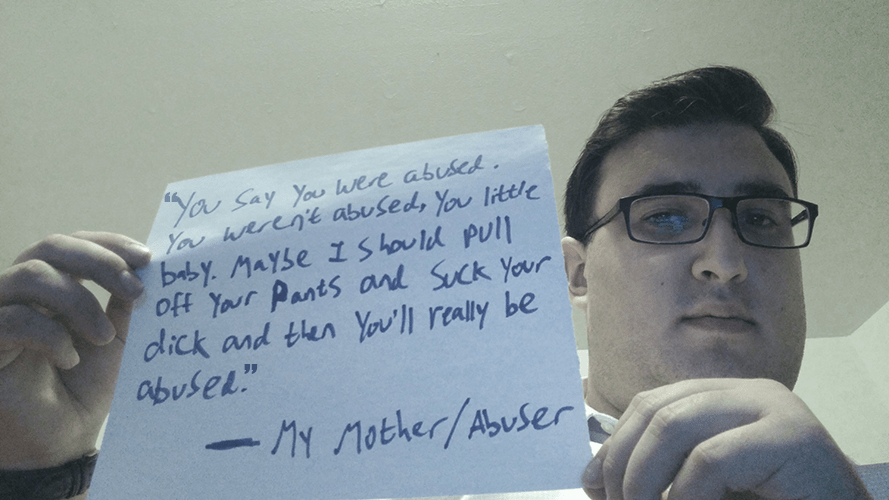
“HE STOLE MY SHEET! THAT’S MY SHEET FROM MY BED FROM WHEN I WAS MARRIED AND HE STOLE IT!” I bought that,” my grandmother replied levelly. “BUT YOU GAVE IT TO ME. “He needs it,” my grandmother pointed out, “you tore off his door.” “WELL, HE DESERVES IT. HE STOLE MY IRON, HE STOLE MY SHEETS, HE STEALS EVERYTHING FROM ME. POOR ABUSED BABY. YOU SAY YOU WERE ABUSED. YOU WEREN’T ABUSED, YOU LITTLE BABY. MAYBE I SHOULD PULL OFF YOUR PANTS AND SUCK YOUR DICK, AND THEN YOU’LL REALLY BE ABUSED. YOU CAN MASTURBATE IN FRONT OF ME! YOU’RE NOT ABUSED, YOU HAVE IT GREAT!”

And for the first time in all this, I was really scared. I had no more options. I’d called the police and they had brought her back. I couldn’t live like this. I couldn’t. Could I? Who could? And then like an angel from heaven, sent over 4G LTE, my aunt messaged me. After realizing that she was getting nowhere with me and the stuff I’d supposedly stolen, my mother called my aunt, demanding she return a sweater my mother had given her a few months back. “GIVE ME BACK MY SWEATER, LEAH, OR I SWEAR I’LL COME DOWN THERE AND KILL YOU.” My aunt, bless her heart, who has in the past been my mother’s champion regardless of how unstable or violent she’s gotten, had the good sense to call the police to report the threat. They were there five minutes later, and took her away, as she ranted on about the sweater and the iron and all the other supposed crimes we’d all committed against her. This time it stuck. She’s there now, and we’re all figuring out what to do next.

So what does this make me? Victim? Survivor? Honestly I’m not sure. I’ve been meaning to write a book about my experiences, but honestly, I don’t feel I can until this is behind me. I don’t feel I can say I survived if I’m still trying to survive. I can’t say I’m past it when I’m still getting panic attacks every time the front door opens, because she might be back before I have a new door. But I’m not a victim, am I. I’m fighting back when I can. I’m standing up for myself. I’m not that little kid anymore who sat there and took it. This time I’m doing what I can to protect myself and my grandmother. So what does that make me, somewhere in between?

Hi, my name is Asher. I’m twenty-two years old, and my story is still being written. I have my share of scars, I have my wounds, I have my cracks. I still have my battles to fight, and sometimes I win and sometimes I lose. Sometimes I can stand tall in the face of everything, and sometimes I can’t. Sometimes I bend, sometimes I sway. I don’t know yet if I’m victim or survivor.

But this I do know: What I am is Unbreakable.

Standard

How NaNoWriMo Saved My Life

My family has always been a little skeptical of writers. My grandmother, especially. “Oh, they’re being paid,” she’d say, as if the act of accepting money nullifies whatever idealism and feeling the author poured into the piece. It really annoyed me. I mean, I’m a writer, aren’t I? I’ve even been paid for some of what I’ve written. As any self-respective content-creator, I was duly offended. I’ve since learned that she’s only half wrong: There is writing that is purely opportunistic, words penned to promote a specific agenda or idea with no feeling behind it; voiceless words, pushing platitudes that a thousand thousand other people have pushed, each varying only slightly from the empty words of their predecessors—those variations being only a way of shoehorning the same tired, irrelevant, manipulative idea into something designed to hook the brainless masses. Those writers should be dismissed for being paid.

And then there’s writing you feel in your core. There is writing that makes you want to laugh, cry, jump for joy, punch walls, pull off your clothes and jump into a pool wearing nothing but your skivvies, and sit curled up in a corner alternatively talking to your security blanket and shoveling half-melted ice cream into your already caramel stained mouth, all at once. There’s writing that changes you. There’s writing that calls to your soul with a voice that demands to be heard. There’s writing that is born of passion, experience, and a burning desire to share with the world a masterpiece, painted by pen, one word at a time. There’s writing that alters the life of the reader—that can save or destroy the life of the reader. Such is the power of the written word. Like any other implement, it can build or destroy, beautify or befoul, inspire or devastate. Trust me, reader, when I tell you that it has the same effect on the author as it does on you.

Writing has been my outlet, the method why which I heal, and my contribution to a damaged world I hope to do my part to heal. Through writing, I can express what I can’t bring myself to utter. I’ve felt everything I’ve made my readers feel, and more. The more I’ve written, however, the more I’ve come to realize that as cathartic as the experience of writing can be, nothing compares to the power of a reader’s feedback. The timing makes this all the more significant for me: It’s November, and NaNoWriMo saved my life.

Those of you who follow my blog are familiar with my story. For those of you who aren’t, here’s what you need to know. My life completely fell apart six years ago. It took me a while, but after around a year, and with some help from a certain special someone, I was finally ready to write about it. I wrote a very long article for Ami Magazine, which was published. It’s hard to describe how liberating it felt to tell the world about my life after suffering silently for so long. I knew I needed to do more. For months my friends had been buzzing about NaNoWriMo (National Novel Writing Month), which is a sort of contest put on every year by the Office of Letters and Light, to see who can write a novel within 30 days. There aren’t really any prizes, but you do get serious bragging rights. There are write-ins, and all sorts of motivational tools on their website. If you’re going to write a book, November is the time to do it. And I wanted to write a book.

And so, I did. Fifty-some-odd-thousand words in two weeks. I barely ate or slept. This book was going to be the meaning for everything that had happened to me; it would give reason to all the suffering—it would be my reason for living. It took everything out of me, but there it was: My story. It was a memoir, not a novel, but still. It was pretty cool. I spent the next week and a half editing the thing, rewriting parts that needed fixing, correcting the odd typo here and there. Finally, about a week ahead of the deadline, I had something I thought was publishable. (It wasn’t, but I was a kid, so what did I know.) Proudly, I walked to the Fedex office three blocks away, and had my manuscript printed and bound. And there I stood, holding what had kept me going, my raison d’être, in my hands, and I wasn’t quite sure how I felt about that.

I remember feeling at once profoundly euphoric and profoundly meaningless. Those pages in my hand had been my life, from the time Ami had published my article to the time my manuscript came out of the printer at FedEx, and now I had it, and I wasn’t sure what was next. What if it was rejected. What if it was never published. What if my purpose never came to fruition. I walked out of that FedEx Office smiling and crying, and into a nearby subway station to catch a train home. And as I stood there on the platform, watching the train coming, a voice niggled at the back of my consciousness, asking “What if?” For the second time in my life, I considered it. Indeed, what if. I’d never see my purpose fulfilled, but then again, I probably wouldn’t anyway. What if. What if I didn’t have to wonder. What if it ended right there, with my life literally in my hands. What if.

I got on that train instead of jumping in front of it, but that feeling of meaninglessness didn’t go away. The euphoria did, though, and the next day I showed up at the last write-in of NaNoWriMo profoundly depressed. As I sat there flipping through my manuscript, my laptop dinged, notifying me of incoming email. It wasn’t from anyone I knew, but the subject said it had to do with my book, so I opened it. It was from a friend of a friend who had seen the summary of my book on my NaNoWriMo page and had a similar history. We chatted a little bit, and got to know each other, and then she sent me her story. It was remarkably similar to mine, right down to the family history of mental illness, abuse, anxiety, and PTSD. She told me how much it meant to her to see someone writing their story—her story—knowing that there were other people out there who knew what she was going through, and who cared about her.

And right then, I knew what my purpose was. That feeling of meaninglessness went away. I knew that my purpose was not just to get my book published, but to use my abilities as a writer to help others who don’t have a voice, who are either not ready or able to express themselves, tell their stories, or begin the process of healing. My purpose was to be there for those people and tell them that they are not alone. As I wrote in another piece on this blog:

…I discovered a purpose, a silver lining, almost, to everything that had happened. I still didn’t like the process, or the fact that I had to experience any of it, but God’s purpose started making sense–the good I had been looking for was beginning to make sense. It may seem odd for me to call the fact that I have the benefit of such unfortunate experience a good thing, but, to me, there is nothing more beautiful than that first smile breaking across a face stained by too many years of crying. If my experience means that I can be the cause of that smile, then that’s the purpose–that’s the good.

So, yeah, that’s how NaNoWriMo saved my life. What’s your NaNoWriMo story?

Standard

Unesaneh Tokef Through The Eyes of a Survivor

I find it hard to pray for myself. I always feel unworthy. I feel like a hypocrite standing before God, imperfect as I am, a sinner set in his ways, asking God to do me yet another favour I know I’ll never return. I’ve heard the speeches. I’ve heard my rav (rabbi) tell me over and over again, that regardless of what I believe will happen after Yom Kippur (Day of Atonement), one moment of pure teshuva (repentance), one moment of repentance, a single instant in which I tell God that were every moment that moment, I would never sin again, is enough to constitute repentance and earn me forgiveness in the eyes of God. No matter how many times I hear it, I can never accept it. Afar ani b’chayai (I am like dirt in my lifetime—taken from the Yom Kippur liturgy)—what right do I have.

So I spend my Yom Kippur doing other things. I focus on the Avodah (litany of the service in the Temple), I cry during eileh ezkerah (litany mourning the death of the Ten Sages by the Romans), I sit quietly in my seat and stare at the choirmaster as he conducts his choir. I pray for other people because I can’t pray for myself. I pray for my friends, for (some of) my family, for the countless victims of abuse and suffering, for the dead who can no longer pray for themselves, both those whose lives were taken by others, and those who took their own lives. I pray for other people, and in doing so, I pray that God sees fit to help me a little bit, too.

For the past five years, Unesaneh Tokef (litany composed by Rav Amnon of Mayence—recounted in part below) has been the hardest prayer for me to utter throughout the entire liturgy of the High Holy Days. I always end up crying bitterly. Thus far, thank God, no one has come over to me and asked me why someone so young cries so hard during a prayer that confronts mankind with a mortality that youth should find, at most, abstract. I have my answer all prepared in case someone asks me: For some of us it’s just more real. I’d like to share my thoughts on a few parts of the Yom Kippur prayers, and what they mean to me. Not all of the things apply to me, but they are all things I have come across since I started hearing people’s stories.

The story goes that Rav Amnon of Mayence, Germany was friends with the Archbishop of the town. The two would converse often, sometimes, and increasingly, about religion. The Archbishop very much wanted Rav Amnon to consider converting to Christianity. After wearing him down enough, Rav Amnon, to buy himself a little time, and to get the Archbishop to leave him alone, requested three days during which to consider the Archbishop’s request. Upon returning home, Rav Amnon was devastated by the fact that he had seemingly given the impression of even considering apostasy. He locked himself in his house for three days, repenting, begging forgiveness from God for even the slightest hint of heresy.

At the end of the three days, the Archbishop sent for Rav Amnon, to hear his decision. Rav Amnon refused to come. Eventually, the Archbishop ordered Rav Amnon forcibly brought to his residence. When confronted about his apparent disobedience, Rav Amnon told the bishop to cut off his tongue for saying he would return after three days, despite his having no intention of doing so. The Archbishop responded that he should instead cut off Rav Amnon’s legs, for it was his legs which were responsible for not bringing him after three days.

The Archbishop ordered Rav Amnon’s limbs amputated, joint by joint. Following each little amputation, he asked Rav Amnon if he would agree to convert. Rav Amnon refused. When both his arms and legs had been cut off, the Archbishop sent Rav Amnon back home on a stretcher, his severed limbs beside him. A few days later, on Rosh HaShana (Jewish New Year), Rav Amnon requested that he be brought, weak, bloody, and dying, to the synagogue. Right before the chazzan (cantor) recited kedusha (holy prayer recited by the cantor), Rav Amnon requested that he be brought before the ark. With his last breath, he recited Unesaneh Tokef, and passed from this world. I read the story every year before saying Unesaneh tokef; it never ceases to amaze me how a man so broken, so forsaken by his God, could hold onto faith so strongly. And with that in mind, I begin: Unesaneh tokef kedushas hayom.

 It is true that You alone are the One Who judges, proves, knows, and bears witness; Who writes and seals, Who counts and Who calculates. You will remember all that was forgotten. You will open the Book of Chronicles — it will read itself.

You alone, God, know; You alone bear witness when the door is closed; You alone bear witness when a child is too afraid to speak; You alone can attest to the atrocity that tens of thousands of Your children experience every day, every week, and every year. You alone record it, and reckon it, remember it, and judge it. You alone can see the truth even if everyone else calls it a lie. That book of yours records and reports all those times a child cried alone, begging someone, anyone, to help.

 All mankind will pass before You like a flock of sheep. Like a shepherd pasturing his flock, making sheep pass under his staff, so shall You cause to pass, count, calculate, and consider the soul of all the living; and You shall apportion the destinies of all Your creatures and inscribe their verdict.

Please, God, let this be the year we get justice.

 On Rosh Hashanah will be inscribed and on Yom Kippur will be sealed…who will live and who will die.

Who will survive, and who will try their hardest, but eventually let go.

Who will die at his predestined time and who before his time.

How many more will be added to The Wall.

Who by sword?

Who will cut just a little too deep.

Who by beast?

Who will run afoul of their dealer.

Who by famine, and who by thirst?

Who will die as a result of an eating disorder.

Who by upheaval?

Who will be forced out onto the street to escape an abusive home.

Who by plague?

Who will contract HIV from a rapist who didn’t wear a condom.

Who by strangling?

Who will hang themselves.

Who by stoning?

Who will jump.

Who will rest?

Maybe this year he’ll stop.

 Who will wander?

Maybe these foster parents won’t be as bad.

Who will live in harmony?

Maybe my husband won’t force me tonight.

Who will be tormented?

My friend gave me a number to a shelter.

Who will enjoy tranquility?

Will he finally give the Get.

Who will suffer?

Will we ever see our children again.

Who will be impoverished?

Will anyone ever hire us again if we go to the police.

Who will be enriched?

How many more hundreds of thousands of dollars will be raised to help some child rapist while we have to literally beg for money.

Who will be degraded?

Maybe we really were asking for it.

Who will be exalted?

When will they finally celebrate a criminal going to prison instead of celebrating his release.

Fast forward to the close of Neilah (lit. closing [of the gates]), the very last time we’re given on Yom Kippur to beseech God for the coming year:

May it be your will, God, who hears the sound of our cries, that you place our tears in your flask to remain; and rescue us from all cruel and harsh decrees, for to you alone do our eyes look.

ISN’T THAT DAMN FLASK OF YOURS FULL ALREADY?! HOW MUCH LONGER! HOW MANY MORE YEARS! HOW MANY MORE THOUSANDS, HOW MANY MORE MILLIONS, HOW MANY MORE DEAD CHILDREN , HOW MANY MORE CUTS, HOW MANY MORE PILLS, HOW MANY MORE NIGHTS SPENT IN THE EMERGENCY ROOM, HOW MANY MORE THERAPY SESSIONS, HOW MANY MORE FLASHBACKS, HOW MANY MORE PANIC ATTACKS, HOW MANY MORE FINGERS DOWN HOW MANY MORE THROATS, HOW MANY DIVES OFF THE EDGES OF BUILDINGS, HOW MANY BODIES SWINGING FROM HOW MANY MORE ROPES, HOW MANY NIGHTS SPENT SOAKING HOW MANY MORE PILLOWS—HOW MANY TEARS WILL IT TAKE FOR YOU TO REALIZE THAT THAT DAMN FLASK OF YOURS IS ALREADY FULL?

Enough. Please. Enough. One day, I hope, my, and everyone else’s prayers will be answered.

Standard

What You Need to Understand About Suicide

Author’s note: This post is very triggering. Please do not read it if you don’t feel you can handle it. Take care of yourself. If you are feeling suicidal, please call the National Suicide Prevention Lifeline at 1-800-273-8255. 

On the way home from a road test in New Rochelle this morning, I turned on the radio to listen to the Geraldo show. Larry Mendte was filling in, and the topic was Robin Williams’ suicide. Since I saw the story online last night I’ve been reading articles, tributes, compilations of his greatest acts and quotes, and, of course, watching his movies. I’m in middle of Dead Poet’s Society. Robin Williams was a great man who not only inspired countless people, but touched every one of our hearts with his comedy. Who hasn’t watched Mrs Doubtfire at least 10 times? He will be sorely missed by the world, and we all mourn his passing.

Except, apparently, for Larry Mendte. No, instead of opening with a tribute to Robin Williams, Mendte decided to open the show with a ten minute diatribe about how selfish, unforgivable, disgusting, and cowardly Robin Williams was in taking his life. He touched upon all the usual talking points whenever suicide finds its way into the news: It’s the easy way out; It’s the coward’s choice; It’s selfish; How could he not think of his children and wife? Mind you, this was after Mendte admitted several times that he had neither suffered from depression or suicidal ideation in his life, nor had any education on the subject. And yet, somehow, he felt qualified to give his tens of thousands of listeners his opinions.

And then he opened the show for callers. He asked his callers to please explain to him, because to him it was unfathomable, how a man could do something so terrible. First two callers up agreed with Mendte’s assessment of Williams’ suicide. “You’re right, Larry, it is selfish and wrong, and I will never forgive him for what he did to his family.” “It’s the pharmaceutical companies. They overprescribe medicine and it makes people do crazy things like this.” Finally a call came in from someone who actually suffered from depression, and I thought oh maybe just this once a talk show host will accept education when it’s offered. Nope. The caller described his experience and his history of depression and suicide pretty well, but after he hung up, all Mendte could say was that he didn’t know, couldn’t understand it, and still found Williams’ suicide unforgivable.

Meanwhile, I nearly hit a barrier on the FDR drive I was so angry. And it’s not just talk show hosts and people who are paid for their opinions. These are commonly held beliefs. People think depression can be cured by funny cat pictures or a motivational speech. They think that depression is something people pretend to have because it gets them attention. They think that suicide is something people consider lightly, that someone standing on the edge of that bridge, or with a gun in his mouth, or a fistful of pills hasn’t considered the impact their action will have on the people they love. They think it’s a selfish act. And you know what? It is. But not in the way they think.

I speak as someone who attempted suicide more than once, has suffered on and off with depression for three years of my life, and who grew up with someone who was rendered quadriplegic by a suicide attempt. Depression is not a bad day. It is not laziness, or a lack of proper motivation. It is an utterly debilitating inability to feel. Anything. It is an emptiness that cannot be filled by any amount of money or any number of people. It’s your soul taking a hiatus. And sure, a person suffering depression can smile, or laugh, but that smile is a mask, that laugh is a lie. They don’t penetrate beyond the depth of the skin and flesh required to make them. We laugh and smile because we desperately wish we could feel it, and we never show you our true sadness and emptiness because we either care about you too much to worry you, or we don’t think you’ll understand.

This is what people don’t understand about suicide when they call it a selfish act. Human beings are born selfish—there is nothing more selfish and demanding than an infant. As we grow older we learn to take care of ourselves, and to empathize with other people and their needs. We train ourselves to temper our self-interests for the benefit of the people we care about, but as human beings with needs, sometimes we need to be a little selfish. Sometimes that selfishness takes the form of alone time, and we blow off a friend because we just can’t deal with people at the moment. Sometimes it takes the form of a shopping spree we know we can’t afford just because we need to be cheered up. Sometimes it’s telling a friend that they’re toxic and that you need time away from them, or a significant other whose heart you know you need to break because the relationship has to end.

We who suffer with depression and suicidal ideation have gotten into the habit of being selfless, of stifling our needs, our feelings and emotions, for the benefit of those around us. We put on that mask every day because someone counts on us, or because we don’t want to burden you. We put others first constantly, neglecting ourselves to help others. That’s why, so often, the nicest, most thoughtful, most caring people you meet suffer from depression. We understand how it feels, and we deprive ourselves every day to make sure no one else needs to feel the way we do. And no, it’s not healthy, and we should take care of ourselves, but that is the nature of the beast. We don’t feel enough self-worth to value ourselves before others.

Suicide is the culmination of all those times we weren’t selfish, all those times we forced ourselves to smile, or to laugh, or go out, help you move, drive you to the airport, not take those sick days or vacations. It’s all those times we thought of maybe telling the world to go to hell for a few hours and doing something for ourselves, but then chose not to because of our obligations to the ones we love and their expectations. It’s the end game, where we look back on all the pain, all the suffering, all the sadness, the anger, fear, uncertainty, dread, anxiety and hopelessness, all the times that people dismissed our misery, trivialized our experiences, called us liars, abused us—it is that single moment of devastating clarity when we realize that we are human beings, and we are entitled to be selfish every now and again, and we jump, we pull the trigger, we swallow those pills because once—just once—we decide to look out for ourselves and make the pain and emptiness just go away.

In that moment, when I stepped in front of that bus, I apologized to everyone I’d be hurting, but I kept walking. I thought about all the responsibilities I’d be leaving behind, the void that would need filling in my absence, and I looked at that bus and I walked toward it. And in those few seconds as I stood there, hoping the bus wouldn’t swerve out of the way, I felt free and in control for the first time in my life. I felt like I was finally—for once—doing something just for me.

Standard

The Gift of Pain

Tisha B’av (Fast of the Ninth of the Month of Av), 2013 was the day I started this blog. I remember it. I was sitting on the floor of my bedroom, bawling, writing what would become my first post on this blog, the words swimming in an out of focus through the tears. I had a lot to mourn for last year. I was just coming to terms with some things about my past that I’d recently discovered, my best friend, the person I love most in this world, was raped on her birthday, and, overall, the enormity of suffering in this world was just hitting me particularly hard. I was almost looking forward to Tisha B’av last year; I was looking forward to the crying, the catharsis. I was looking forward to screaming at God for the evil allowed in this world. The words of Eicha (Lamentations) still felt fresh on my lips:

The Lord has become like an enemy; He has destroyed Israel; He has destroyed all its palaces, laid in ruins its strongholds, and He increased in the daughter of Judah, pain and wailing.

I was exposed to suffering I’d never experienced up close before. I’d read about how people suffer, but I’d never seen it firsthand. I’d never actually heard someone say the words “I was raped last night” before. I’d never felt the rage, the all-consuming bloodlust, the powerlessness, the simultaneous desire to hold the person I love most close while we both watch the world burn for its crimes. I’d never seen the effects of domestic violence, the terror and confusion in the eyes of a wife at once petrified but still protective of her husband. I’d never been the person to whom other people turned when life violently flung them out of their element. It was all new to me. So raw. So abhorrent and aberrant. It was so far outside of the standard deviation of my life, and it needed to go somewhere. Tisha B’av couldn’t come too soon last year.

When I was finished writing, I knew I had written something special—something that should be shared. It felt like an opportunity for a new beginning, to do something that could actually make a difference.

It’s a year later, and I’m sorry to say that it’s no longer raw, no longer unusual—it no longer has that effect on me. These issues are common, almost foregone conclusions. While hearing people’s stories of abuse and hardship used to throw me for hours, sometimes days, rendering me incapable of functioning properly, it has become, in this past year, just another day in the life. I used to cry when I heard about terrorist attacks in Israel; now I keep scrolling down my news feed and laugh at something funny from 9gag. Every once in a while something comes along which arrests my attention and violently awakens my empathy, but those instances are becoming fewer and farther between.

Last year I wrote that I was mourning for the conscience that died in those who made us suffer. I cried as I wrote those words. I meant them with all my soul. I don’t feel that way anymore, and honestly it scares me. I sat on my floor this year and read Eicha just as I did last year, and I found myself counting pages until I could go back to checking Facebook. The things I had cried for last year didn’t even register this year. That scared me. It almost made me cry. Almost. And that scares me even more. I feel myself beginning not to care. Tonight I mourn the empathy inside of me that I feel slowly ebbing away with each passing tragedy.

There is what to be said for becoming jaded. We have to cope somehow. Holding on to every ounce of grief is unhealthy. We need to forget, let go, move on, and stop caring. We need that to live. By the same token, however, we can’t afford to entirely lose the pain we feel when we see a fellow human being suffer. Tonight I pray that God grant me the strength to live with the pain, the fortitude to accept it without giving up, the ability to process and let go of the excess, and gift of always being able to feel it.

Standard

When Iron Dome Can’t Protect Us From Our Enemies

Author’s note-7/30/2014: I am no longer proud of the fact that I wrote this. I apologize for it, and recommit to never writing like this again. I have written an apology for it on this blog. Please see it here.

It’s been interesting following the Israeli-Palestinian conflict escalate over the past few weeks. It feels different this time. I think the world is taking notice of that. The completely unprovoked kidnappings and murders of those three boys, the non-stop rocket barrages, the media circus constructing its three rings, and the arguments for both sides: Israel’s right to defend itself vs. the disproportionate amount of casualties experienced by the Palestinians. Of course, if Hamas had its way, there would either be no disproportion, or the disproportion would be in their favor. Thank God for Iron Dome, a short range missile defense system designed to intercept and destroy rockets before they reach their destinations. It’s an impressive bit of technology, with close to 90% accuracy. Since the beginning of the most recent conflict, only one person has died as a direct result of rocket attacks in Israel. Iron Dome, with God’s help, is keeping our brothers and sisters safe.

As the conflict drags on and the argument continues to rage, I’ve noticed certain similarities in the arguments between the pro-Israelis and the pro-Palestinians and the arguments I have with people who are part of the cover-up culture concerning sexual abuse (whether out of malice or out of ignorance).

What I find most interesting, is that many of the people, specifically the more right wing communities, which are typically the most pro-Israel and its right to defend itself,  no matter the cost in collateral damage, are the same people who condemn victims and their relatives for coming forward to the authorities as mosrim (informants) because of the slightest chance that the accusations may be false, and because of the devastating effect the indictment, trial, and incarceration of an abuser with a wife and children may cause to his family. Never mind the fact that the likelihood of an allegation being false is miniscule, and the number of reported rapes is only 40%. Never mind the fact that of the 40% reported, only 10% are arrested, and only 3% will actually sit in a prison. So careful are these people with the lives and reputations of alleged abusers and the potential damage to their families, that they would force the victim into silence, further revictimizing him and endangering the community. And yet they have no problem with the amount of collateral damage Israel inflicts while fighting Hamas in Gaza. I’m not taking a position on Israel’s acceptable threshold for collateral damage, but the hypocrisy is clear.

I can hear you rolling your eyes, accusing me of building straw-men in favor of an argument for a cause many feel is overblown and exaggerated, but just spend an hour or two listening to Curtis and Kuby, or Geraldo Rivera in the morning, and you’ll hear tens of people, from every Jewish community in New York and New Jersey, calling in and unanimously supporting the bombing of and military incursions into Gaza—many of those communities have covered up and continue to cover up abuse.

Fewer than 50 Israelis have been killed in the recent conflict. According to Al-Jazeera, approximately 800 Palestinians have been killed. Not many frum (right-wing- religious) Jews would disagree with Israel’s tactics in Gaza. Hamodia, a frum newspaper which refuses to publish any stories about sexual abuse in the community because its editor is protecting her readers’ “right not to know,” has published several editorials justifying Israel’s tactics and collateral damage. The same with Yated, another frum paper that will never print a single word about sexual abuse. Fewer than 50 Israelis have been killed. Close to 800 Palestinians. Apparently that price is acceptable. 800 Palestinians for 50 Israelis.

1 in 3 women, and 1 in 6 men will be sexually abused in their lifetimes. According to RAINN (Rape Abuse Incest National Network), sexual abuse victims are 4 times more likely to kill themselves, 26 times more likely to abuse drugs, and 13 times more likely to abuse alcohol. Of course the frum world likes to tell itself that the numbers are way lower in its communities, a theory which can never be refuted because people are too scared of the consequences to ever answer a survey on the subject. They’re scared of losing shidduchim (prospective marriage partners) for themselves or their families, of being thrown out of or denied admission to schools, and being shunned in their synagogues. The consequences have been made very clear, and the stakes have been set very high; reporting, except under very specific, limited, and completely arbitrary circumstances, is unacceptable, and will result in your life being made a living hell within the community.

I’ve worked with sexual abuse victims, victims whose abusers were never reported because of pressure, either implied or direct, from their community to stay silent. I’ve seen the effect silence has on victims. I’ve seen kids turn to drugs and the streets, seen them kill themselves, seen them throw their lives away because they’ve been so devastated by monsters who are elevated and respected while they’ve been discarded by their community. Thousands of our children die every year, and even more leave their religion behind, and hundreds of abusers are allowed to walk free, because of the remote possibility of 2% collateral damage. And yet, somehow, an 800 to 50 ratio of dead Israelis to dead Palestinians is ok.

My aim is not to take a side in the Israeli-Palestinian conflict. I’m not qualified to make the decision on how much collateral damage is acceptable to protect a country’s citizens. I’m not a learned man, nor am I the leader of a nation. I prefer to leave that determination to my betters, to people more experienced. My aim is to provide perspective, and ask for consistency in our fights against our enemies. I am not minimizing the loss of Israeli lives and the tragedy each loss is, not only to the families of the victims, but to the nation as a whole. That is not my goal. I am simply imploring the people in a position to affect change, the people who are faced, every day, with life and death decisions, the people who are aware of abuse and have thus far chosen not to report it, to please value the lives of your children, the lives of your loved ones, the lives of your brothers and sisters who are suffering and dying because of sexual abuse, as much as you value the lives of your brothers and sisters who are suffering and dying because of Hamas.

Israel, thank God, has Iron Dome, which protects it from 90% of Hamas’ rocket attacks. Please help be the Iron Dome for our children. God willing, Israel will see peace soon and never know war again, and never again will a child know the pain of sexual abuse.


Standard

The Monster on My Bed

Theres a certain degree of scrutiny to which you open yourself as a writer, a certain understood and assumed lack of privacy which you invite into your life when you make so much of yourself public. There’s always a reason and everyone’s is different. For some it’s fame. For some, money. For others it’s a cause, a catharsis, or a little bit of both. Every writer has their reasons for what they publish and even better reasons for what they don’t. Certain things are private; certain secrets, struggles or hardships or beliefs which, for one reason or another, they feel will do more harm than good to either them or people that matter to them. We keep these secrets because the potential benefits don’t outweigh the potential fallout. Sometimes, however, there’s a sort of grey area where the cost-benefit analysis isn’t quite as clear cut as we’d like, but we write it anyway, over the cries of protest from our better judgment.

I don’t always make the best company. I make people uncomfortable sometimes. My friends reading this are probably smiling and rolling their eyes because they know I’m a fan of understatement. I’m either cracking an inappropriate joke, seeing how much I can get away with saying, or broaching a subject that people would rather avoid. I discuss abuse a lot. Mostly the abuse of others, open and public cases, how the public responds, proper awareness, debunking abuse myths—things that rank up there with politics and religion on the list of topics one should avoid as dinner conversation. Sometimes I talk about what happened to me in public, but I try not to because it makes me more vulnerable than I’d like to be. You can’t control the opinions that fly at you in public the way you can on a blog.

Even when I do discuss what happened to me, and even when it’s on my blog, I try not to talk about the effects abuse had on me; I prefer to let my readers draw their own conclusions. I have to live in the real world, a real world where people know me, associate me with what I write on my blog, a real world where what I say on this blog can affect my chances of landing a client, or, more importantly, someone with whom I can hope to share my life.

Sex worries me. I know that as a man I’m supposed to—expected to—want sex, crave sex, desire sex more than anything else—that it is supposed to be the center of my existence and the focal point of all my goals, but it’s not. I talk about it plenty; I joke about it plenty; I think about it plenty, but sex, actual sex with another person, as in not hypothetically, but actually contemplating having sex with someone worries me. Worries is perhaps the wrong word to use. Worried is the word people use when their erections don’t stand up quite as proud and tall as they’d like them to, or when they’re worried they’re lacking in the experience department. Lack of experience is the least of my worries. Scared, perhaps. No, scared sounds a little wimpy, like I’m worried I won’t be able to please my girlfriend. What’s the word…terrified. That’s the word—terrified.

Sex seems nice on paper, sometimes on the screen (God, I hope my rav isn’t reading this), depending on what I’m watching. My friends all do it, enjoy it, rave about it, tell me it’s nice, feels good, bonds them and their significant other in ways I’ll never understand unless I have sex, and while I can understand the appeal, feel the physical drive, want, on a base level, to have sex with someone, either significant or just for the sake of it, I can’t bring myself to actually, consciously, want to have sex.

I suppose it’s lucky that I subscribe to a religion that demands celibacy of me until marriage. It means that whichever girls I spend my time with will not only never pressure me to have sex, they’d be horrified if I asked for it. There was a time in my life when religion meant nothing to me, when I’d just as soon have broken my obligation to maintain chastity until marriage, but I never did. I never even tried. The thought never crossed my mind. Religion came in handy, in that sense, even when I didn’t believe in it; it was an excuse I could fall back on for being a 19 year old virgin. I’m 22 now and still a virgin, and while I take my liberties here and there, the one thing I’m happy to keep, the one thing I’m glad to be obligated to keep, is my obligation to stay a virgin until I’m married.

Everything I know I learned by negative example. I know how to treat people by having been abused. I know I would never want anyone else to experience what I did, certainly not by my hand. I learned how to have a relationship by seeing so many bad ones. I learned how to educate myself by seeing the cost of ignorance. The problem with learning by negative example is that there’s a steep learning curve when you try to infer positive from negative and apply it practically. Everything I know about sex I learned by negative example.

Age four, I watched my mother have sex with a man I barely knew from the foot of the bed they were having it on. Age 10 I had to beg my mother to come home and take care of me when she ran off and shacked up with some man she hardly knew for a few days, and told me it was because she wanted to have sex with him. Age 16, I heard my mother tell me that she wished I was dead because my not existing would benefit her sex life. There’s plenty in between that I’m not ready to talk about.

And that’s what I know about sex firsthand: I know that sex hurts, that it tears families apart, that it causes irrevocable damage—that I still suffer because of it. I know that every time I so much as think of actually having sex with someone I experience physical anxiety. I can’t count the number of times I’ve considered finding someone with zero interest in sex and just settling down with that person, resigning myself to a life which, while devoid of what I’m told is something wonderful and pleasurable, would also, thankfully, be less one more thing that could hurt me or anyone I love. I’d be secure in the knowledge that I could never be hurt, nor could I ever hurt someone in the ways I and so many of my friends have been hurt.

That doesn’t make me happy, though. I know that my experiences aren’t the only truth out there. I know that abuse, and pain, and suffering are not all the world, that relationships, that sex has to offer. I know that there are people, many if not most people, who live happily, have happy relationships, happy sexual relationships, happy sexual relationships which in no way involve anyone getting hurt. I just don’t even know what that looks like, and I am absolutely terrified of letting myself find out whether or not I can have that. Maybe I can; but what if I can’t? What if I hurt someone the way I’ve been hurt? I know I don’t want to, but does everyone who hurts someone else want to? What gives me the right to take that risk?

I faced something similar when I stopped being shomer negiah. I was scared of touching someone else, especially girls I dated. I was scared I’d do something wrong. I learned a lot from not being shomer negiah (shomer negiah is the Jewish law prohibiting men and women who are not either married or immediately related to each other from touching). I learned boundaries, what I like and what I don’t— I know I like cuddling, I know I like holding hands, walking down the street hands around each other’s shoulders or waists, and I imagine I’ll enjoy kissing and touching. I learned when to initiate and when to back off. But I don’t feel that’s enough for me to let myself consider sex with someone else. It seems like there’s so much more at stake—so much more potential for pain. I know one day I’ll have no choice, but…

Help?


Standard